
Give “A Mighty Fortress” a Groove the Congregation Can Carry
Worship Music & Hymn Resources
By Spiritrax Content Studio · October 6, 2026
Updated October 6, 2026
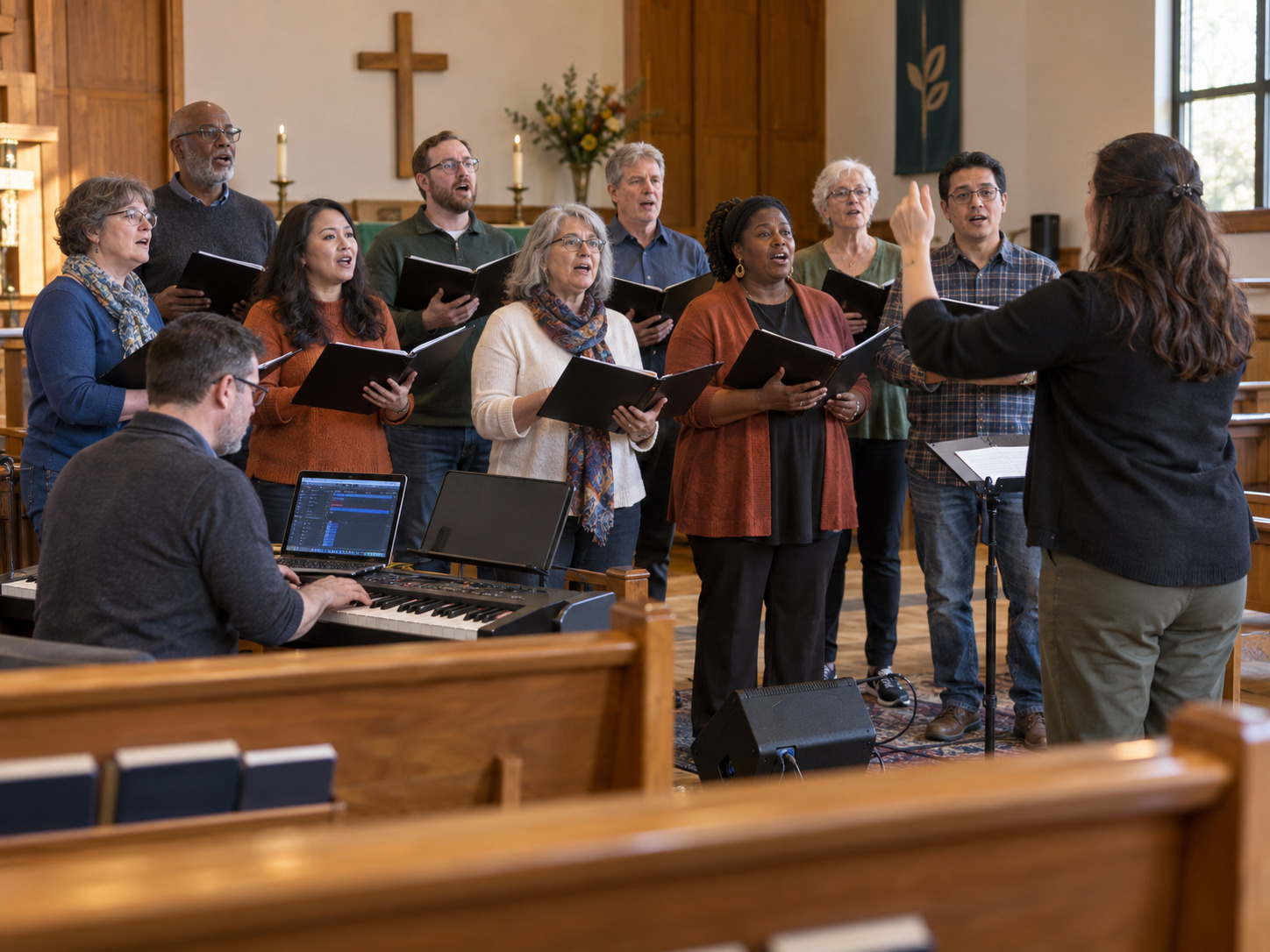
The short answer: keep the beat clear, choose the key with ordinary congregational voices, and let the choir model the rhythm before asking the whole room to join. A contemporary groove can make “A Mighty Fortress Is Our God” feel immediate, but the pulse should help people sing the hymn rather than turn the congregation into an audience.
Spiritrax offers “A Mighty Fortress Is Our God” in C, B-flat, E-flat, and G major. The product page describes a hip-hop and funk-influenced arrangement of the traditional hymn and provides previews in all four keys. That rhythmic character creates a useful opportunity: the choir can carry a strong, contemporary pulse while keeping the words and congregational entrance clear.
Decide who the arrangement is for
Before choosing a key or playback level, name the primary singers:
- a soloist or worship leader;
- a youth or adult choir;
- the full congregation;
- or a choir-led congregation that joins after hearing the style.
The same track can feel different in each setting. A soloist can shape syncopation with more independence. A choir needs shared consonants and releases. A congregation needs an entrance it can recognize and a range it can carry without strain.
If the room is not familiar with the rhythmic style, let the choir or small group establish it first. Participation does not have to begin with every voice at once.
Compare all four keys with real singers
The original key listed on the product page is C major, with B-flat, E-flat, and G-major versions also available. Do not choose from the title of the key alone.
Use this comparison:
- Preview the introduction in C, B-flat, E-flat, and G major.
- Sing the first complete phrase in each realistic option.
- Move to a later stanza and sing through the ending.
- Listen for clear words, comfortable sustained notes, and steady rhythm.
- Choose the version the intended leader and congregation can still carry after the rest of the service music.
The lowest track is not automatically the most congregational. If the melody sits too low, the room may lose energy and clarity. If it sits too high, people may stop singing or press for volume. Choose the key that keeps the center of the melody usable for the people present.
If none of the listed versions fits, the product page includes a customization option. Test the complete arrangement first so the request can name the exact range, tempo, or structural need.
Teach the groove before the words
When a familiar hymn receives a less familiar rhythmic treatment, singers may try to follow the words and decode the beat at the same time. Separate those jobs.
Start with the track alone. Ask the choir to tap or step the main pulse. Then speak the text in rhythm without singing. Finally add the melody while keeping the physical beat small and steady.
The rehearsal goal is not to imitate a recording’s surface style. It is to understand where the beat lives, how phrases begin, and where the ensemble releases together.
Mark:
- the count and character of the introduction;
- the first entrance;
- any off-beat pickups;
- places where consonants must arrive together;
- the space between stanzas;
- rhythmic changes in the accompaniment;
- and the final cutoff or decay.
If the choir cannot speak a passage together on the beat, louder singing will not solve it. Return to speech, pulse, and a shorter loop.
Give the congregation one dependable entrance
The leader should not assume that a familiar title makes the arrangement self-explanatory. A clear invitation can be brief:
Please join after the introduction; the choir will lead the first entrance.
Rehearse that sentence with the button press and the actual introduction. The speaker should finish in time for people to look up, breathe, and hear the cue.
If the choir leads the opening before the congregation joins, write the plan in the service order. Name the stanza or cue rather than using “join later.” The playback operator, choir director, projection operator, and worship leader should all see the same plan.
One visible leader should own the breathing cue. When three people gesture differently, the room hesitates even if the recording is steady.
Let the choir carry clarity, not extra volume
A rhythmic track may invite the sound team to make the accompaniment large. Set the live voices first. Then bring in enough playback for singers and congregation to hear the pulse, bass movement, and introduction without covering consonants.
Listen from the seating area and check:
- whether the first word of each stanza is clear;
- whether the beat remains audible when the room sings;
- whether lower voices disappear behind the accompaniment;
- whether microphones amplify one section too strongly;
- whether the choir can release final consonants together;
- and whether the last stanza stays free instead of becoming shouted.
If singers begin forcing, lower or reposition the playback before asking for more vocal effort. A clear pulse can feel energetic at a moderate volume.
Build participation across the four stanzas
The product page presents four stanzas in its lyric section. Instead of treating them as four copies of the same musical event, decide who leads and what changes.
One possible plan is:
| Stanza | Leader | Participation goal |
|---|---|---|
| 1 | Choir or worship team | Establish the groove and first entrance |
| 2 | Choir with congregation | Invite confident shared singing |
| 3 | Smaller vocal texture or selected section | Restore text clarity and contrast |
| 4 | Full group | Return with a secure final statement |
This is not a required service order. A congregation that already knows the arrangement may sing from the beginning. A youth choir feature may keep all four stanzas. The useful principle is that each change in participation should be planned and cued.
Avoid making every stanza louder. Contrast can come from fewer voices, a stronger unison, a clearer consonant, a different choir section, or a brief moment when the track carries the room before the next entrance.
Connect the style to the service purpose
“A Mighty Fortress Is Our God” may appear in a regular hymn set, a choir feature, a youth-led service, or a Reformation Sunday observance. Confirm the service purpose with the pastor or worship leader rather than assuming the hymn’s history determines one required use.
For a Reformation Sunday service, the broader Spiritrax Reformation Sunday planning guide recommends choosing familiar, singable music and giving every selection one clear job. A contemporary arrangement can support that plan when the groove serves participation and the surrounding spoken frame remains concise.
Do not over-explain the style immediately before the music. One sentence about how people are invited to sing is usually more useful than a long historical preface that makes the room forget the key and tempo.
Rehearse the transitions around the track
The song is only one part of the service. Practice what happens immediately before and after it.
Before playback, confirm:
- who introduces the hymn;
- who presses play;
- who gives the visible breath;
- where the congregation sees the words;
- and whether the choir is already in position.
After the final sound, confirm:
- who releases the choir;
- whether silence remains;
- whether prayer, scripture, teaching, or dismissal follows;
- and when the next speaker begins.
Run those edges with the same device, cables, microphones, and leaders that will serve. A polished rehearsal can still produce an awkward worship handoff when nobody owns the ending.
A 20-minute rehearsal plan
Minutes 1–4: compare the keys
Preview C, B-flat, E-flat, and G major. Sing the first phrase and a later stanza in each realistic option, then choose one.
Minutes 5–8: find the pulse
Tap or step the beat, speak the text in rhythm, and mark pickups, shared consonants, and releases.
Minutes 9–12: assign participation
Write who leads each stanza and exactly when the congregation joins.
Minutes 13–16: balance the room
Sing with the intended microphones and playback level. Listen from the congregation area.
Minutes 17–20: prove the handoffs
Run the spoken introduction into playback and the complete ending into the next service moment.
Final checklist
- C, B-flat, E-flat, and G-major previews were compared with the actual leaders.
- The selected key works for a later stanza, not only the opening phrase.
- The choir can speak the rhythm together before singing it.
- One person owns the visible entrance cue.
- The service order states when the congregation joins.
- The four stanzas have a deliberate participation plan.
- The playback supports the words without covering them.
- Microphones and speakers were checked from the seating area.
- The introduction and final ending were rehearsed with the actual device.
- A backup copy of the approved file is available.
- Any customization request names a tested range, tempo, or structural need.
- Performance, lyric display, livestream, recording, and sound-recording permissions were checked separately as applicable.
FAQ: “A Mighty Fortress Is Our God” backing tracks
Which keys does Spiritrax offer?
The product page lists C major, B-flat major, E-flat major, and G major.
What style is this arrangement?
Spiritrax describes it as a hip-hop and funk-influenced version of the traditional hymn.
Should the choir or congregation sing first?
If the rhythmic treatment is new to the room, let the choir establish the pulse and entrance before inviting the congregation. If the congregation already knows the arrangement, it may join from the beginning.
How can the service keep the track from feeling too loud?
Set the live voices first, add only enough playback for the room to hear the pulse and cues, and listen from the seating area. Energy should come from rhythmic confidence, not volume alone.
What if the four listed keys do not fit?
Test the complete arrangement, identify the exact problem, and use the product page’s customization option to describe the needed key, tempo, or structural change.
The useful final test is whether the congregation can enter confidently, keep the words clear, and stay part of the music. When the key, groove, leadership, and service handoffs are settled, the contemporary arrangement can feel both energetic and genuinely communal.
Preview C, B-flat, E-flat, and G major, then choose the rhythmic hymn track your choir and congregation can carry together.
Preview the Four Keys