
Let the Advent Wreath Give Each Week One Clear Musical Job
Holiday & Special Occasion Music
By Spiritrax Content Studio · August 13, 2026
Updated August 13, 2026
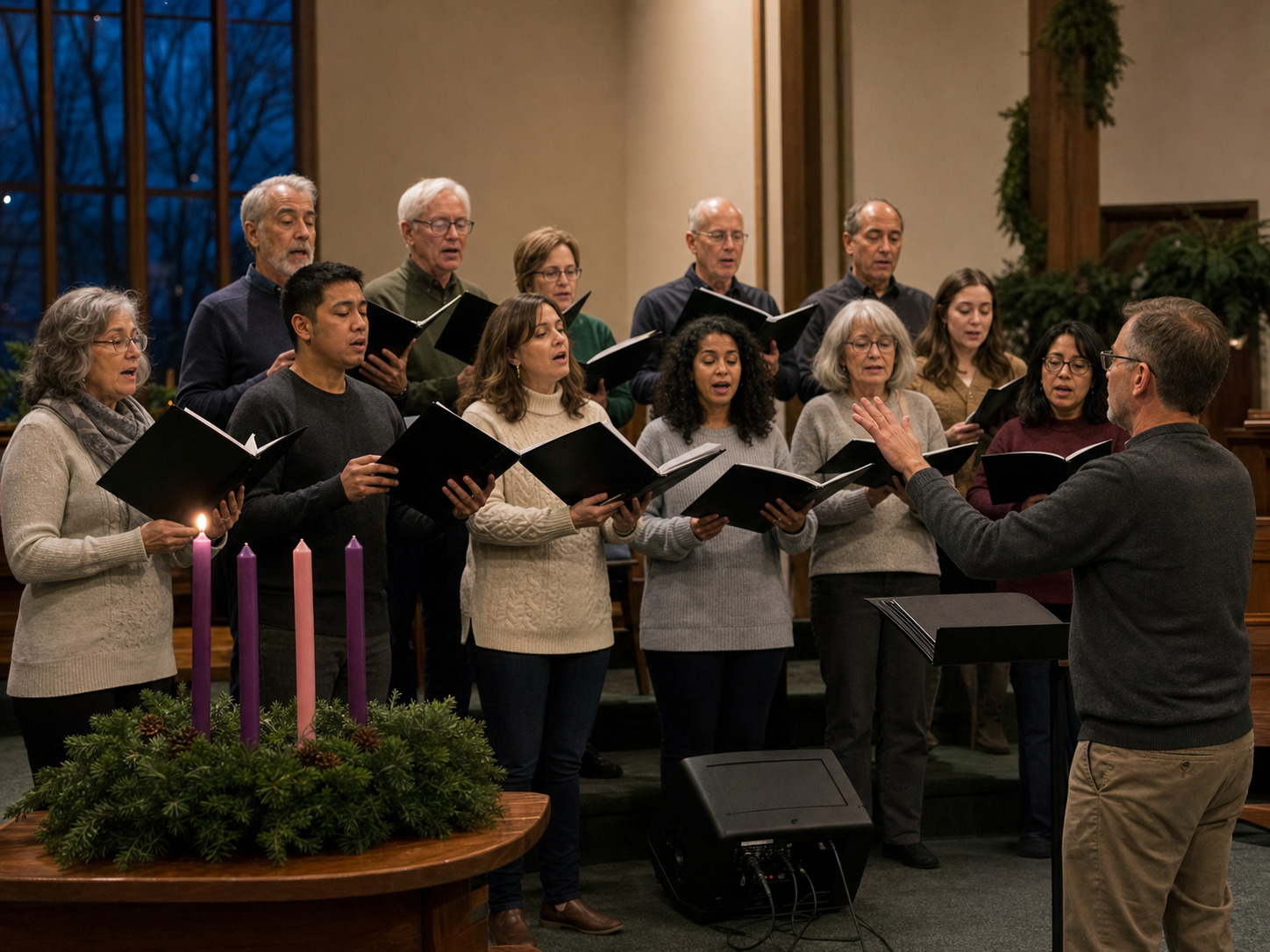
An Advent wreath can give four weeks of church music a clear shape—but only when each candle has one practical musical job.
Many congregations use themes such as hope, peace, joy, and love. Others follow different readings, colors, names, or orders. Confirm the local tradition first, then choose music that helps people participate rather than forcing every theme into a complicated seasonal program.
Backing tracks can support a small choir, soloist, cantor, worship leader, children's group, or volunteer-led congregation with dependable keys, introductions, forms, and endings. The best plan keeps the wreath moment brief, singable, and connected to the rest of the service.
How do you plan music for the four Sundays of Advent?
Start with four questions:
- What theme, reading, or prayer does the congregation actually use this week?
- Is the music for gathering, candle lighting, response, choir, soloist, or sending?
- Who is expected to sing?
- What does the next spoken or liturgical moment need from the ending?
Then give each week one musical focus. A familiar refrain repeated across all four Sundays may create more continuity than four unrelated feature songs.
Confirm the local Advent plan before choosing songs
Advent practices are not identical everywhere.
Before building the music schedule, confirm:
- the dates and service names used locally;
- candle colors and lighting order;
- weekly readings, prayers, or themes;
- whether a family, child, leader, or congregation lights the candle;
- how long the spoken portion usually takes;
- whether the congregation sings during or after the lighting;
- and how the fourth Sunday connects to Christmas Eve or Christmas Day.
Do not assume an online theme list outranks the congregation's own plan. Music should serve the reading and action already chosen.
Choose one repeated Advent anchor
A repeated anchor helps people understand where they are in the season.
That anchor might be:
- one verse of a familiar hymn;
- a short refrain;
- a simple instrumental introduction followed by congregational singing;
- a choir phrase that the congregation joins;
- or the same musical response with a different verse each week.
“O Come, O Come, Emmanuel” is a practical anchor because its expectant character can frame the season without making every Sunday sound like Christmas Day. The Spiritrax “O Come, O Come, Emmanuel” backing track is available in multiple keys and uses a spacious arrangement that can support a soloist or focused seasonal moment.
Review the complete form and key before assigning verses. If the track is longer than the candle-lighting action, place the full song after the reading rather than asking an operator to guess when to fade.
Week one: give hope a clear entrance
For a service centered on hope, choose music that helps the room begin together.
Useful qualities include:
- an introduction people can recognize;
- a melody that sits comfortably for ordinary voices;
- enough space for the first candle to be lit without rushing;
- text that fits the selected reading or prayer;
- and an ending that leads naturally into welcome, scripture, or silence.
A soloist can introduce the first verse, then invite the congregation into a refrain. A small choir can sing the opening phrase and step back once the room has the melody.
Hope does not need to sound fragile. It can be quiet, steady, and clear.
Week two: let peace lower the room's musical pressure
Peace is not simply slower tempo.
Build a calmer service moment by reducing musical competition:
- keep accompaniment beneath spoken words;
- avoid a dense arrangement under a long reading;
- choose a settled key instead of a showy high finish;
- leave a complete breath after the candle is lit;
- and decide whether silence belongs before or after the song.
If a prayer has open timing, do not trap it inside a fixed track. Let the prayer finish, then cue the complete selection from its normal beginning.
For an instrumental response, test the level from the seating area. Music that feels gentle near the speaker may still cover a reader across the room.
Week three: make joy easy to join
The joy Sunday in many traditions has a different visual and emotional character, but the music should still be singable.
Joy can come from:
- a stronger pulse;
- a brighter melodic shape;
- a familiar congregational refrain;
- a children's or choir entrance the room can follow;
- or a clear lift in arrangement and participation.
It does not require the loudest track of the season.
If children participate, simplify the cue structure. Give them one entrance, one repeated phrase, and a clear adult leader. Rehearse the walk, candle location, microphone plan, and exit as carefully as the singing.
Keep the key centered on the people who are actually expected to join. A festive recording loses its purpose when the congregation stops singing at the highest phrase.
Week four: let love connect Advent to Christmas without rushing there
The fourth Sunday often sits close to Christmas services. It can be tempting to treat it as a preview concert.
Instead, choose one piece that gathers the season's work:
- a text connected to the local reading;
- a familiar Advent anchor returning for the last time;
- a choir or solo selection with understandable words;
- or a restrained transition toward Christmas Eve.
Keep Christmas music for Christmas where the local tradition makes that distinction. If the congregation blends the seasons differently, follow that plan intentionally rather than by accident.
The Spiritrax Christmas Collection Vol. 1 can support later seasonal services with downloadable accompaniment, sheet music, and demonstration versions. Review individual pieces and use only the ones that fit the service's actual point in the season.
Match the track to the candle-lighting action
A wreath moment combines music, movement, flame, speech, and sometimes children. That makes cueing important.
Write the sequence in plain language:
- Reader reaches the lectern.
- Worship leader finishes the introduction.
- Reader delivers the assigned text.
- Candle lighter moves to the wreath.
- Stage or sanctuary light changes only if planned and rehearsed.
- Track begins from the named cue.
- Singer, choir, or congregation enters after the confirmed introduction.
- Candle lighter returns safely.
- Music ends into the next prayer, reading, or spoken transition.
If the candle is lit during music, decide whether the operator follows a fixed action or the leader gives a cue. Do not make the operator estimate from a person walking at a different pace each week.
Follow the congregation's fire-safety and supervision procedures. Music should never distract the person responsible for lighting or extinguishing a candle.
Choose keys for the gathered voices
Advent music often includes sustained phrases and familiar melodies that people remember in several different keys.
Test:
- the first congregational entrance;
- the highest repeated note;
- the lowest text-heavy line;
- the full final verse;
- the soloist's range if verses are divided;
- and whether the choir can support rather than overpower the room.
Use the key that makes participation confident. Where a Spiritrax track offers multiple keys, compare them with the actual leader or soloist before the rehearsal plan is distributed. Spiritrax custom tracks can also support confirmed key, tempo, cut, lead-in, or arrangement needs for a specific service.
Give choir, soloist, and congregation different jobs
Avoid asking everyone to do everything.
One useful pattern is:
| Participant | Clear musical job |
|---|---|
| Soloist | Introduces a verse or text the room needs to hear |
| Choir | Supports harmony, models the refrain, or carries one focused selection |
| Congregation | Joins a familiar verse or repeated response in a comfortable key |
| Worship leader | Explains participation in one short sentence and gives the entrance |
| Playback operator | Starts the approved file, follows named cues, and lands the planned ending |
Use demonstration or guide-vocal material during learning when available, then move to the accompaniment-only file early enough for live singers to own their entrances and balance.
Keep spoken words clear over accompaniment
If music plays beneath a reading or prayer, test the complete combination.
Listen for:
- low instruments masking a soft reader;
- a rhythmic build that arrives before the candle is lit;
- a modulation that changes the emotional focus;
- a fixed ending that pressures the speaker;
- and speaker placement that makes the track louder in one seating area than another.
The safest plan is often speech first, then song. When underscore is important, use a section designed or edited for that purpose and rehearse the level, cue, duration, and exit.
Build one volunteer-ready Advent folder
Create a folder with:
- the four final service orders;
- accompaniment files in weekly order;
- a separate rehearsal folder for guide vocals or demonstrations;
- keys, verse plans, repeats, and endings;
- reader, candle lighter, leader, choir, and operator assignments;
- exact start cues;
- a tested backup copy;
- and one line showing what follows each song.
Download every file before the service. Do not rely on a search page, streaming preview, or personal login at the candle-lighting cue.
Advent wreath music checklist
- Confirm the congregation's own themes, readings, colors, and order.
- Give each week one musical focus.
- Choose a repeated Advent anchor when it improves continuity.
- Match keys to the people expected to sing.
- Give choir, soloist, children, and congregation distinct jobs.
- Rehearse the candle-lighting sequence with the real people and space.
- Keep fire safety and supervision ahead of musical timing.
- Put open-ended prayer before or after a fixed track.
- Test spoken words and accompaniment from the seating area.
- Keep guide vocals outside the service playlist.
- Download, order, label, and back up every file.
- Confirm the permissions that apply to public performance, lyrics, livestreaming, recording, and the sound recording.
FAQ: Advent wreath music and backing tracks
What are the four Advent themes?
Hope, peace, joy, and love are widely used, but congregations may follow different names, readings, colors, or orders. Use the local worship plan as the source of truth.
Should music play while the Advent candle is lit?
It can, but the action needs a clear cue and safe timing. A short refrain or instrumental passage may work. If the reading or prayer has variable length, finish it before starting a fixed track.
Can “O Come, O Come, Emmanuel” be used every Sunday of Advent?
Yes, when the verse plan, local tradition, and service purpose support it. A repeated refrain or selected verse can create continuity, but review the track form and key before assigning the weekly plan.
Should the congregation sing every Advent-wreath selection?
No. Alternate participation intentionally. A soloist can carry a text-rich verse, a choir can introduce a response, and the congregation can join the most familiar, comfortable material.
Should Christmas music begin during Advent?
Practices differ. Some congregations preserve a clear Advent repertoire; others blend seasonal music earlier. Follow the local calendar, readings, and leadership rather than assuming one universal rule.
The takeaway
An Advent wreath does not need four unrelated musical productions.
Confirm the local plan, give each week one job, choose a singable anchor, rehearse the candle-lighting cue, and keep accompaniment behind live words and participation. Four small, prepared moments can carry the season more clearly than one crowded set.
Give Advent a steady musical center with a spacious “O Come, O Come, Emmanuel” accompaniment available in multiple keys for a soloist or focused seasonal moment.
Download O Come, O Come, Emmanuel