
Amazing Grace Backing Track for Worship, Memorials, and Soloists
Worship Music & Hymn Resources
By Spiritrax Content Studio · May 18, 2026
Updated May 18, 2026
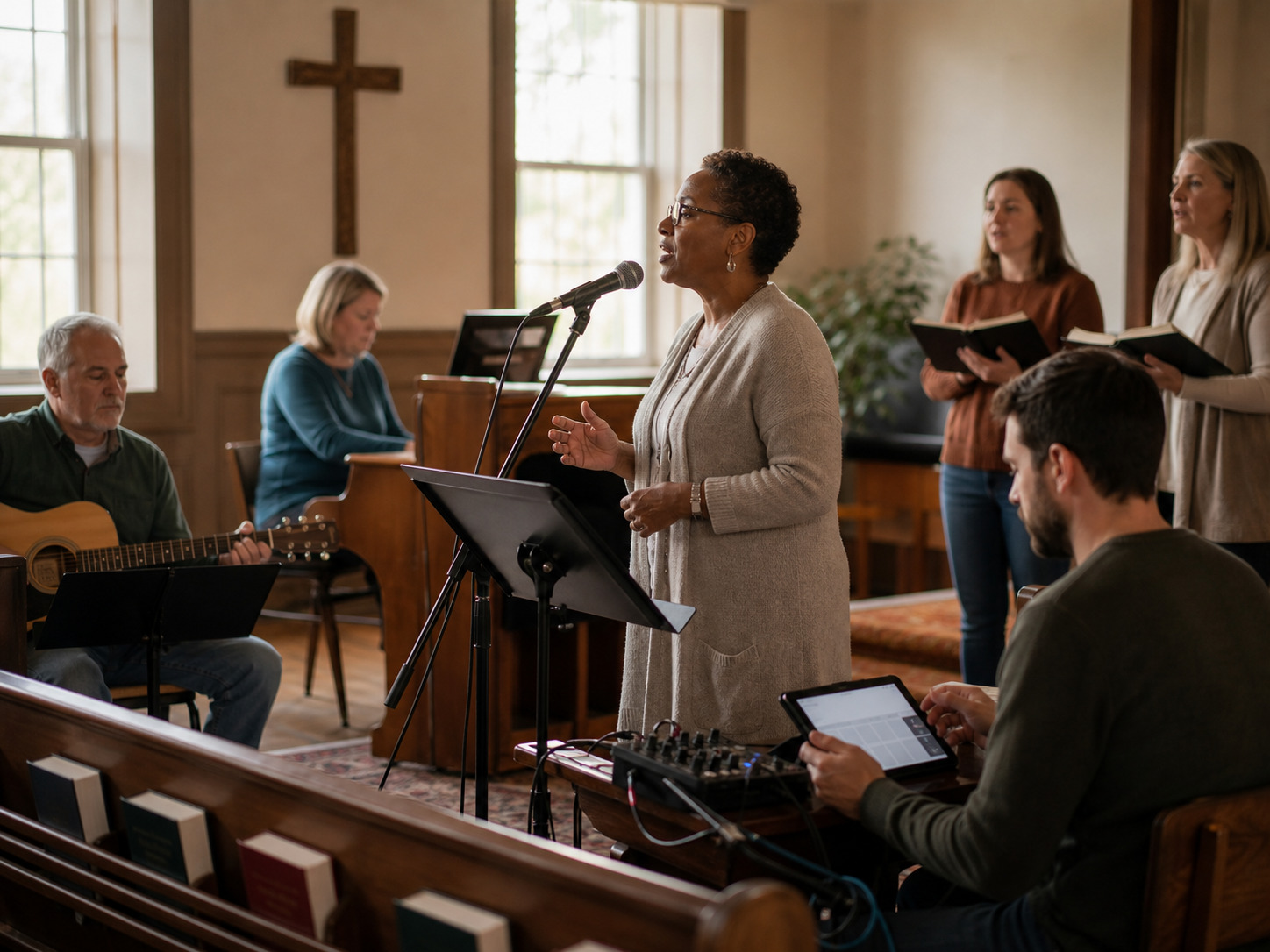
Amazing Grace is familiar enough that people think it will take care of itself. In a real service, it still needs preparation. The singer needs a comfortable key, the worship leader needs a clear cue, and the sound operator needs a track that starts and ends cleanly.
For worship services, memorials, funerals, small groups, and solo ministry, the right accompaniment should support the words without pulling attention away from them. A backing track can help when there is no pianist available, when the service is in a different location, or when the team needs the same musical foundation every time.
Spiritrax offers an Amazing Grace backing track with downloadable accompaniment support for singers and worship teams who need a steady, reverent track they can rehearse with before the service.
Start with the purpose of the moment
The same hymn can serve several different roles. It may be a congregational hymn, a solo, a memorial selection, a prayer response, or a quiet reflection during a service. Before choosing the track setup, name the purpose.
| Service moment | Best use of the track | Planning note |
|---|---|---|
| Congregational hymn | steady tempo and singable key | keep the introduction easy to follow |
| Solo or duet | supportive accompaniment | leave room for natural phrasing |
| Memorial or funeral | calm, warm delivery | avoid rushing the text |
| Prayer or reflection | lower-volume playback | let the room stay quiet |
| Rehearsal | repeatable practice file | mark entrances, verses, and ending |
A clear purpose keeps the music from becoming too big for the moment.
Choose the key around the singer
Amazing Grace can feel simple until the last phrases arrive. A key that is comfortable at the beginning may become strained by the end, especially for a soloist singing in a large room or during an emotional service.
Before the service, test the full track from start to finish. Do not only check the first verse. Listen for:
- whether the lowest notes still carry
- whether the highest notes stay relaxed
- whether the singer can breathe naturally
- whether the final verse still has warmth
- whether the room makes the tempo feel slower or faster
If the key does not fit, solve it before rehearsal becomes habit. A calm hymn loses its purpose when the singer has to fight the range.
Plan the entrance and ending
Many service problems happen before the first word. Someone presses play, the intro begins, and the singer is not sure when to enter. That uncertainty is avoidable.
Write a simple cue note:
- who starts the track,
- what happens before playback,
- how many measures or beats lead into the first phrase,
- whether the congregation or soloist sings,
- what happens after the final note.
If the hymn follows a spoken prayer, reading, or tribute, leave enough silence for the room to settle. A backing track should feel prepared, not sudden.
Using the track for memorials and funerals
For memorial services, the track should make the moment easier for the family, singer, and service leader. Keep the setup simple. Test the speaker, phone, laptop, or sanctuary sound system before people arrive. If the service is offsite, bring the file locally instead of depending on weak internet.
A practical memorial checklist:
- download the final file before the service
- test volume in the actual room
- confirm the key with the singer
- mark the start cue in the order of service
- decide whether all verses will be used
- keep a backup device available
The music does not need to be elaborate. It needs to be dependable.
Soloist rehearsal tips
A singer using a backing track should rehearse with the same version that will be used in the service. If they practice with one tempo and perform with another, the phrasing may feel less secure.
During rehearsal, listen for the places where the singer needs to lead slightly and where the track needs to stay steady. Mark breath points, verse entrances, and the final cutoff. If the singer will use a microphone, rehearse with it at least once so the balance feels natural.
When to use a custom track
A standard backing track is often enough, but custom changes can help when the service has a specific need. Consider a custom request if:
- the singer needs a different key
- the service needs fewer verses
- the intro should be shorter or longer
- the ending needs to land before a spoken transition
- the arrangement should feel simpler or fuller
- the track needs a clearer cue for playback
Spiritrax can support custom track needs when a song has to fit a particular singer, room, or service flow.
FAQ: Amazing Grace backing tracks
Can a backing track be used for a funeral or memorial service?
Yes. A backing track can be a good fit when the service needs reliable accompaniment and there is no live pianist or ensemble available. Test the exact file and playback system before the service begins.
Should the congregation sing with the track?
They can, if the key and tempo are comfortable. For congregational singing, keep the introduction clear and avoid a key that sits too high for untrained voices.
What should a soloist practice first?
Practice the entrance, breath points, highest phrases, and ending. Those details matter more than simply singing through the hymn once.
Is a guide vocal useful?
A guide vocal can help a singer learn melody and timing, but the final rehearsal should use the accompaniment version so the singer is ready to carry the hymn independently.
The takeaway
This hymn works best when the preparation is quiet and exact: a singable key, a clear cue, a tested playback setup, and enough rehearsal for the singer to focus on the words.
Start with the Spiritrax track, then adjust key, verses, intro, or ending if the service needs something more specific.
Use the Spiritrax Amazing Grace backing track for worship services, memorials, soloists, and rehearsal with a steady accompaniment your team can follow.
View Amazing Grace Track