
Augment Your Easter Choir With Backing Tracks
Backing Track Guides
By Spiritrax Content Studio · February 28, 2026
Updated March 16, 2026
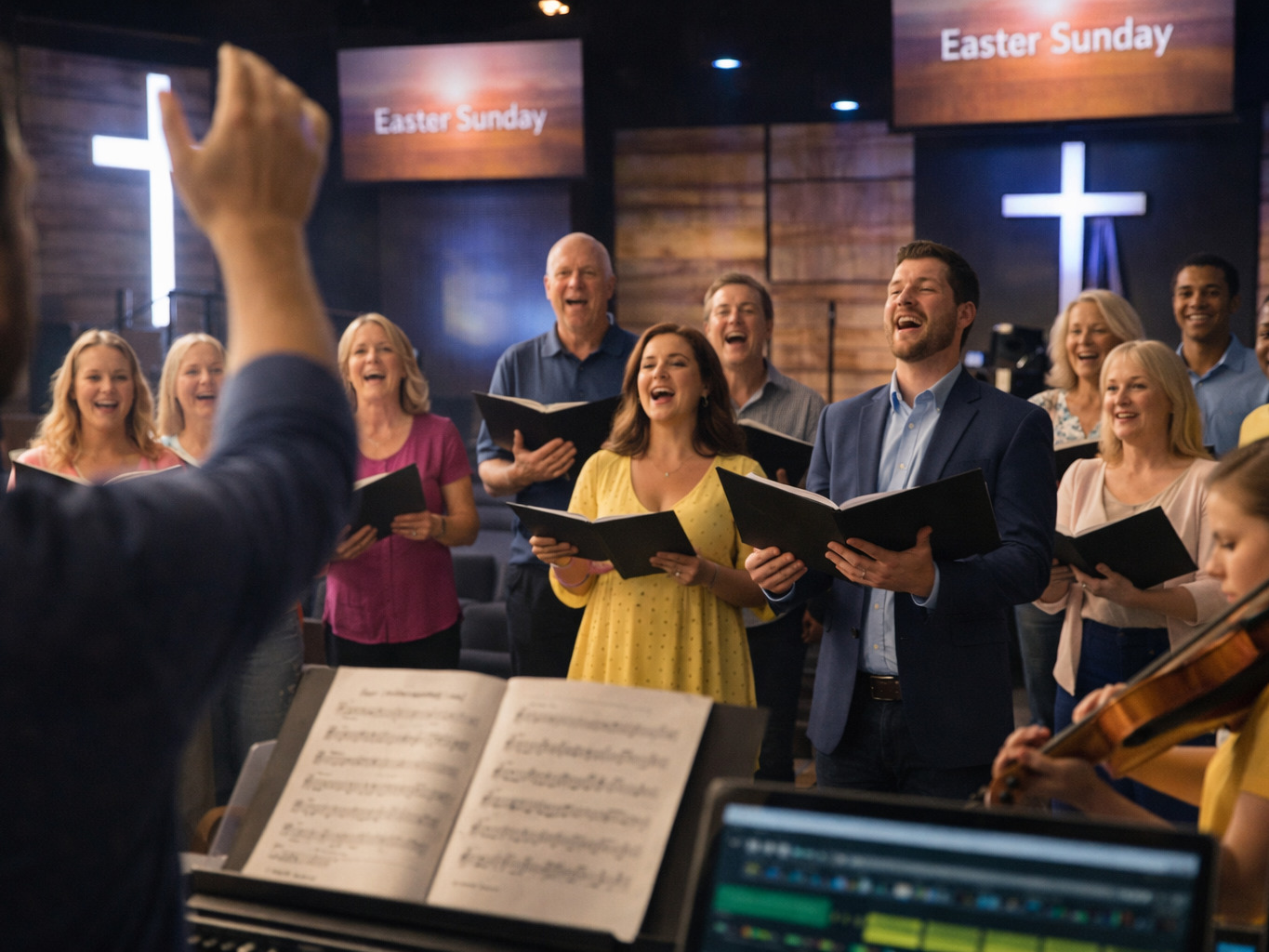
Easter morning will be full of energy. People come ready to sing. Your choir can lead the way, even with a smaller team. Backing tracks provide steady tempo, rich sound, and clear starts. They help make each service strong, from sunrise to the final amen.
This guide focuses on the lively spirit of Easter. Lent is about quiet reflection. Easter needs energy, pace, and quick cues. If you're looking for tips for Lent, check out our guide Using Backing Tracks During Lent Worship. Here, we’ll explore joy for Palm Sunday, focus for Good Friday, and celebration for Easter.
Start with your calendar. Easter Sunday in 2026 is April 5, and Palm Sunday is March 29 timeanddate.com. That gives you five weeks from late February to prepare. Plan backward so your choir builds comfort and confidence.
This week, finalize your song list, keys, and tempos. Decide where you want full sound and where to create space. Choose backing tracks that fit. Many leaders focus on core hymns from Easter. For a quick start, browse options in the Easter Collection at Spiritrax.
Next week, prepare your system. Use a playback device with an audio interface with at least two stereo outputs. Send music to the main room on Outputs 1 and 2. Route click and cues to the choir’s ears on Outputs 3 and 4. Do not send the click to the house. A small wired headphone amp for the choir is both simple and reliable. If possible, allow each section a basic mix. Make sure ear levels are safe and clear.
Latency can affect singing. Keep the total delay under 10 to 12 milliseconds. Singers can notice latency around 20 ms, which can make singing difficult. Use smaller buffer sizes, avoid heavy look-ahead plugins, and favor wired in-ears when possible Shure.
For your first rehearsal, include guide vocals. This helps singers hear entrances, vowels, and cutoffs clearly. Remind them that the guide is a tool, not a crutch. In week three, switch to accompaniment-only for most songs. If needed, keep a low guide in section leaders' ears. Soloists can hold onto a soft guide longer in their personal mix but keep it out of the room.
Tempo practice reduces nerves. For tricky sections, start at 85 to 90 percent speed. Then return to full tempo for the next rehearsal. This allows the choir to shape phrases without strain. In the service week, keep the full tempo set to ensure consistency.
Choose keys that fit your singers. Avoid keeping top sopranos above E5 for a long time and long bass notes below E2. If a key strains a section, select a better key now. Your singers will produce better tone and feel less fatigue on Easter morning.
Transitions matter just as much as the notes. Easter services often shift from readings to songs to prayers. Use tracks with clear endings or short pauses. Practice hand cues so the room can settle after statements like "Christ is risen!" before the next entrance. For classic choruses, consider options like Handel's Hallelujah in the Easter collection Spiritrax.
Here’s a simple week-by-week plan:
Late February: Finalize your song list, keys, and tempos. Confirm the rights to use and stream each song. The song license and recording rights are different. Many churches use the CCLI Streaming or Streaming Plus License, but make sure your track provider permits streaming or get permission CCLI.
Four weeks out: Set up output routing and in-ear mixes. Run a full rehearsal with guide vocals and clear count-ins.
Three weeks out: Do sectional rehearsals. Loop hard sections with the track. Drill cutoffs with the track's endings. Switch to accompaniment-only for most songs.
Two weeks out: Rehearse the full program, including any spoken transitions. In Holy Week, run two cue-to-cue rehearsals, check redundancy, and do a dress rehearsal.
Performance day: Keep things simple. Use two playback devices. Put them in airplane mode. Set gains so loud moments peak around -12 dBFS. Count-ins should match your rehearsals. Agree on clear hand cues for every first entrance. If a track fails, plan to sing one a cappella verse, then jump back in on the chorus when the track is back. Set console scenes for quick track-to-talk transitions.
In the house, keep the choir slightly louder than the backing track, about 2 to 3 dB, so everyone hears the voices. If the track masks consonants, cut back a bit on the 2 to 4 kHz range, or raise the choir bus the same amount. For livestreams, add a bit of natural reverb to the choir mics so it sounds full. Listen to the stream on small speakers to check the final sound.
Pull quote: Let the click lead your feet, and let your choir lead the room.
Common problems can arise, but fast fixes exist. If the choir feels late, lower your buffer size and turn off look-ahead processing. Keep ears wired when possible. If the track feels overpowering, reduce high-mid energy, or bring the choir bus up a little. If singers miss their cues, increase the count-in level in the ear mix or provide spoken cues just for section leaders.
Focus on your people, not the gear. A steady track helps your accompanist and director. It energizes multiple services and allows a small choir to sound full without oversinging. Your church will feel the joy and join in the singing.
For quieter services earlier in the week, check out our Lent guidance here. For Easter morning, start by exploring core hymns and service elements from the Easter Collection. If you plan to include a piece from Handel, this resource is a great starting point: The Complete Messiah (Handel).
Build a confident Easter set fast with curated hymn accompaniments for Palm Sunday through Resurrection Sunday.
Find Tracks