
Back to Church Sunday Music Should Help Guests Join In
Holiday & Special Occasion Music
By Spiritrax Content Studio · August 7, 2026
Updated August 7, 2026
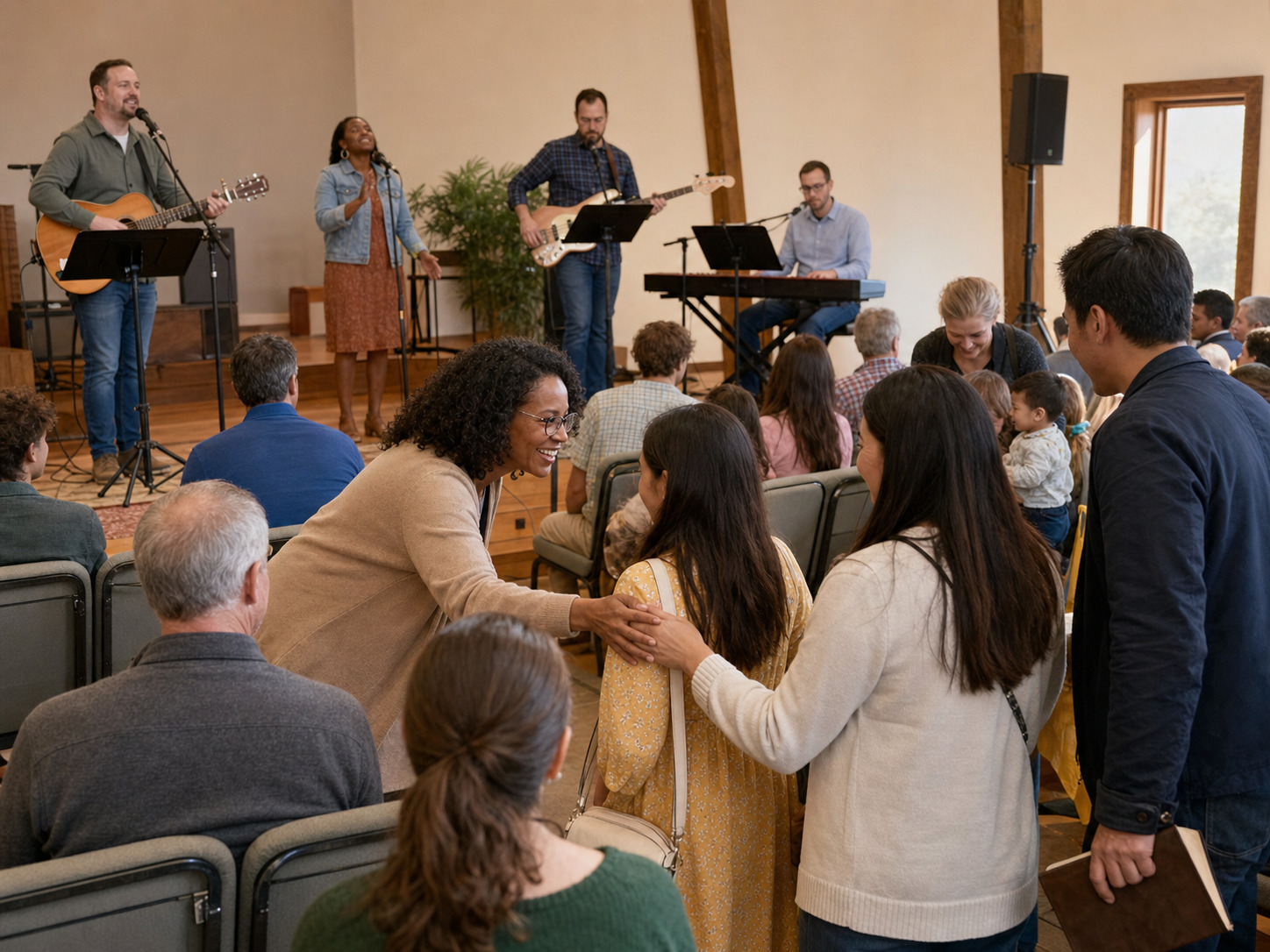
Back to Church Sunday music should make it easier for a guest to enter the room, recognize the invitation to participate, and join without feeling tested.
That usually means a familiar musical shape, a comfortable key, a clear first entrance, and an arrangement that leaves room for welcome, prayer, and conversation.
In 2026, Back to Church Sunday is observed on September 20. The official Back to Church Sunday planning site confirms the date. Churches may also use another fall kickoff or homecoming date that fits their local calendar. The music plan should serve the actual gathering, not force every congregation into one template.
Start with the guest's first five minutes
Before choosing songs, walk through what a new or returning person will experience.
- Is someone available to welcome them before the music begins?
- Can they tell where to sit without interrupting the service?
- Will lyrics, hymn numbers, or spoken instructions be clear?
- Does the opening song begin with enough musical information to find the pulse and pitch?
- Is there time to settle before the room is asked to sing?
- Can people participate without already knowing the local arrangement?
Music cannot replace hospitality, but it can either support or complicate it. A long instrumental build, surprise key change, unfamiliar repeat, or abrupt spoken-to-sung handoff may be exciting to regular attenders and confusing to everyone else.
Choose clarity first.
Give each piece one service job
A welcoming service does not require every song to sound celebratory.
| Service moment | Useful music job | Planning question |
|---|---|---|
| Arrival | Create a calm, open room | Can people still hear greeters and find seats? |
| Opening | Help the room begin together | Is the first entrance obvious? |
| Congregational singing | Give regulars and guests a shared voice | Is the key and refrain easy to carry? |
| Reflection or prayer | Support attention without filling every silence | Would less music serve this moment better? |
| Sending | Give the room a clear, hopeful close | Can people rejoin after announcements or prayer? |
Name the job before selecting the track. A beautiful solo arrangement may be right for reflection and wrong for the first congregational song. An energetic opener may welcome regulars while leaving a hesitant guest two phrases behind.
Choose one immediate point of participation
Give the congregation an early musical moment they can understand quickly.
That may be:
- a familiar hymn refrain;
- one repeated chorus;
- a short call and response;
- a solo verse followed by a congregational verse;
- or a simple instrumental introduction that clearly establishes the melody.
The goal is not to avoid all unfamiliar music. It is to prevent the first invitation to sing from depending on insider knowledge.
The Spiritrax Classic Hymns Collection provides familiar accompaniment options in practical keys for soloists, choirs, and congregational leadership. Choose the song because its text, range, and service role fit the gathering—not simply because people may recognize the title.
Use a key the room can carry
A guest-friendly key is not necessarily the key of the best-known recording or the worship leader's strongest solo range.
Test the highest and lowest phrases with the leader, then ask two or three ordinary voices to sing the most repeated section. Listen for places where people stop singing, change octave unexpectedly, or press for volume.
Confirm:
- the leader's comfortable complete range;
- the congregation's expected role;
- the first sung pitch;
- the highest repeated note;
- the lowest sustained phrase;
- the number of verses or choruses;
- and the exact ending.
If the room includes many children, older adults, occasional singers, or people returning after time away, a centered key and steady tempo usually serve participation better than a dramatic arrangement.
Let the introduction teach the entrance
An introduction should answer three questions without a spoken rescue:
- What is the pulse?
- Where does the singer or congregation enter?
- What pitch or melodic shape should they expect?
Avoid trimming the lead-in so tightly that the operator, leader, or congregation has no time to prepare. Also avoid a long arrangement-only opening that makes guests wonder whether they are supposed to listen or sing.
Rehearse the spoken welcome into the music. The person speaking should know the final sentence, the operator should know the trigger, and the leader should know exactly what they will hear before the first word.
Keep arrival music under the welcome
Pre-service music can create warmth, but it should not cover the human work of greeting people.
Test the level from:
- the main entrance;
- the central aisle;
- the front rows;
- the welcome or information point;
- and the sound position.
If greeters must raise their voices or families cannot hear seating directions, reduce the level or choose a less dense arrangement. A backing track with a clear instrumental texture can support the room without turning arrival into a performance.
Plan the stop as carefully as the start. Decide whether the prelude will finish naturally, fade, or end at a named cue before the formal welcome.
Rehearse the exact participation language
Guests should not have to decode “you know this one,” “take it from the top,” or “sing it like we usually do.”
Use direct, warm instructions:
- “You are welcome to sing the refrain with us.”
- “We will sing the first two verses.”
- “The leader will sing the first line, and the congregation may answer.”
- “You may remain seated during this song.”
- “The words are available on the screen or in the hymnal.”
Match the instruction to the track. If the arrangement repeats a chorus, changes key, or adds an instrumental verse, tell the leader and operator how the congregation will be guided through it.
The language should invite participation without suggesting that a guest is being watched or evaluated.
Build a compact service arc
A simple plan can carry the whole morning.
Arrival
Use one or two instrumental or gently led selections at a level that preserves conversation and practical welcome.
Opening
Choose a piece with an unmistakable entrance and a refrain or verse the room can join quickly.
Shared song
Use a familiar hymn or accessible worship selection in a centered key. Give the congregation clear instructions about verses, repeats, and posture.
Reflection
Choose a solo, choir piece, instrumental selection, or silence that supports the message and prayer without demanding participation at every moment.
Sending
Return to a clear shared voice. Rehearse the transition out of announcements, prayer, or invitation so the final song begins with confidence rather than a search for the file.
This structure is a planning frame, not a required order of worship. Local leaders should shape the actual service around their community, tradition, and pastoral purpose.
Prepare guide vocals, accompaniment, and backups
If a song is new to the choir, soloist, or volunteer leader, use a guide-vocal version during preparation. Then move to the accompaniment-only version before the service.
A useful sequence is:
- Listen to the guide vocal and mark the form.
- Rehearse the first entrance, repeated section, and ending.
- Sing with the accompaniment-only track.
- Practice the spoken cue into the song.
- Run the final transition after the track ends.
Spiritrax's guide on moving a choir from guide vocals to accompaniment tracks can help a small or volunteer group prepare without carrying the teaching voice into the service.
Download every final file before Sunday. Silence device notifications, confirm offline playback, and keep a tested backup on another device. Label files with the service order rather than vague names such as new, final, or Sunday version.
Write cues a volunteer can follow
For every track, record:
- service position;
- filename and key;
- who starts it;
- the exact spoken or visual trigger;
- first vocal entrance;
- verse and repeat plan;
- any level change under speech;
- ending behavior;
- and the next spoken or musical event.
Use observable triggers. “After the welcome leader says, ‘There is a place for you here’” is clearer than “start when the room feels ready.” If the service uses another welcome sentence, write the actual sentence.
The operator should know what happens if a speaker goes long, a guest conversation needs another moment, or the congregation begins singing later than expected. The safest contingency is often to finish the current musical phrase rather than making an abrupt mid-word correction.
Avoid four common welcome-service mistakes
Making every song large
Constant intensity can make the service feel less open, not more. Give arrival, singing, reflection, prayer, and sending different musical shapes.
Choosing only for regular attenders
A favorite local arrangement may include repeats, cues, or vocabulary a guest cannot predict. Keep what serves the service, then explain the participation path clearly.
Talking over a dense track
Spoken welcome and instructions need full intelligibility. Lower the accompaniment, choose a lighter section, or stop it before important language.
Waiting until Sunday to test the room
Rehearse the sound level, start cue, first entrance, ending, and backup with the real operator and playback system.
Back to Church Sunday music checklist
- Confirm the local service purpose and 2026 date.
- Walk through a guest's first five minutes.
- Give each musical selection one job.
- Choose an early, low-barrier point of participation.
- Test the key with ordinary voices, not only the leader.
- Use an introduction that teaches the entrance.
- Keep arrival music below conversation and welcome.
- State verses, repeats, posture, and participation clearly.
- Move from guide vocals to accompaniment before the service.
- Download, label, and back up the final files.
- Write observable cues and endings for the operator.
- Rehearse the transitions before and after each track.
FAQ: Back to Church Sunday music
When is Back to Church Sunday in 2026?
The official Back to Church Sunday date is September 20, 2026. A congregation may choose another fall kickoff or homecoming date that fits its local calendar.
What music works best for Back to Church Sunday?
Choose music with a clear service role, comfortable key, understandable entrance, and participation path. A familiar hymn, repeated refrain, accessible worship song, solo, choir piece, instrumental selection, or intentional silence may all fit different moments.
Should every song be familiar?
No. Give guests at least one early point of participation they can understand quickly, and introduce unfamiliar music with clear leadership rather than assuming prior knowledge.
How loud should pre-service backing tracks be?
Low enough that greeters, families, and volunteers can speak normally. Test the level near the entrance, aisles, front rows, and sound position.
Should a choir rehearse with guide vocals?
Guide vocals can teach melody, form, and entrances. Move to the matching accompaniment-only track before the service and rehearse the spoken cue, first entrance, ending, and next transition.
Can the service be livestreamed with downloaded music?
Public performance, lyrics, recording, and livestream use may involve separate permissions. Confirm the music, recording, lyric-display, and platform permissions that apply to the service.
The takeaway
Back to Church Sunday music should help people find a place in the room and a way into the singing.
Plan from the guest's first minutes, choose one clear job for every track, use a comfortable key and teachable entrance, keep welcome audible, write cues a volunteer can follow, and test the complete handoffs before Sunday. The best music plan does not make newcomers admire the production from a distance; it helps them participate when they are ready.
Build a welcoming service around familiar hymn accompaniment in practical keys, with downloadable tracks a soloist, choir, or small worship team can prepare before Sunday.
Explore the Classic Hymns Collection