
Battle Hymn of the Republic Needs a Clear Service Cue
Holiday & Special Occasion Music
By Spiritrax Content Studio · May 26, 2026
Updated May 26, 2026
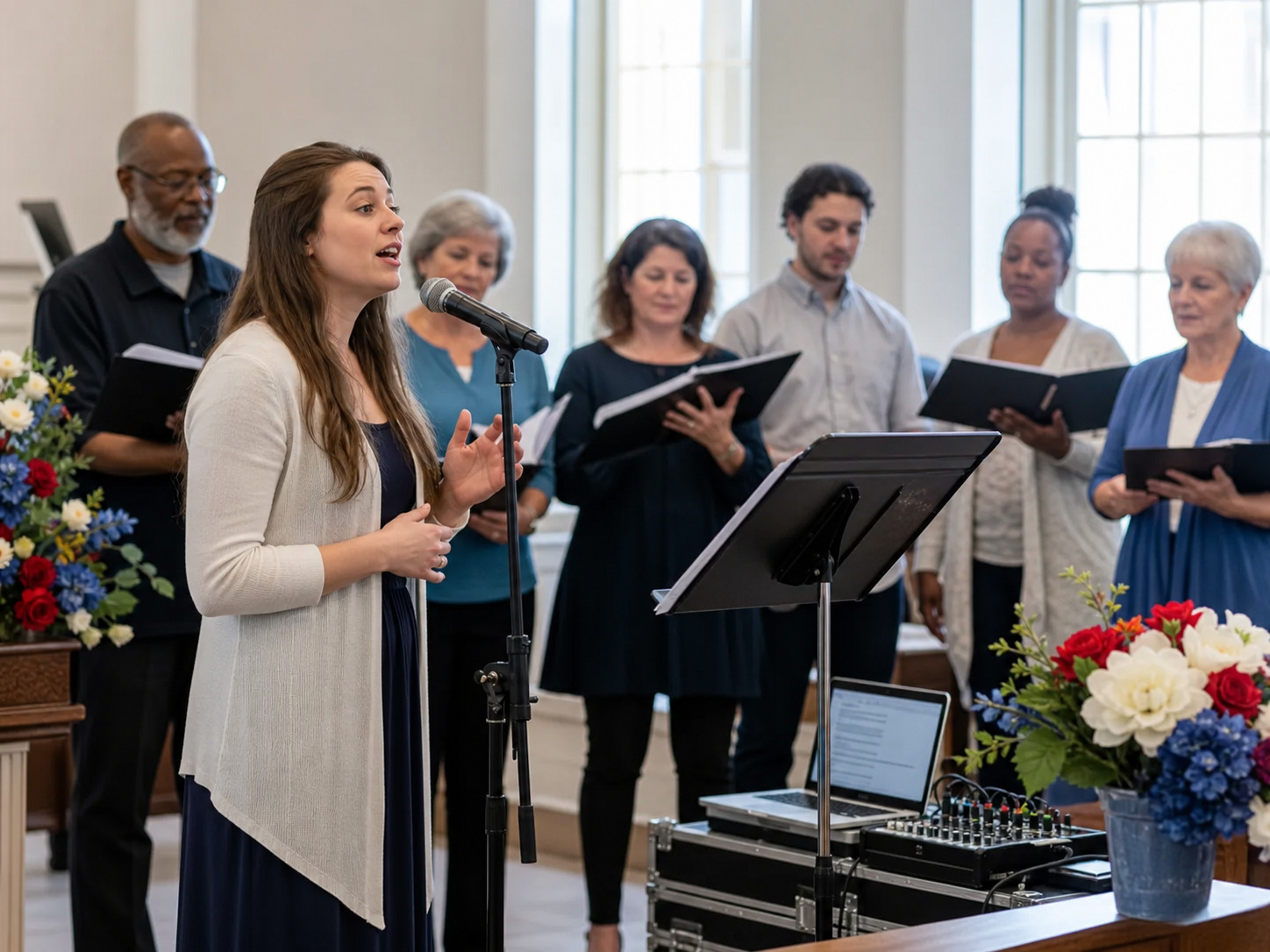
This hymn can carry a lot of meaning in a small amount of service time. In a worship service, school program, veterans event, civic ceremony, or Independence Day gathering, it can feel hopeful, solemn, patriotic, and congregational all at once. That range is useful, but it also means the music needs a clear cue and a clear purpose.
A backing track helps when the room does not have a full accompanist, brass player, or rhythm section available. It keeps the arrangement steady, gives the singer or choir a dependable frame, and lets the leader plan the moment without turning the service into a production number.
Decide what role the hymn has in the service
Before choosing a key or track, decide why the hymn is there. It may be supporting a congregational song, a solo feature, a choir anthem, a flag presentation, a veterans recognition, or a closing sending moment. Those are different jobs.
For worship settings, frame the song with care. The strongest use is often gratitude, hope, courage, remembrance, or prayer for civic responsibility. If the surrounding language is too casual, the hymn can feel disconnected from the service. If the surrounding language is too grand, it can overwhelm the moment.
A simple service note may be enough: "We will sing this as a prayer for courage, gratitude, and peace." That gives the music a worship frame without overexplaining it.
Choose the key around the people leading it
The Spiritrax Battle Hymn of the Republic backing track is available in multiple keys, including Bb, G, D, and F. That gives planners a practical choice: pick the key around the singer or choir that will actually lead the room.
For a soloist, listen for the refrain first. The repeated "Glory, glory" phrases need energy without strain. For a choir, check the verse ranges and the final refrain. For congregational singing, choose a key that lets the room join without forcing the high notes.
If the song will be sung by a mixed group, rehearse the exact key with the exact track before the service. Do not assume a familiar hymn will automatically sit well in every room.
Give the cue room to breathe
The cue is the difference between a strong patriotic hymn and a rushed service moment. Decide who gives the start, what happens before the track begins, and whether the first sound should arrive after silence, spoken introduction, prayer, or applause.
A clean cue plan should answer:
- Who starts the track?
- Does the leader speak before the track begins?
- Is the first verse sung by a soloist, choir, or congregation?
- Does the room stand before the track or after the introduction?
- Will the final refrain resolve into prayer, applause, silence, or a spoken transition?
Write these answers into the service order. If there is an audio volunteer, give them the same cue language the worship leader or program director will use from the front.
Keep patriotic music connected to the whole program
One patriotic hymn works best when it is part of a thoughtful arc. For Memorial Day, Veterans Day, Independence Day, school assemblies, and civic worship weekends, the surrounding music should keep the service balanced.
Useful pairings include:
- The Star-Spangled Banner for an opening or ceremonial moment.
- Taps for remembrance or a quiet close.
- America the Beautiful for a more reflective patriotic song.
- The Patriotic Collection when the program needs several service-ready options.
The goal is not to stack patriotic songs until the service feels crowded. The goal is to choose the right moment for each song.
Rehearse the ending, not just the entrance
Many teams rehearse the first verse and assume the rest will take care of itself. The ending needs just as much planning. Decide whether the arrangement should land as a confident finish, a congregational close, or a transition into prayer.
During rehearsal, listen for:
- Whether the final refrain is too high or too low for the leader.
- Whether the choir knows when to release the last phrase.
- Whether the audio volunteer knows when to fade room microphones.
- Whether the speaker after the song knows when to step forward.
- Whether applause is appropriate for the setting.
These details are small, but they keep the service from feeling uncertain after a strong hymn.
Frequently asked questions
Can this hymn work in a church service? Yes, when the service frame is clear. Introduce it around gratitude, remembrance, hope, service, or prayer rather than treating it as a standalone performance.
Should a soloist or congregation lead it? Either can work. A soloist gives more control over key and phrasing. Congregational singing can be powerful when the key is comfortable and the cue is clear.
When should the track be tested? Test it before the final run-through, with the same sound system and key planned for the service. That gives time to adjust the cue, volume, or singer placement.
A steady track cannot choose the tone for the room, but it can support the tone you have chosen. With the right key, cue, and service frame, this hymn can feel grounded instead of oversized.
Choose the Battle Hymn of the Republic accompaniment track in the key that fits your singer or choir, then use it as one clear moment in a larger patriotic service plan.
View Battle Hymn Track