
A Blue Christmas Service Should Never Rush Grief
Holiday & Special Occasion Music
By Spiritrax Content Studio · August 14, 2026
Updated August 14, 2026
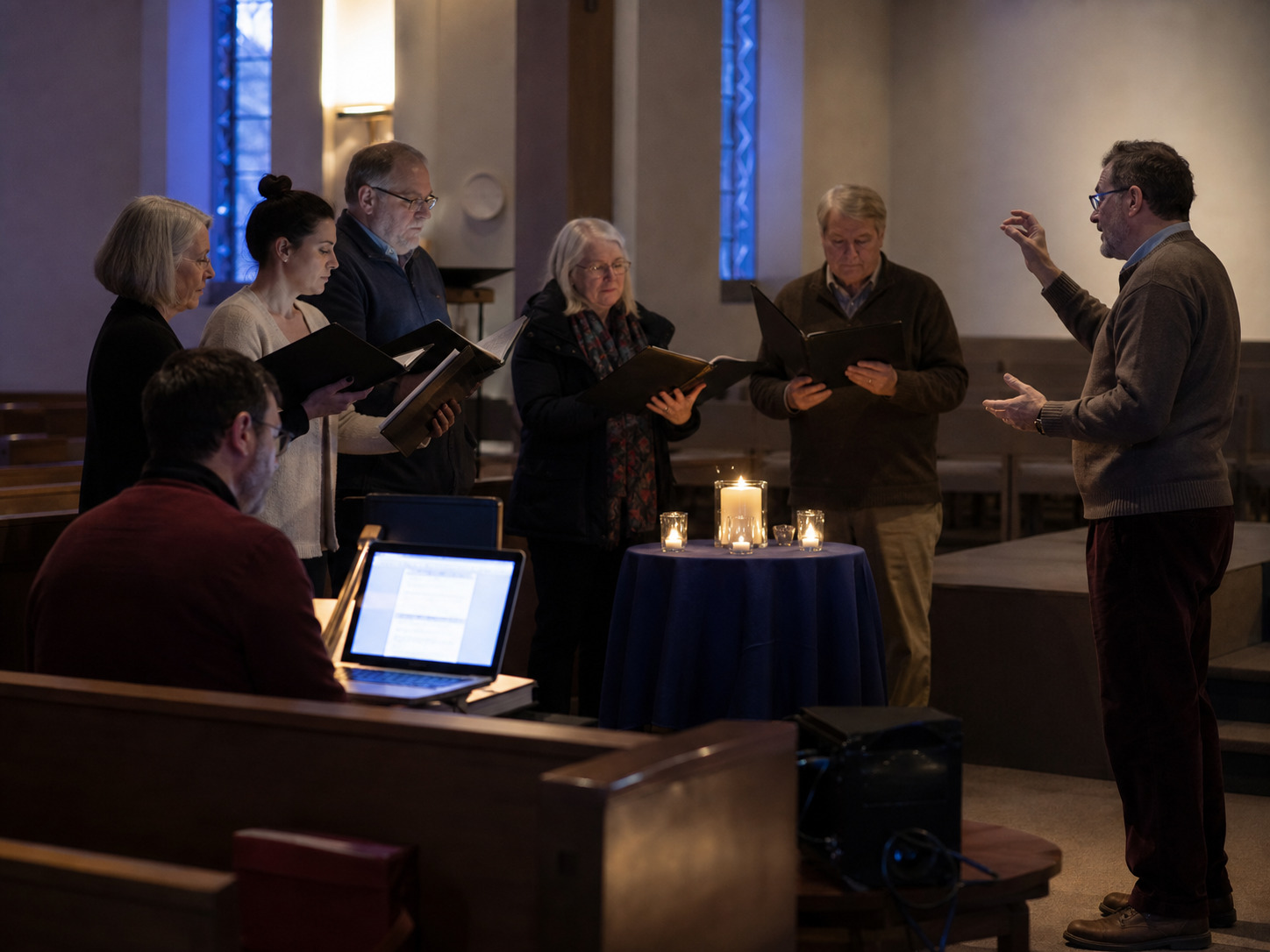
A Blue Christmas or Longest Night service works best when the music makes room for grief instead of trying to solve it.
Choose a small number of familiar hymns, place them around prayer and silence, use keys that people can enter without strain, and keep every accompaniment cue simple enough that volunteers can support the room calmly. The goal is not to create a sad Christmas concert. It is to offer a truthful worship space for people who may be carrying loss, loneliness, illness, family change, or a difficult year.
That purpose should shape every musical decision.
Begin with the pastoral job of the service
“Blue Christmas” and “Longest Night” are often used for quiet services during Advent or near the winter solstice. Churches may structure them differently, but the shared need is recognizable: not everyone arrives in December ready for celebration.
Resources from Discipleship Ministries and ResourceUMC offer examples centered on prayer, healing, grace, scripture, and unhurried participation. Use your congregation's own tradition and pastoral guidance for the liturgy. Let the music serve that plan rather than compete with it.
Before choosing songs, finish this sentence:
In this service, music will help people __________.
Possible answers include “arrive without pretending,” “name loss,” “pray when words are difficult,” “receive a familiar promise,” or “leave with gentle hope.”
That answer is a better filter than popularity.
Use a quiet three-part musical arc
A simple arc can keep the service focused.
1. Arrival without pressure
Begin with instrumental music at a low, steady level. Avoid an introduction that sounds as though everyone is expected to sing immediately. People may be entering the room cautiously, and some may prefer to listen.
A familiar hymn melody can create recognition without demanding participation. Keep the volume beneath conversation and movement. If candles, name cards, stones, or prayer stations are part of the service, make sure the music does not rush the setup.
2. Naming and holding
Place one sung hymn or solo near the center of the service. This is usually enough. A text about companionship, mercy, peace, or enduring hope may fit better than a bright seasonal anthem.
The Spiritrax Classic Hymns Collection includes familiar options such as “Amazing Grace,” “What a Friend We Have in Jesus,” “The Old Rugged Cross,” and “Wonderful Peace.” Do not choose from a list alone. Review the exact lyrics, arrangement, key, and musical tone in the context of your service.
3. Gentle sending
End with music that opens a path forward without forcing emotional resolution. Hope can be present without sounding triumphant.
Consider a quiet instrumental postlude or one repeated refrain. Allow people to remain seated, pray, or leave gradually. The final track should not make the room feel as though it must applaud or suddenly become cheerful.
Choose a key that invites rather than tests
Familiar hymns are not automatically singable. A congregation that sings confidently on an ordinary Sunday may participate differently in a service shaped by grief.
Choose the key from the people who will actually carry the melody:
- If a soloist leads, protect that singer's most vulnerable phrases.
- If the congregation is invited to join, avoid high climaxes that require vocal effort.
- If a small choir supports the room, keep the melody present rather than burying it inside harmony.
- If participation is optional, say so clearly and let listening count as participation.
Test the lowest and highest important notes with the leader before settling on the track. A comfortable key creates space for words and breath. An uncomfortable key makes the music feel like an assignment.
Spiritrax's guide to choosing a church solo key offers a practical way to evaluate range, tone, room, and service role.
Let silence be an intentional cue
Silence is not a missing track. In this kind of service, it may be one of the most important musical choices.
Write silence into the order with the same care you give a hymn:
- how it begins,
- how long it may last,
- what visual or spoken cue ends it,
- whether candles or names continue during it,
- and whether the next track begins immediately or after one sentence of prayer.
Avoid placing an automatic playlist beneath every action. Music under a reading of names can make spoken words harder to hear. Music beneath personal prayer can make people feel hurried. If accompaniment is used under speech, choose a simple instrumental texture, keep it genuinely quiet, and rehearse the balance in the actual room.
No volunteer should have to guess whether a pause is intentional or whether the laptop has failed.
Keep backing-track arrangements restrained
The right arrangement matters as much as the right song.
For a Blue Christmas or Longest Night service, look for:
- an introduction long enough for a calm breath but not a performance entrance,
- a texture that supports the melody without crowding speech,
- a moderate or slow tempo that still moves naturally,
- dynamics that do not build toward an oversized finish,
- and an ending that releases the room gently.
If an arrangement contains a large modulation, dramatic drum entrance, bright brass feature, or applause-style button, it may not serve this particular moment even when the hymn itself is appropriate.
Use the preview to hear the actual track. Do not assume every version of a familiar hymn has the same emotional shape.
Give candles, names, and prayer actions their own time
Many services include a physical action: lighting a candle, placing a stone, writing a name, or coming forward for prayer. These actions move at human speed.
Decide whether the music will:
- cover the entire action,
- begin after the action is introduced,
- stop before spoken prayer,
- or repeat quietly until the final person is ready.
A fixed-length song may end too soon when participation is larger than expected. A long playlist may continue after the room is ready to move on. If timing is uncertain, plan a separate instrumental cue or a repeatable section rather than asking the operator to fade a vocal line at random.
The worship leader, pastor, and playback volunteer should agree on the exit cue. A small hand signal, spoken line, or marked sentence in the order can prevent a graceful ritual from ending in a technical scramble.
Rehearse transitions, not emotion
Do not ask participants to reproduce the emotional weight of the service in rehearsal. Rehearse the mechanics that will protect them when the room is full.
Test:
- the exact start of each track,
- microphone and speaker levels,
- the spoken introduction into the first note,
- the candle or name-reading cue,
- any verse cuts,
- the final chord and the silence after it,
- the transition from music back to prayer,
- and the backup device.
Use accompaniment tracks for the service and guide-vocal demos only when singers need them during preparation. Before the gathering begins, confirm that the performance folder contains the intended accompaniment versions rather than rehearsal files with guide vocals.
A volunteer-ready playback sheet
Keep the operator's document short. One row per cue is enough:
| Cue | Trigger | File | Level or action | Ending |
|---|---|---|---|---|
| Gathering | Doors open | Instrumental prelude | Low under arrival | Fade on welcome signal |
| Central hymn | After spoken invitation | Approved hymn/key | Full but gentle | Hold silence after final chord |
| Candle action | First candle is lit | Quiet instrumental cue | Under movement only | Stop before prayer |
| Sending | Closing words finish | Postlude | Low, no announcement | Let finish or fade after room clears |
Use the exact filename on the sheet. “Track 2” or “the quiet one” is not enough when a volunteer is serving in a sensitive room.
What to avoid
Too many songs
Every additional number adds another emotional direction, cue, key, and transition. One or two well-placed musical moments can support the service more honestly than a full concert-length set.
Explaining every feeling
Do not make the song introduction tell people how they should feel. Name the invitation plainly, then let the text, prayer, and silence do their work.
A dramatic ending
Resist the instinct to prove hope with volume. A gentle final cadence can communicate steadiness without erasing the grief that brought people to the service.
Unrehearsed underscoring
Speech over music is difficult to balance. If it has not been tested through the real sound system, choose silence.
Assuming everyone will sing
Offer singing without measuring participation. Some people will sing. Some will listen. Some may need to leave the room briefly. The music plan should make all three possible without drawing attention.
FAQ: Blue Christmas and Longest Night music
Is Blue Christmas the same as a Longest Night service?
The names are often used for related services that acknowledge grief, loss, or difficulty during the Christmas season, but local traditions and liturgies vary. Follow your church's pastoral and denominational guidance.
How many hymns should the service include?
There is no universal number. A compact service may need only one central hymn plus instrumental gathering and sending music. Choose by purpose and timing, not by filling every space.
Can a backing track work under a reading of names?
Yes, but speech must remain completely clear. Use a restrained instrumental track at low volume, rehearse the balance, and make the stop cue explicit. Silence is often the stronger choice.
Should the service use Christmas carols?
It can, but review the exact text and arrangement. A familiar Advent hymn or classic hymn may fit better than a brightly orchestrated carol. The service purpose should decide.
Should an ad or announcement interrupt the service plan?
No. Keep the reader and worship plan focused on care, preparation, and respectful musical support. Commercial discovery should remain secondary to the trust required by the topic.
The final check
Read the order from the perspective of someone who does not feel festive.
Does the music allow them to arrive quietly? Can they participate without singing? Are names and prayers easy to hear? Does every transition have a calm cue? Does the ending offer hope without demanding a change of mood?
When the answer is yes, the accompaniment is doing its real job: carrying the room without crowding it.
Choose familiar, congregation-friendly hymns for a quiet service from a twelve-track collection that includes sheet music and selected guide-vocal rehearsal support.
Explore the Classic Hymns Collection