
Children's Church Songs Work Better When the Track Feels Easy
Worship Music & Hymn Resources
By Spiritrax Content Studio · May 29, 2026
Updated May 29, 2026
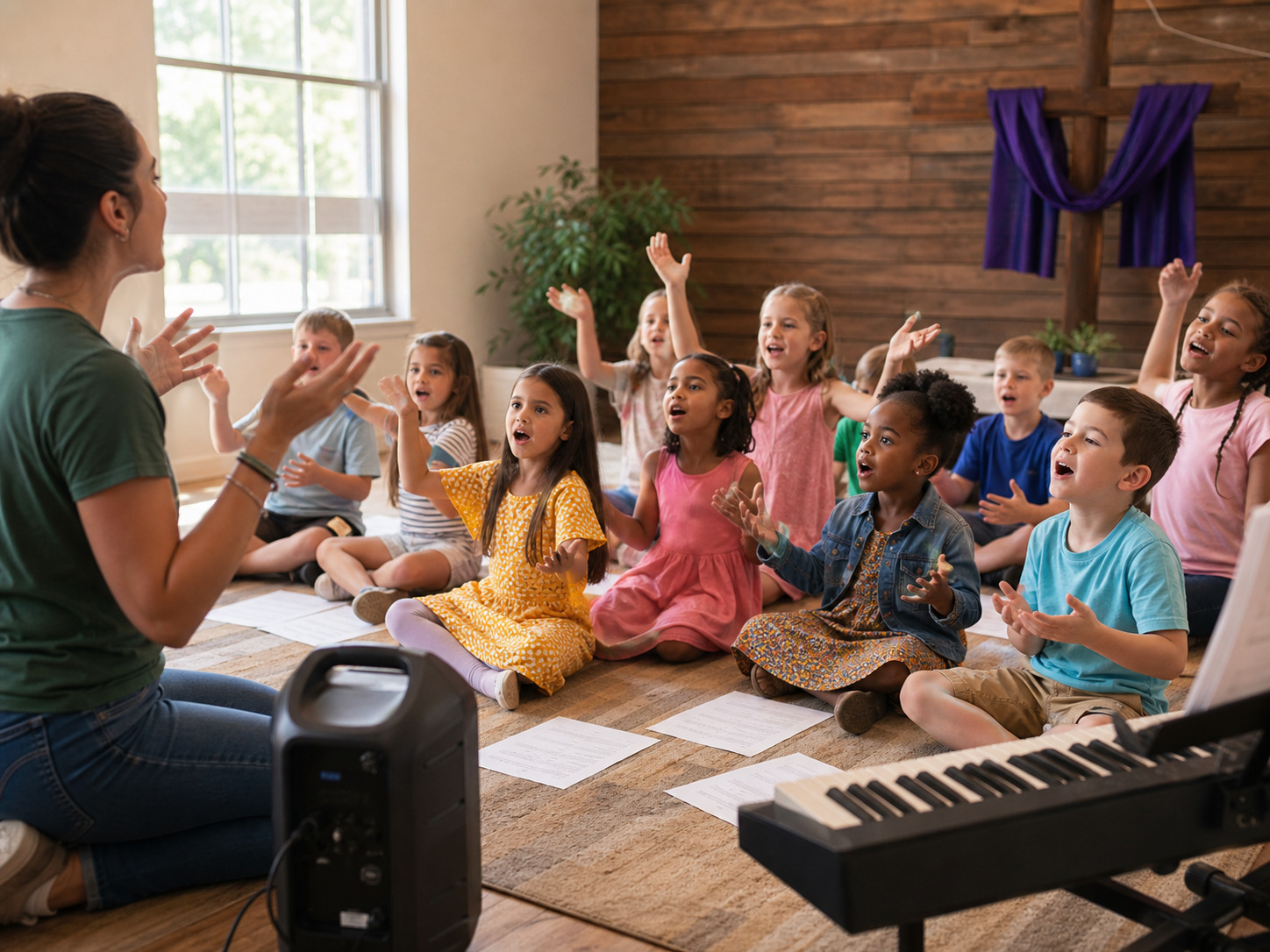
Children's music works best when the room can join quickly. In a church classroom, VBS rotation, children's choir rehearsal, school chapel, or family program, the track should make the song easier to lead, not harder to manage.
That means the best plan is usually simple: choose songs in comfortable keys, rehearse the first entrance, keep the ending clear, and give leaders enough confidence that they can focus on the children instead of the playback device.
Start with the age of the room
A song that works for older elementary students may feel too fast or wordy for preschoolers. Before choosing tracks, decide who is singing and what the moment needs to accomplish.
For younger children, prioritize:
- short phrases,
- steady tempo,
- call-and-response sections,
- hand motions or simple movement,
- a clear ending.
For older children or mixed-age groups, you can use fuller arrangements, but the cue still needs to be obvious. If the leader has to explain the entrance every time, the track is doing too much.
Spiritrax has a Children's Music Collection with familiar songs such as "Jesus Loves Me," "This Little Light Of Mine," "Zacchaeus," "When the Saints Go Marching In," and "He's Got the Whole World in His Hands." It is useful when the goal is a ready-made set rather than one isolated song.
Pick the song by service moment, not only by familiarity
Familiar songs are helpful, but placement matters. A high-energy opener can help children settle into singing. A quieter Bible song can support a lesson, prayer, or chapel moment. A repeatable closing song can make pickup time or dismissal feel calmer.
For VBS or summer programs, build a small rotation:
- one welcome song,
- one Bible story or theme song,
- one movement song,
- one quieter response song,
- one closing song.
That is usually stronger than changing every song every day. Children learn by repetition, and leaders become more confident when the musical flow is predictable.
Rehearse the cue before adding motions
Hand motions help children participate, but they can also distract leaders from the track entrance. Rehearse the music cue first. Start the track, count or breathe with the children, and sing the first line without movement. Then add motions once the entry is comfortable.
If a song has a guide vocal demo, use it early. It gives volunteers and children a clear melody reference. Once the group knows the song, switch to the accompaniment track so the children carry the singing.
Keep playback simple
Children's ministry rooms are not always built like performance spaces. The speaker may be small. The leader may be using a phone. The group may be sitting on the floor, standing in rows, or moving between stations.
Before the program starts, test:
- speaker volume,
- whether the leader can reach pause quickly,
- the opening count or pickup,
- the ending,
- the next track in the playlist,
- whether lyrics or motions are ready before playback begins.
A clean playlist matters. Rename files clearly and remove extra versions from the active folder so a volunteer does not start the wrong key or guide vocal by accident.
Use keys that help children sing
Children do not need a song to feel big; they need it to feel singable. If the key sits too low, the room may mumble. If it sits too high, children may shout. When possible, choose an arrangement that feels natural for young voices and comfortable for the adult leader.
Spiritrax children's tracks are arranged with easy singing in mind, and several include guide vocal support. For a mixed group, the best key is usually the one that lets children sing clearly without forcing the leader to dominate.
A simple planning checklist
Before the first rehearsal or program day, confirm:
- the song list is short enough to repeat,
- each track is in the correct key,
- guide vocal and accompaniment versions are labeled clearly,
- the first entrance is easy for volunteers to cue,
- hand motions do not hide the musical pickup,
- the ending is clear enough for children to stop together,
- the playback device and speaker have been tested in the room.
FAQ: children's church backing tracks
What songs work well for children's church or VBS?
Choose songs with clear melody, simple words, steady tempo, and repeatable sections. Familiar Bible songs and children's hymns often work well because leaders can teach them quickly.
Should children rehearse with guide vocals?
Guide vocals are useful at the beginning because they show the melody and rhythm. After the group learns the song, switch to accompaniment tracks so children sing with more confidence.
Do backing tracks work for small churches?
Yes. Backing tracks are especially useful when there is no live pianist, when a volunteer is leading music, or when a program needs the same cue every day.
What should a leader check before using tracks with children?
Test the speaker, volume, first cue, ending, and playlist order. Keep the active playlist simple so the right version starts every time.
The takeaway
Children's songs do not need a complicated production plan. They need clear cues, comfortable keys, repetition, and leaders who can stay present with the room. With the right backing tracks, a children's church, VBS, or summer program can feel prepared without feeling overproduced.
Planning children's church, VBS, or a summer program? Start with the Children's Music Collection for easy keys, sheet music, guide vocals, and rehearsal-ready tracks.
Browse Children's Music Collection