
Let the Service Choose the Worship Track Style
Planning Guides
By Spiritrax Content Studio · July 28, 2026
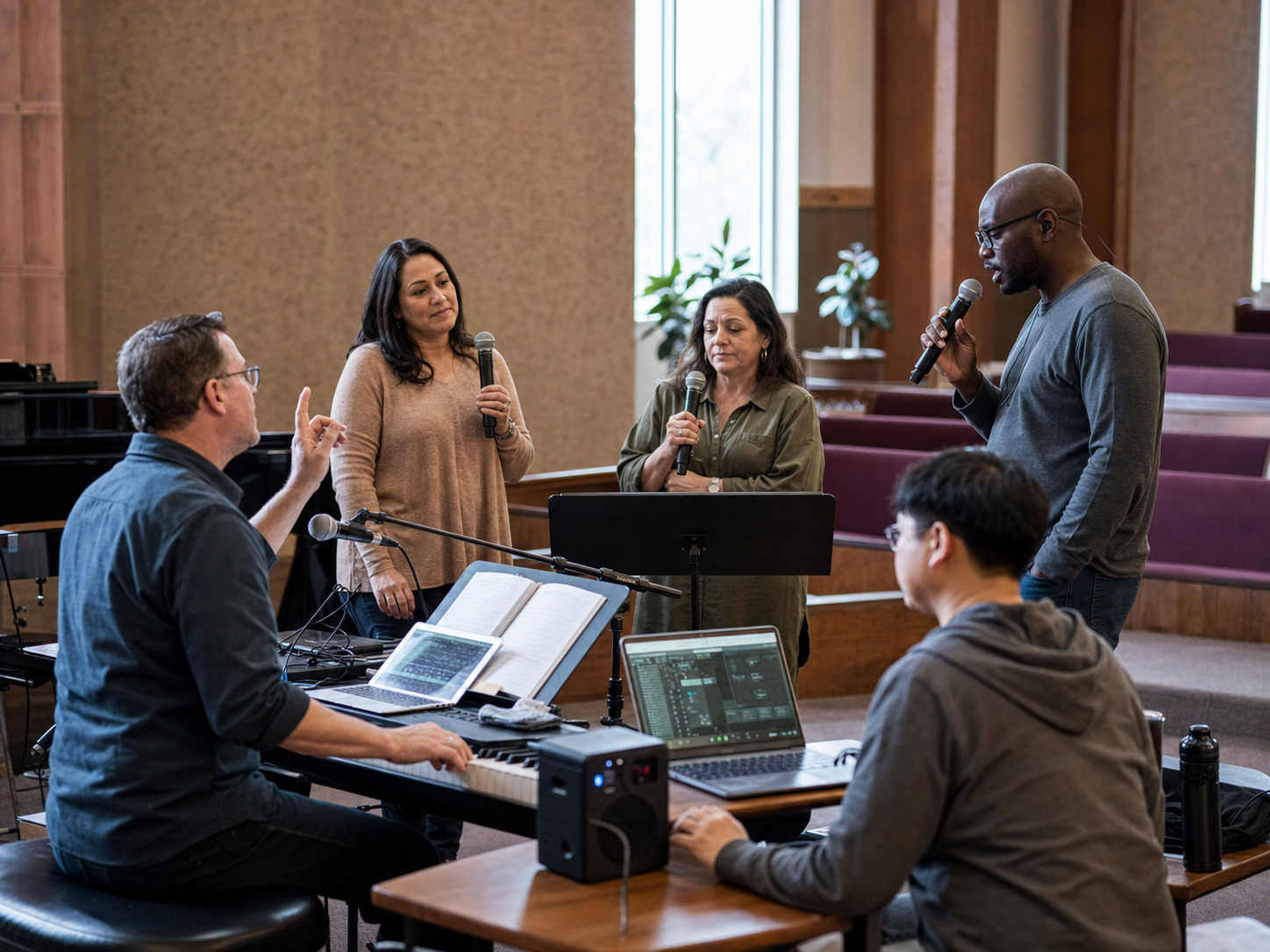
The best worship backing track style is not automatically the newest, biggest, or closest to a familiar recording. It is the arrangement that helps the actual room participate in the actual service.
A small chapel, choir anthem, contemporary worship set, senior-living service, solo feature, and reflective prayer gathering may all need different musical support. The useful decision starts with the service moment, the singers, and the room—not a genre label by itself.
The short answer
Choose a track style by answering four questions:
- Who is carrying the melody: congregation, soloist, choir, or worship team?
- What job does the music have in the service?
- How much rhythmic and instrumental support does the room need?
- Can the singers hear and follow the introduction, key, tempo, and ending comfortably?
Traditional, contemporary, gospel-influenced, piano-led, acoustic, choral, and orchestral arrangements can all be useful. The right style is the one that makes the musical role clearer.
Start with the service job
Before comparing arrangements, name what the music needs to do.
| Service moment | What the track should support | Arrangement question |
|---|---|---|
| Gathering | Help people settle or begin singing together | Is the introduction clear without demanding too much attention? |
| Congregational hymn | Keep melody, key, and pulse easy to follow | Does the accompaniment leave room for ordinary voices? |
| Solo or choir feature | Support a prepared musical offering | Does the arrangement fit the singer or ensemble rather than overpower it? |
| Prayer or reflection | Hold a calm musical frame | Is the texture spacious enough for words, silence, or listening? |
| Children's or youth music | Make entrances and repetition obvious | Can young singers hear where the phrase begins and ends? |
| Closing or sending | Give the room a settled, confident finish | Does the ending match what the service does next? |
One arrangement does not need to solve every job.
Use style labels as clues, not promises
The Spiritrax worship music styles guide can help planners understand broad genre and arrangement families. When choosing a specific track, listen beyond the label.
Piano-led or traditional
A piano-centered arrangement can leave useful space for a soloist, choir, or congregation. It may fit a service where the melody and text need to stay prominent.
Listen for:
- a clear introduction;
- a key ordinary voices can carry;
- enough rhythmic shape to keep the room together;
- and an ending the leader can hear.
Simple does not mean weak. A smaller arrangement can make participation easier.
Contemporary or band-style
A contemporary arrangement may provide a stronger pulse, fuller texture, and familiar worship-team energy.
Listen for:
- whether the groove supports or rushes the singers;
- whether the instrumental build matches the service moment;
- whether the key assumes a high lead vocal;
- and whether the room can still hear its own voices.
A full band texture can help a small team feel supported. It can also cover a congregation if the volume or arrangement density is too large for the space.
Gospel-influenced
Gospel-influenced accompaniment may use stronger rhythmic motion, dynamic development, and responsive musical gestures.
Listen for:
- whether the leader and singers understand the rhythmic language;
- whether the arrangement expects repeats, cues, or vocal responses;
- whether the service has enough rehearsal time;
- and whether the chosen version fits the community's musical practice.
Do not choose a style as decoration. Choose it when the musicians can carry it with respect, preparation, and musical understanding.
Choral or orchestral
A choral or orchestral texture can support a formal anthem, seasonal program, concert-style service, or large musical moment.
Listen for:
- how much room the accompaniment leaves for live singers;
- whether entrances are easy to locate;
- whether the arrangement grows beyond the planned service moment;
- and whether the final chord leaves space for the next prayer, reading, or action.
Large sound should still have a clear purpose.
Acoustic or reflective
An acoustic, lightly scored, or meditative arrangement can work well for prayer, communion, small groups, and quiet services.
Listen for:
- whether the track keeps enough pulse for the leader;
- whether long introductions create uncertainty;
- whether the texture stays supportive at a low volume;
- and whether the ending feels complete without a dramatic finish.
Space is useful only when the room knows how to enter and continue.
Let the room change the decision
The same track can feel completely different in a carpeted classroom, stone sanctuary, fellowship hall, outdoor gathering, or senior-living community room.
Test from the seating area.
- Does the bass become heavy?
- Do percussion or orchestral peaks cover the singers?
- Can people hear the introduction?
- Does the melody remain clear when the room joins?
- Does the track sound thin at a low volume?
- Does the room's echo make quick words or rhythmic detail hard to understand?
Choose the arrangement and playback level together. A track style that works through headphones may need a smaller or more spacious alternative in the actual room.
Choose the key for the people who will sing
Style and key are separate decisions.
A contemporary arrangement may be musically appropriate but sit too high for the congregation. A traditional hymn setting may be familiar but feel too low for the soloist. An orchestral version may sound impressive while forcing the choir to push.
Test:
- the highest sustained phrase;
- the lowest text-heavy phrase;
- the final refrain after the singers are tired;
- and any section where the congregation is expected to join.
If the song is a solo, choose the key for the singer and the service role. If the room will participate, include ordinary congregational voices in the test.
Match the track to the available rehearsal time
A complicated arrangement is not automatically a better arrangement.
When rehearsal time is short, favor:
- an obvious introduction;
- a steady tempo;
- a familiar structure;
- clear phrase endings;
- and few unexpected repeats or instrumental breaks.
When a prepared choir or worship team has more rehearsal time, a fuller arrangement may be appropriate if the group can learn its cues and musical shape.
Use guide-vocal demos to learn melody, entrances, and arrangement details when available. Move to the accompaniment-only file before the service so the live singers know what they must carry.
Compare two arrangements with the same test
Do not listen casually to five seconds of each option. Use one repeatable test.
- Play the full introduction.
- Sing the first verse or section.
- Jump to the most demanding phrase.
- Test the section where the room joins.
- Run the ending and the next spoken cue.
- Listen once from the seating area.
Then compare:
- vocal comfort;
- lyric clarity;
- participation;
- cue confidence;
- room balance;
- and service fit.
The winning arrangement is the one that solves the whole job, not the one with the most exciting preview.
Keep the service from becoming a style sampler
A service can include musical variety without making every song feel unrelated.
Choose one primary sound for the set, then use contrast intentionally. For example:
- a piano-led gathering song;
- a fuller congregational arrangement;
- and a reflective closing track.
Keep key, volume, and transitions under control so the changes feel purposeful. If every track has a different count-in, instrumentation, level, and ending, the worship leader and operator need a written map.
Spiritrax Worship Accompaniment Sets can provide a practical place to compare coordinated backing-track options for different service needs.
Give the operator style-specific notes
The file plan should record more than the title.
For each track, include:
- exact filename and version;
- key;
- arrangement style;
- who leads;
- start cue;
- length of introduction;
- any repeat or instrumental section;
- ending type;
- target playback level;
- and the words or action that follow.
A fuller contemporary or orchestral track may need a lower starting level. A quiet piano track may need enough volume for the room to hear the pulse. A repeating gospel-influenced section may need a clear stop or release note. A reflective track may need silence after the final chord.
Rehearse those decisions instead of discovering them during the service.
A practical track-style checklist
- Name the service job before choosing the arrangement.
- Decide who carries the melody.
- Compare the full introduction, demanding phrase, and ending.
- Test the key with the actual singers.
- Listen from the seating area.
- Match arrangement complexity to rehearsal time.
- Keep guide vocals separate from service files.
- Check repeats, instrumental breaks, and cue landmarks.
- Balance the track so live voices remain present.
- Write the exact version and style on the service plan.
- Download the file and keep a verified backup.
- Confirm public performance, recording, streaming, and lyric permissions separately.
FAQ: choosing a worship backing track style
Which backing track style is best for congregational singing?
Choose an arrangement with a comfortable key, clear melody, steady pulse, useful introduction, and enough space for ordinary voices. The best genre label depends on the congregation and service context.
Should a small church avoid full arrangements?
Not automatically. A fuller track can support a small team when the arrangement and volume fit the room. Test whether it helps people sing or makes them compete with the recording.
Are piano tracks always better for hymns?
Piano-led tracks can be clear and flexible for familiar hymns, but other arrangements may also work. Compare the exact key, tempo, introduction, texture, and ending rather than assuming one instrumentation is always correct.
Can one worship set mix traditional and contemporary tracks?
Yes, when the transitions, keys, levels, and service roles are planned. Use variety intentionally and give the operator a clear map so the changes do not feel accidental.
When should we request a different version or key?
Request a change when the available arrangement does not fit a confirmed singer, congregation, service length, cue, key, tempo, or room need. Explain the practical reason for the request.
The takeaway
Let the service choose the style. Start with the people, the room, and the job the music must do. Compare complete arrangements, test the key and cues, and keep the track at a level that supports live voices. When the musical role is clear, traditional, contemporary, gospel-influenced, piano-led, acoustic, choral, or orchestral accompaniment can all serve well.
Compare coordinated Spiritrax Worship Accompaniment Sets and choose the arrangement, key, and musical shape that fit your singers, room, and service plan.
Browse Worship Accompaniment Sets