
Build Christ the King Sunday Around a Singable Center
Holiday & Special Occasion Music
By Spiritrax Content Studio · August 12, 2026
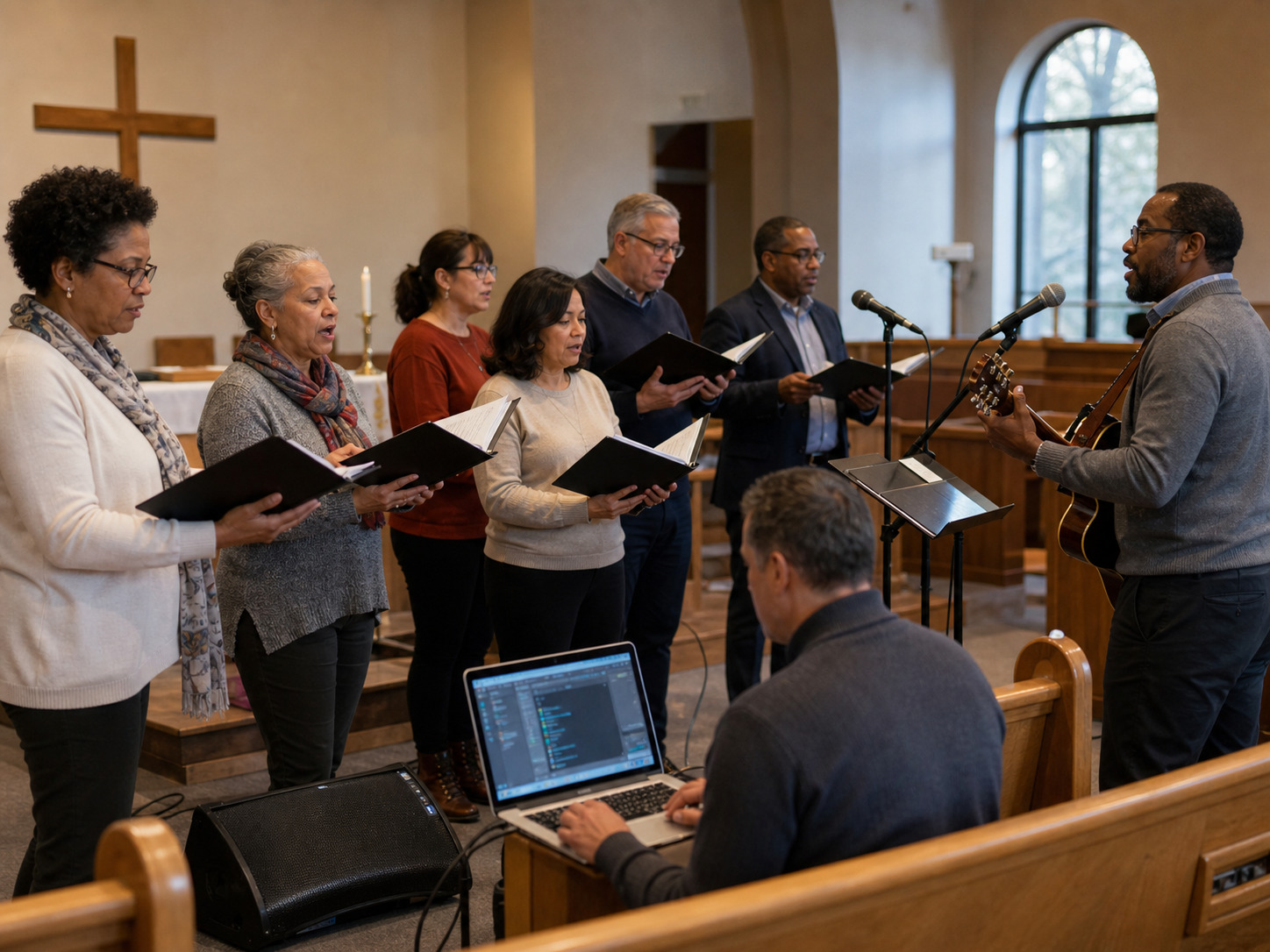
Christ the King Sunday music works best when the service has one singable center and every other musical choice supports it.
In 2026, Christ the King Sunday falls on November 22. For churches that observe the day, it closes the liturgical year just before Advent. The music can acknowledge majesty and hope without making every arrangement grand, loud, or difficult for the congregation to carry.
A familiar hymn, a focused choir or solo selection, a reflective response, and a clear sending song are often enough. Backing tracks can help a small worship team, volunteer choir, soloist, or chapel create that arc with dependable keys, introductions, cues, and endings.
What music works for Christ the King Sunday?
Choose music for four service jobs:
- Gather: give the room a clear, welcoming way to begin.
- Proclaim: support the service's chosen themes and readings without adding claims the local plan has not made.
- Respond: leave room for prayer, reflection, commitment, or congregational singing.
- Send: connect worship with service, mercy, justice, peace, and faithful life beyond the gathering.
The strongest plan is not the one with the most songs about kingship. It is the one in which text, key, arrangement, participation, and placement work together.
Begin with one congregational anchor
Choose one hymn or song that the room can sing with confidence.
That anchor should have:
- a melody people can recognize or learn quickly;
- a key centered for the gathered voices;
- a clear introduction;
- a verse or refrain plan the leader can explain briefly;
- language that fits the service's tradition and readings;
- and an ending that hands naturally to the next prayer, reading, or action.
Use the anchor early enough that it gives the congregation a voice in the service. A choir or soloist can add interpretation later, but the day should not feel like a concert presented to the room.
The Spiritrax Classic Hymns Collection offers familiar accompaniment options that can support congregational, choir, and solo planning. Select the exact piece only after reviewing its text, key, form, and role in the local service.
Let majesty include restraint
Christ the King Sunday can invite large musical gestures, but scale is not the same as meaning.
Contrast gives the service shape:
| Service moment | Useful musical character |
|---|---|
| Gathering | Clear pulse, familiar melody, easy entrance |
| Proclamation | Confident text, focused arrangement, intelligible words |
| Prayer or response | Spacious texture, gentle level, settled ending |
| Choir or solo feature | Enough support to carry the singer without covering the message |
| Sending | Strong direction, comfortable refrain, decisive but unforced finish |
A quiet verse may serve the day better than another full orchestral chorus. Silence after a prayer may carry more weight than continuous underscore. Let the service purpose determine the size of each arrangement.
Build the plan around the readings and local tradition
Different churches observe Christ the King Sunday with different names, readings, emphases, and orders of worship.
Before choosing music, confirm:
- the exact readings or themes selected by local leadership;
- whether the service emphasizes praise, hope, service, justice, peace, compassion, or the close of the liturgical year;
- how the day leads toward Advent in that tradition;
- the role of the congregation, choir, soloist, children, or instrumentalists;
- and any language the church uses or avoids.
Do not build the set from a generic online song list before the service itself has a center. The same hymn can support one congregation's proclamation and feel disconnected in another plan.
Choose keys for the room, not the recording
A powerful recording may sit too high for a mixed congregation or too low for the soloist carrying an exposed verse.
Test:
- the highest repeated congregational note;
- the lowest text-heavy phrase;
- the complete final verse or refrain;
- the leader's first entrance after the introduction;
- the choir's strongest shared range;
- and the soloist's range when the congregation is listening rather than joining.
If the room is expected to sing, center the key on ordinary voices. If a soloist carries the full selection, choose the best key for that singer and make the participation plan clear.
Spiritrax tracks are available in different keys where offered, and custom backing-track support can help with confirmed key, tempo, cut, lead-in, cue, or arrangement needs for a specific service.
Give the choir one clear musical job
A choir does not need to fill every transition.
Choose one role:
- introduce the congregational anchor;
- carry a text-rich anthem or hymn setting;
- sing a response after the reading or sermon;
- support a repeated congregational refrain;
- or lead the sending.
Then prepare that role precisely.
Send choir members the exact title, key, verse plan, repeats, introduction, interludes, ending, and rehearsal reference. Use a guide vocal or demonstration file during learning when it helps. Move to the accompaniment-only file early enough that the choir learns its entrances, balance, and responsibility without a recorded teaching voice.
Rehearse consonants and final words over the fullest part of the track. A confident arrangement still needs understandable text.
Use soloists to clarify, not decorate
A solo can give the congregation space to listen to a complete text, especially when the melody or range is not suited to group singing.
Decide:
- why this person is singing here;
- whether the congregation listens or joins later;
- which verses belong to the soloist;
- how the singer enters after the track introduction;
- whether the final phrase leads to silence, prayer, or applause;
- and what the operator does if the spoken introduction changes length.
Avoid adding a solo simply to make the service feel more special. Its placement should help the service move.
Rehearse spoken-to-musical handoffs
The most fragile moment may be the sentence before the song.
Run:
- welcome into gathering music;
- reading into choir or solo response;
- sermon into congregational hymn;
- prayer into instrumental reflection;
- communion or another service action into music when applicable;
- and final charge or benediction into the sending song.
For each handoff, record the last spoken words, who gives the cue, when playback begins, when the singer enters, and how the music ends.
If the service may pause for prayer or participation, do not rely on a fixed track length to guess the room's timing. Place the complete song after the open-ended moment, use silence, or prepare a clearly controlled musical option that the operator and leader have rehearsed.
Keep backing tracks behind live participation
The track should provide structure without becoming the main event.
Listen from the seating area and check:
- whether the congregation can hear its own singing;
- whether the leader's words remain clear;
- whether the choir hears the pulse and first pitch;
- whether bass or percussion becomes too strong in the room;
- whether a quiet response still feels present;
- and whether the final chord leaves the intended space for speech or silence.
Headphones can hide room problems. Test the actual speaker system, microphones, volunteer operator, and seating area before the service.
Prepare a simple four-part service arc
One practical musical plan might look like this:
1. Arrival or gathering
Use an instrumental or familiar hymn setting at a level that allows people to enter, greet one another, and settle. Do not demand attention before the service is ready to begin.
2. Congregational anchor
Lead the central hymn or refrain in a comfortable key with an unmistakable start. Explain any unusual verse or participation plan in one short sentence.
3. Choir, solo, or reflective response
Give the room a different texture. Keep the arrangement, text, and ending aligned with the reading, sermon, prayer, or service action around it.
4. Sending
Choose music that directs the congregation outward. A confident refrain can work well when the key remains singable and the ending supports the dismissal rather than competing with it.
This is a planning frame, not a required order of worship. Adapt it to the service and tradition actually being prepared.
Make one folder a volunteer can run
Create one service folder with:
- final accompaniment tracks in service order;
- guide vocals in a separate rehearsal-only folder;
- a one-page order with filenames and cue numbers;
- exact verse, repeat, and ending notes;
- playback levels when they change by song;
- the name of the person calling each cue;
- and a backup copy on a second tested device.
Download the files before the service. Do not depend on a personal account, unstable connection, or search result during worship.
Christ the King Sunday music checklist
- Confirm the local readings, themes, and service name.
- Choose one congregational anchor before adding features.
- Match every text to the service's actual purpose.
- Test the key with the people who will sing.
- Give choir and solo selections one clear job.
- Use guide vocals for learning, not the service playlist.
- Rehearse spoken-to-musical handoffs.
- Balance accompaniment behind live words and participation.
- Number final files in service order.
- Keep rehearsal files separate from performance files.
- Download and back up the complete folder.
- Confirm the permissions that apply to public performance, lyrics, livestreaming, recording, and the sound recording.
FAQ: Christ the King Sunday worship music
When is Christ the King Sunday in 2026?
Christ the King Sunday falls on November 22, 2026. Churches may use different names or observances, so confirm the local calendar and service plan before publishing schedules or choosing music.
What hymns work for Christ the King Sunday?
Choose hymns whose exact texts fit the readings and emphasis selected by local leadership. Common planning themes may include praise, hope, peace, service, justice, compassion, faithful witness, or the close of the liturgical year, but the local text and tradition should guide the final choice.
Does every song need to sound grand?
No. A service often benefits from contrast: one confident congregational center, a restrained response, a focused choir or solo selection, and a clear sending. Musical scale should serve the moment rather than become the theme.
Can a small church use backing tracks for the whole service?
Yes, when every track has a clear role, comfortable key, tested introduction, known ending, balanced level, and named operator. Fewer well-prepared selections are usually stronger than a crowded set.
Should the congregation sing with a soloist?
Only when the participation plan is clear and the key works for both roles. Let the soloist carry the piece when the range or arrangement is not congregational, or invite the room to join on a familiar refrain after the soloist establishes it.
The takeaway
Christ the King Sunday does not need musical spectacle to feel complete.
Choose one singable center, build the service around its real readings and tradition, use contrast, prepare choir and solo roles precisely, and rehearse every handoff. Reliable accompaniment serves the day best when it helps the gathered people sing, listen, pray, and leave with purpose.
Build a clear gathering, response, choir or solo feature, and sending path with familiar downloadable hymn accompaniment in practical keys.
Explore the Classic Hymns Collection