
Build the Christmas Service Arc Before You Assign the Soloists
Holiday & Special Occasion Music
By Spiritrax Content Studio · November 2, 2026
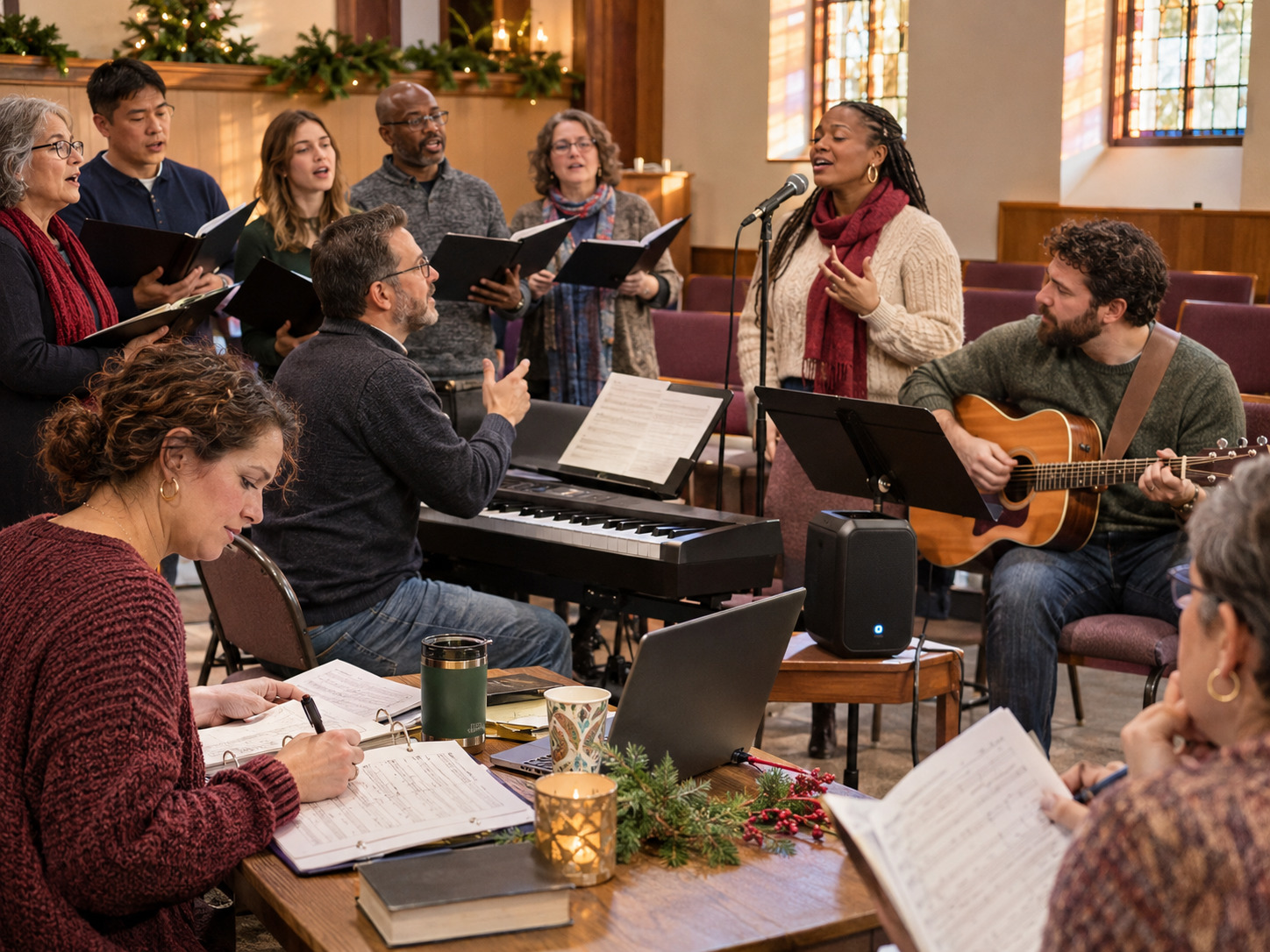
The short answer: plan the emotional and practical arc of the Christmas service before assigning songs to soloists, choir, children, or congregation. A useful set moves the room through gathering, story, reflection, response, and sending. The backing tracks should support those jobs rather than create a string of unrelated seasonal favorites.
That is where a collection can help. Christmas Collection Vol. 2 places twelve familiar and less-familiar carols in one downloadable set, with sheet music and demonstration versions. The value is not simply having more tracks. It is being able to compare contrasting musical roles before rehearsal time is spent on the wrong pieces.
Begin with five service moments
Write the service plan in plain language before naming songs:
- Gather: help the room arrive and join a shared purpose.
- Tell: carry the Christmas story with enough clarity that people can follow it.
- Reflect: make space for wonder, prayer, grief, or quiet attention.
- Respond: let a choir, soloist, or congregation answer what has been heard.
- Send: close with warmth, hope, or communal energy.
Not every service needs all five musical moments. A short candlelight gathering may use one reflective carol and one sending song. A lessons-and-carols service may need several contrasts. The sequence should serve the event, not prove how much music the team prepared.
Use a planning table before assigning singers:
| Service job | Desired energy | Likely leader | Track question |
|---|---|---|---|
| Gathering | clear and welcoming | choir or congregation | Is the opening cue easy to hear? |
| Story | attentive and specific | soloist, reader, children, or choir | Does the arrangement leave room for the text? |
| Reflection | calm and spacious | soloist or small ensemble | Can the room hear quiet words? |
| Response | connected and singable | choir or congregation | Is the key comfortable for the full melody? |
| Sending | hopeful and complete | choir, ensemble, or congregation | Is the final cue unmistakable? |
This keeps the music director from choosing three pieces that all occupy the same emotional space.
Compare songs by function, not popularity
The collection contains twelve tracks in their listed album keys. Rather than ranking them, group them by the job they might do in your particular service.
For a bright opening, “Angels From the Realms of Glory” in G or “Hark! The Herald Angels Sing” in F can offer a clear sense of arrival. Test the complete melody with the actual singers before assuming the familiar title makes the key comfortable.
For story-centered moments, “Bring a Torch, Jeanette, Isabella” in C, “The Friendly Beasts” in D, and “I Am So Glad Each Christmas Eve” in G can support narration, children, or a smaller ensemble when the service design fits. Decide whether the song carries the story itself or follows a reading; do not make a spoken reader and vocalist compete for the same moment.
For reflection, “Infant Holy, Infant Lowly” in G, “It Came Upon a Midnight Clear” in B-flat, and “Do You Hear What I Hear?” in A offer different kinds of quiet and build. Listen beyond the opening. A track that begins gently may grow into a larger final verse, and the service needs to be ready for that trajectory.
For a journey or procession, “We Three Kings” in E minor can create forward motion without requiring a triumphant tone at the start. Rehearse any movement against the actual introduction and phrase lengths rather than estimating from memory.
For sending, “We Wish You a Merry Christmas” in E-flat can suit a communal or community-event close. “Jolly Old Saint Nicholas” in F may be better for a family program, school setting, or seasonal gathering than a worship service. The right placement depends on the event’s purpose and audience.
These are planning possibilities, not fixed prescriptions. Listen to the previews, read the included music, and choose the role that fits your room.
Choose the people after the arc is clear
Once each musical moment has a job, decide who should lead it.
A soloist works well when the service needs one clear point of view. A choir can widen the emotional frame or carry music that depends on shared consonants and releases. A congregation needs a comfortable key, a clear invitation, and enough melodic familiarity to enter without uncertainty. Children need safe movement, age-appropriate range, and visible cue leadership.
Avoid assigning every strong singer a solo simply because the season feels special. The service may become a recital with readings between numbers. Ask what the room needs to do during each song: listen, join, watch a story, pray, move, or leave with a final thought.
Then make the leadership visible. The congregation should know whether to listen or sing before the first vocal entrance. The sound operator should know whether the microphone belongs to one soloist, a shared ensemble, or a leader who will invite the room.
Confirm keys with the complete track
The album page lists one key for each included track. Those keys make the collection convenient, but no single set can guarantee the right range for every soloist, choir, or congregation.
Test the entire piece with the people who will sing it. Do not choose from the opening phrase alone. Check:
- the lowest complete phrase;
- the highest sustained note;
- the final verse after fatigue has accumulated;
- the transition from a reading or previous song;
- and the ability to keep the words clear at the intended dynamic.
If the collection key does not fit, order the individual track in an available alternate key or use the custom-track path when the production needs a different structure. Do not force a singer to make the album key work merely because the file is already in the folder.
Use demonstration versions as rehearsal scaffolding
The collection includes demonstration versions along with the accompaniment downloads. Use the demo to learn melody, entrances, phrasing, and the arrangement’s overall shape. Then move to accompaniment early enough that the singers become responsible for the musical line.
A practical handoff is:
- Listen once and mark the introduction, verse count, transitions, and ending.
- Learn uncertain passages with the demonstration version.
- Alternate short sections between demonstration and accompaniment.
- Run the full piece with accompaniment only.
- Rehearse the same downloaded file, cue, and device that will be used in the service.
The online previews contain a watermark voiceover. The downloaded accompaniment files do not. Use the preview to compare options, but do not build the final service cue around the preview audio.
Connect songs with silence and speech
A good set is shaped by what happens between tracks.
For every transition, write one line that names the event:
- final chord releases into silence;
- reader begins after a visible cue;
- congregation remains standing;
- children move during an instrumental section;
- microphone passes from soloist to leader;
- lights or candles change only after the track ends;
- next file begins from the stage manager or worship leader’s cue.
Run the transitions, not just the songs. A calm carol can lose its effect if the device begins the next track automatically or several people cross the room without a plan. Disable crossfade and autoplay, silence notifications, prevent the device from sleeping, and keep a tested backup.
Keep the track below the words
Christmas arrangements often grow in orchestration. That does not mean the playback level should keep rising.
During sound check, test the quietest text, the fullest accompaniment passage, and the final verse. Listen from the center and sides of the room. Confirm that:
- the first pitch and pulse are audible to the singers;
- the text remains intelligible to the audience;
- solo and choir microphones do not suddenly change the apparent track balance;
- a congregation can hear its own sound;
- movement does not take a leader out of speaker or microphone coverage;
- and the ending is clear enough that no one talks over it accidentally.
Record a short run from audience distance. Fix covered words by adjusting balance before asking singers to push. More volume from the vocalist is rarely the cleanest first solution.
Build one rehearsal that proves the whole arc
Separate music rehearsals are useful, but the team also needs one run that connects the service.
Use this order:
- Start with the spoken or visual cue before the first selected track.
- Run each piece with the assigned leader and final file.
- Include readings, movements, microphone changes, and silences.
- Stop only for safety, a missing cue, or a problem that would prevent the service from continuing.
- After the run, correct the earliest weak transition first.
The goal is not a perfect concert. It is a service in which the music team, readers, sound operator, and room all understand what happens next.
Christmas service set checklist
- Name the purpose of each musical moment.
- Choose contrasting songs rather than several pieces with the same energy.
- Test every listed album key with the complete melody.
- Assign soloist, choir, children, or congregation only after the service arc is clear.
- Use demonstration versions for learning and accompaniment versions for final rehearsal.
- Download and label the exact service files.
- Rehearse spoken cues, movement, silence, and microphone handoffs.
- Balance the track so the words remain clear.
- Disable autoplay, crossfade, notifications, and screen locks.
- Keep a tested backup device and final file list.
Common questions about using a Christmas collection
Do we need to use all twelve tracks?
No. A collection gives the team options. Choose only the pieces that serve the event, available singers, and rehearsal time.
Does every track come in several keys inside the collection?
No. The collection page lists one included key for each track. If that key does not fit, consider an individually available version or a custom request rather than forcing the singer.
Can the demonstration version be used in the service?
Use the demonstration version for learning and reference. The accompaniment download is the performance file when the singers will provide the vocal line.
Should the congregation sing every familiar carol?
Not automatically. Tell the room when to join, choose a singable key, and let some pieces remain choir, solo, or listening moments when that better serves the service.
How early should the playback operator join rehearsal?
Before the final run. The operator needs the approved files, start triggers, transitions, microphone plan, endings, and backup procedure—not only a playlist on the day of the service.
The collection becomes useful when it creates clarity. Choose the service arc, match each track to a real job, confirm the people and keys, and rehearse the spaces between songs. Then preview all twelve options in Christmas Collection Vol. 2 and build only the set your room actually needs.