
Classic Hymns Work Better When the Set Has a Shape
Worship Music & Hymn Resources
By Spiritrax Content Studio · June 23, 2026
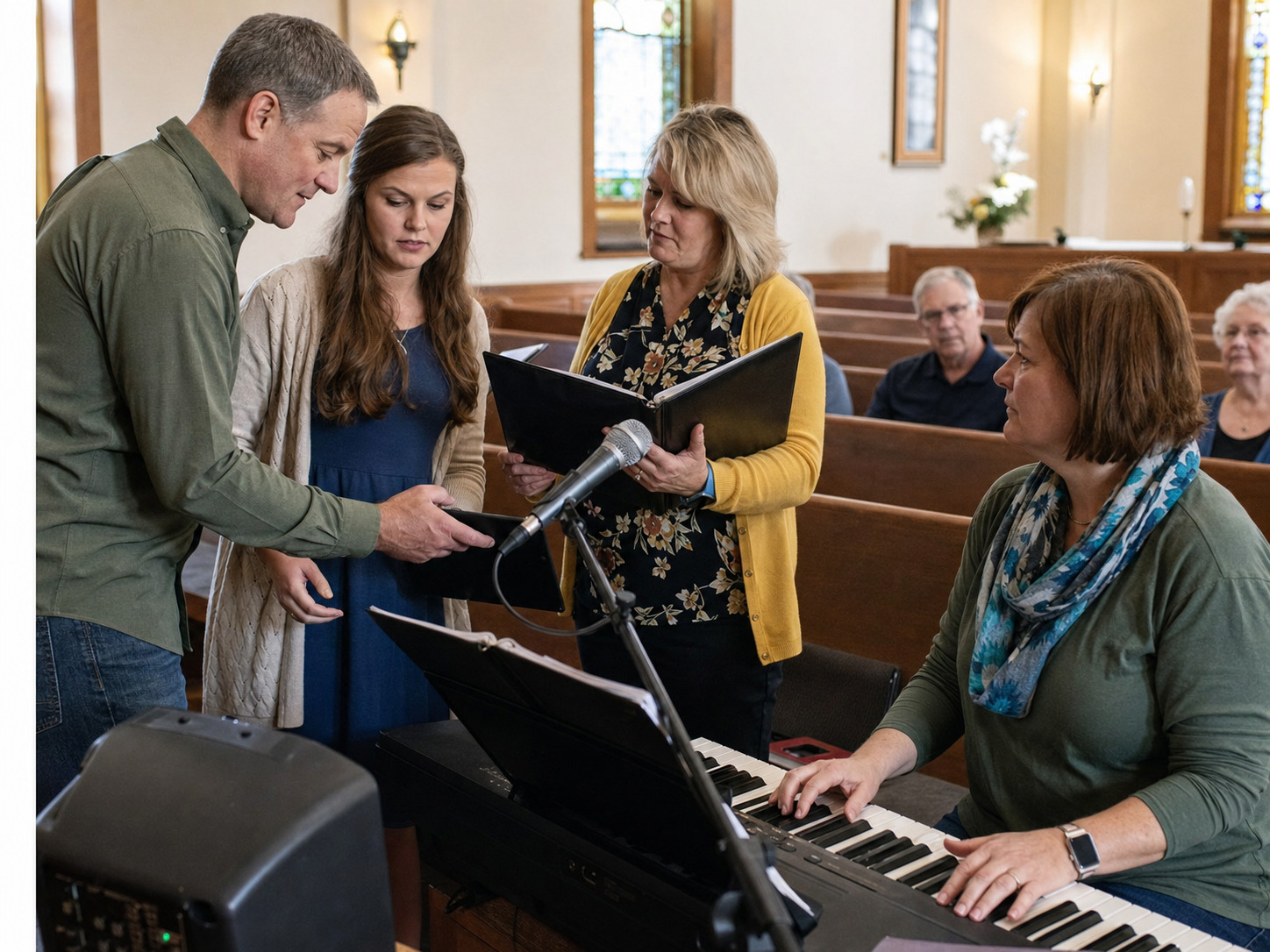
A familiar hymn can still feel hard to lead when the arrangement does not fit the room.
The melody may be known, but the key may sit poorly for the soloist. The introduction may be too short for a congregation to enter confidently. The tempo may feel right for a recording but rushed for a memorial service. The choir may need a guide before singing with accompaniment alone.
That is why classic hymn planning works best as a set, not as a last-minute search for one track at a time.
Start with the moment in the service
Before choosing a track, decide what the hymn needs to do.
It may need to:
- gather the congregation,
- support a soloist,
- give a choir a steady rehearsal reference,
- accompany a prayer or reflection,
- honor a memorial or remembrance moment,
- close the service with a familiar sending song,
- provide music for a small group, chapel, or community event.
The same hymn can feel different in each setting. A solo arrangement may need more space. A congregational moment needs a key people can join. A choir rehearsal may need the clearest possible form and entrances.
When the purpose is clear, the track choice becomes simpler.
Choose keys for real voices, not just the original recording
Classic hymns are often passed around as if everyone sings them the same way. They do not.
A cantor, worship leader, school soloist, senior choir, small group, and congregation may all need different key decisions. If the track sits too high, people stop singing. If it sits too low, the melody loses energy. If the introduction does not make the entrance clear, even a familiar hymn can feel uncertain.
When possible, test the opening phrase and the highest phrase before rehearsal. A track that fits the room will protect confidence before the service begins.
Build a service arc instead of a song pile
A hymn set works better when the emotional shape is intentional.
For a reflective service, you might move from welcome, to prayer, to reassurance, to sending. For a memorial or retirement-community program, you may need more space between songs. For a small church, you may need tracks that support participation without making the room feel like a concert.
Ask:
- Which hymn opens the room?
- Which one supports the central prayer, reading, or message?
- Which one gives the soloist or choir a focused moment?
- Which one sends people out with clarity?
That order matters. A strong song in the wrong place can feel heavier than intended.
Keep solo, choir, and congregational uses separate
The safest planning mistake to avoid is assuming one track version can do every job.
A soloist may need a key chosen for range and expression. A choir may need a steady arrangement that helps sections enter together. A congregation may need a familiar tempo and introduction that invites participation. A rehearsal track may need a guide vocal or especially clear form, while a service track may need accompaniment only.
Label the intended use clearly so the wrong version is not cued during worship.
Use collections when the service needs flexibility
Individual tracks are useful when the service needs one specific hymn. Collections become useful when the music leader needs options across several weeks, recurring services, choir rehearsals, memorial requests, and seasonal programs.
A hymn collection can help when you want:
- several familiar titles available quickly,
- a consistent accompaniment source,
- flexible solo and group options,
- rehearsal continuity for volunteers,
- an easier way to plan small-service music without rebuilding the library every week.
That flexibility can be more practical than solving each service from scratch.
Rehearse the transitions
Classic hymn tracks are often judged by whether the song itself works. In live use, the transitions matter just as much.
Check:
- how much time the introduction gives the singer,
- whether the congregation can hear the entrance,
- where the final chord lands,
- whether a spoken prayer or reading follows too quickly,
- who starts the track,
- who stops or fades it if the moment changes.
Small transition notes can make a backing track feel natural instead of mechanical.
A simple hymn-track planning checklist
Before the service, confirm:
- The hymn's role in the service is clear.
- The key fits the soloist, choir, or congregation.
- Guide vocal and accompaniment-only versions are not confused.
- The introduction gives enough time for the entrance.
- The tempo fits the room.
- The playback device and speaker have been tested.
- The worship leader, cantor, choir director, and sound helper know the cue.
- Any licensing, streaming, recording, or worship-use questions have been checked with the appropriate source.
That last item matters because every setting is different. A backing track can solve the accompaniment need, but it does not answer every rights or usage question for every service or recording.
Build the service library from familiar hymns
If your team needs several dependable hymn options for services, rehearsals, memorials, and small groups, explore the Spiritrax Classic Hymns Collection and choose tracks that fit the room.
FAQ: classic hymn backing tracks
Are hymn backing tracks only for churches?
No. They can also support chapels, retirement communities, memorial services, school programs, small groups, solo recordings, podcasts, and reflective music settings when the arrangement and rights fit the use.
Should a small church use a full hymn collection or individual tracks?
Individual tracks are efficient when you need one title. A collection is helpful when the same team plans several services, recurring programs, choir rehearsals, or memorial requests and needs flexible options ready.
What makes a hymn track easy for a congregation?
The key, tempo, introduction, and form need to be easy to follow. The best track is not always the biggest arrangement. It is the one the room can enter confidently.
Should a choir rehearse with guide vocals?
Guide vocals can help singers learn melody, phrasing, and entrances. As the choir gains confidence, accompaniment-only rehearsal can help them take ownership of the sound.
The takeaway
Classic hymns carry memory, but they still need practical planning.
Choose tracks around the service moment, test the key with real voices, keep solo, choir, and congregational uses labeled, and rehearse the transitions before the room is full. A shaped hymn set gives singers, leaders, and listeners a steadier path through the service.