
Contemporary Worship Tracks Should Leave Room for the Room
Worship Music & Hymn Resources
By Spiritrax Content Studio · June 30, 2026
Updated June 30, 2026
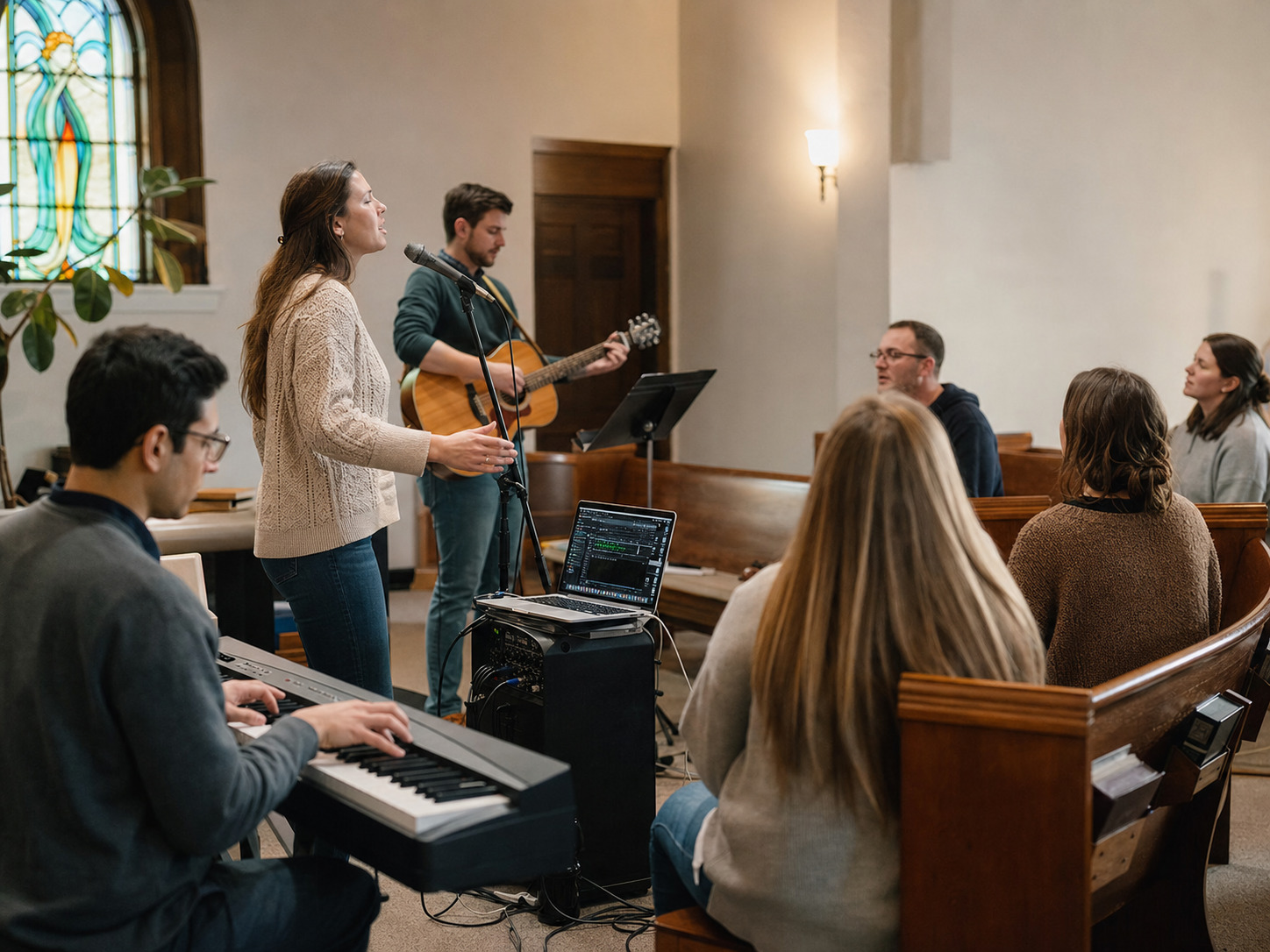
A contemporary worship backing track has to do more than sound full. It has to leave enough space for the people in the room to sing.
That is especially true in small churches, chapel services, youth gatherings, recovery services, and devotional events where the track may carry the band role but still needs to feel supportive. If the arrangement is too busy, the congregation can become an audience. If it is too thin, the leader may feel exposed.
The right plan starts with the service role, not just the song title.
Decide who the track is supporting
Before choosing a track, name the primary job.
Is it supporting:
- a soloist;
- a praise team;
- a small choir;
- a congregation;
- a youth group;
- a prayer or altar moment;
- a recorded devotional or livestream;
- a rehearsal where singers are still learning?
The same song may need a different feel depending on the answer. A soloist may want a clear arrangement with room for phrasing. A congregation may need a steadier pulse and a key that does not sit too high. A small praise team may need enough harmonic support to stay together without fighting the track.
Choose the key for the room, not only the leader
Contemporary worship songs can climb quickly. A key that feels exciting for one lead singer may be too high for casual congregational singing.
When the room is expected to join in, test the chorus with ordinary voices. Ask:
- Can untrained singers reach the repeated high notes?
- Does the verse sit too low for the room to enter confidently?
- Does the bridge build without forcing the leader?
- Will the key still work early in the morning?
- Does the track support the singer without covering the words?
If the song is for a solo, the leader's range matters most. If it is for the room, the congregation's range matters too.
Make the first entrance obvious
Many worship-track problems happen before the first lyric.
The leader needs to know:
- how many measures of intro there are;
- whether there is a count-in or pickup;
- where the first sung phrase begins;
- whether the track starts with pad, piano, guitar, drums, or full band;
- who gives the visual cue to the room.
Write that down in the service order. A simple cue such as "track starts after prayer; leader enters after four measures" can prevent a hesitant first line.
Let the arrangement breathe
A worship track should not compete with the people it serves.
For contemporary songs, listen for:
- a clear tempo that supports the lyric;
- enough instrumental movement to keep the song alive;
- space around verses and prayerful sections;
- a build that feels natural instead of forced;
- an ending the leader can cue cleanly.
If the service moment is reflective, avoid turning every song into a peak. If the room is small, a less crowded arrangement may feel more worshipful than a larger one.
Build a small set with contrast
When using multiple tracks, do not choose three songs that do the same job.
A simple set can include:
| Moment | Track role |
|---|---|
| Gathering | steady, singable, familiar |
| Response | more reflective, room for prayer |
| Sending | clearer lift or confident close |
The Spiritrax worship accompaniment sets can help leaders think beyond a single song when planning services, small groups, and seasonal programs.
Test the playback system in the real room
Laptop speakers, phone speakers, and sanctuary systems tell different truths. A track that sounds balanced in headphones may feel too bass-heavy, too bright, or too quiet through the church system.
Before the service:
- Test the exact file.
- Set the track level before the leader sings.
- Check the first entrance.
- Walk the room if possible.
- Confirm the ending cue.
- Keep the file available offline when the service depends on it.
If the service is livestreamed or recorded, confirm any permissions needed for that use. Keep music, lyric, streaming, and recording questions separate from the practical track plan.
Use product pages as rehearsal tools
Spiritrax contemporary worship pages can help leaders compare available arrangements before rehearsal. For example, a song such as Here I Am To Worship gives a concrete starting point for key, feel, and service placement.
The larger contemporary worship backing tracks category is useful when a worship leader needs to build a small set or find an accompaniment track that fits a specific singer, room, or service moment.
FAQ: contemporary worship backing tracks
Can a small church use worship backing tracks instead of a band?
Yes. A backing track can support a small church when there is no full band, as long as the leader rehearses entrances, levels, keys, and endings before the service.
Should the track be loud enough to lead the congregation?
It should be clear enough to support tempo and harmony, but not so loud that the congregation stops singing. The leader's voice and the room's participation still matter.
What is the best key for congregational singing?
The best key is the one the room can sing comfortably, not always the highest or most dramatic key. Test the chorus with ordinary voices before deciding.
The takeaway
Contemporary worship accompaniment works when it helps the room participate.
Choose the track by service role, test the key with real voices, write the first cue, and keep the arrangement spacious enough for the congregation to sing. When you need a practical starting point, browse Spiritrax contemporary worship backing tracks and choose the version that supports the people in the room.