
Planning an Easter Worship Set With Backing Tracks
Worship Music & Hymn Resources
By Spiritrax Content Studio · March 23, 2026
Updated May 23, 2026
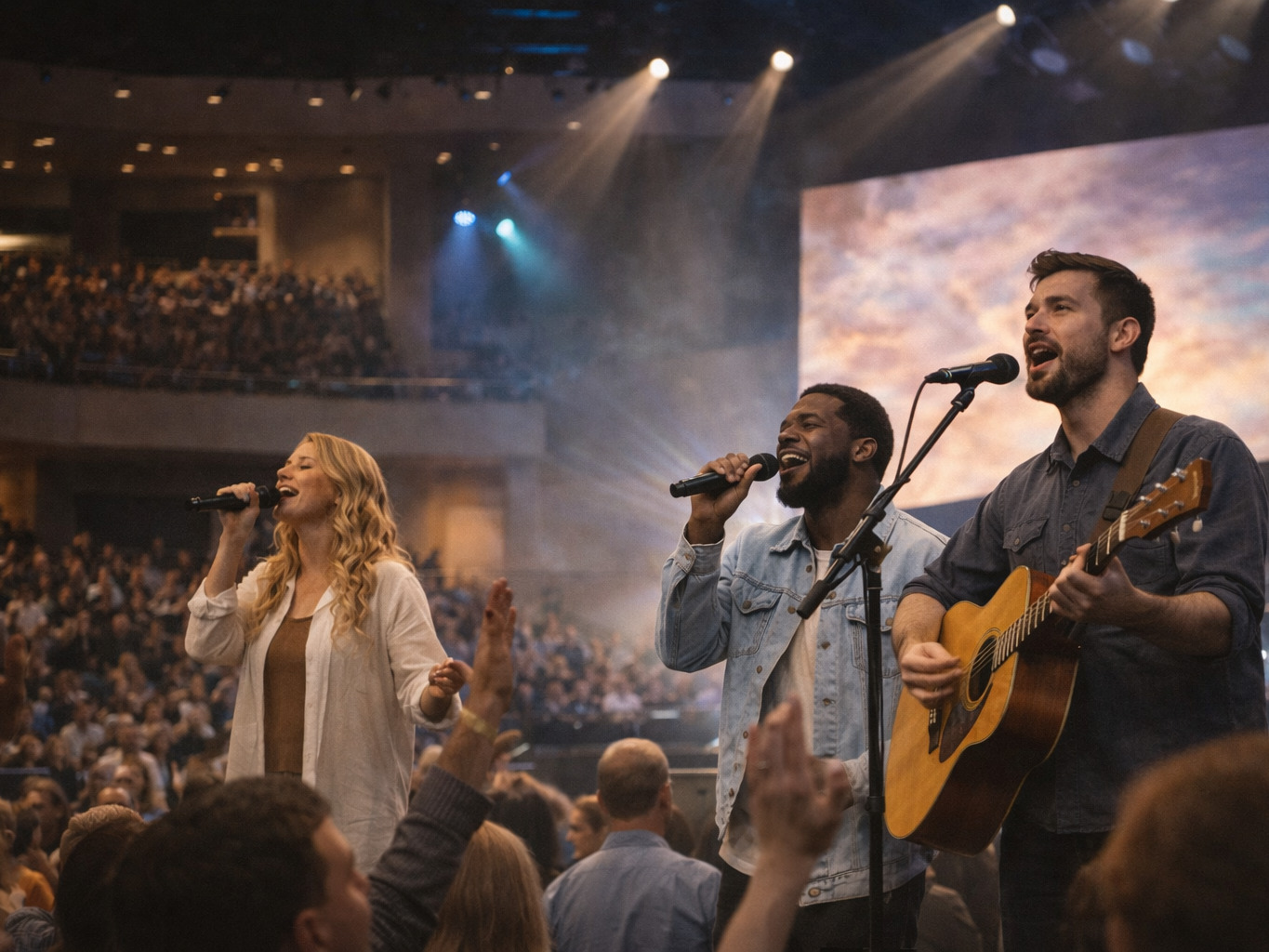
The room fills with light. Children wave palms. The first chord blooms, steady and bright. Your team breathes together. This is the promise of a well-planned Easter set with backing tracks. It keeps the pulse sure, frees the band to lead, and lets the whole church sing with joy.
We’ve discussed warm-ups and choir practice before, like our focused notes on transitions in rehearsal. Today is different. This guide focuses on live flow on Easter morning. We will map the story, set keys, build clean transitions, and create a playback rig that is clear and calm for Spring 2026 and beyond.
Start with the story. Easter is a journey, not just a list of songs. A simple arc works well: a bright call to worship, a strong declaration of Christ’s victory, Scripture or Creed, a reflective moment for communion or baptism, a big resurrection praise, and a joyful sending. When you shape this arc early, your team can align readings and music as one whole. Lock the arc and keys 3–4 weeks out in your service plan so everyone can prepare. Tools like Planning Center Services let you attach songs, media, and notes in one place for the whole team.
Choose congregational keys. Aim for average peaks around C–D for most voices, with very high notes rarely above E. If a song soars beyond that, drop the key or simplify the melody on the final tag. When you build medleys, stay close in key. Neighbor keys or relative major/minor pairs help you glide from one song to the next. Note your final keys and any cuts in your plan so singers, readers, and tech can move together.
Make your transitions disappear. Each track should start with a 1–2 bar count-in in the team’s ears. Keep intros at 4–8 bars so you can read a verse or welcome over the music. Place a continuous pad between songs to cover prayer and Scripture. Treat the pad like its own item in the plan, so your operator can hold or fade as the pastor leads. If you need fresh ideas for choir flow as you prepare, see our rehearsal notes on Backing Tracks for Choir Rehearsals.
Set up your playback carefully. Route the click and spoken cues only to in-ears. A simple stereo split can work in a small room: send click and cues on the left to in-ears, and the band mix on the right to the house. For more control, run a multitrack session with stems for drums, bass, guitars, keys, and BGVs. Use an audio interface with separate outputs and send the click to a pre-fader aux to avoid reaching the congregation. Also, check your wireless and IEMs on big Easter Sundays. Fresh batteries and good antenna placement help prevent dropouts (Shure: Wireless Microphone Basics for Houses of Worship).
Prepare your files like your charts. Keep your sample rate and bit depth the same across your set to avoid any timing drift. Match perceived loudness so your front-of-house doesn’t chase faders after every song. Name files with numbers, like 01_Title, 02_Title, so operators stay calm. Bounce alternatives for a tight service ending or an extended tag for baptisms or communion. This way, the leader can land the moment with care.
In the week before Easter, run the full flow. Test every transition. Label outputs at the stage box. Charge or replace batteries for IEMs and wireless. Pre-load offline copies of your audio on a backup device. Print a one-page service map with bar counts, stop points, and who leads each prayer. Rehearse a spoken Scripture over the intro of your biggest anthem so the room can breathe before the first downbeat. These steps keep things stable when the room is full.
A short rehearsal can still get you ready. Try this 45-minute plan the week of Easter: start with 10 minutes of vocal warm-up and blend. Use ideas in our guide on Leveraging Backing Tracks for Vocal Warm-Ups. Spend 20 minutes linking transitions, only the last 16 bars of each song and the first 16 of the next with pads. Finish with a 15-minute pass of the heaviest segment, like your main anthem plus the response chorus. For choir-specific work on entries, visit our rehearsal tips on Backing Tracks for Choir Rehearsals.
If you stream your service, make sure you are covered. Backing tracks do not replace song licensing. You need permission to stream the compositions you perform. The CCLI Streaming License lets churches stream worship music and covers many songs, but not every publisher, and not artist original recordings. Check coverage for each song and display required on-screen credits.
Have a safety net ready. If a track fails, do not freeze. Lead the room on a simple chorus in the same key, hold a sustaining pad while tech resets, or read a short Scripture while the team reloads. Keep a printed chord chart and a pad track on a separate device for this reason. Your calm voice will carry the room.
As you select songs, think in colors. Start with a classic Easter hymn your church knows by heart, move into a clear modern declaration, rest in a reflective response, then rise into a triumphant send. For congregational keys and ready-to-use accompaniments, explore our Easter options at Easter Collection. If you also lead a solo or student feature in Spring 2026 services, check our recital planning notes.
Easter is the church’s great song. Plan the story, set singable keys, build quiet transitions, and protect your signal path. Then, let your people sing. With a steady track and a steady heart, the good news rings clear.
Build your Easter set in minutes with ready-to-use backing tracks—congregational keys, clean count-ins, guide-vocal options, and mix-ready stems for a seamless Resurrection Sunday.
Build your Easter set in minutes with ready-to-use backing tracks for a seamless Resurrection Sunday.
Download the Easter Collection