
Let “Do You Hear What I Hear?” Grow One Voice at a Time
Holiday & Special Occasion Music
By Spiritrax Content Studio · September 29, 2026
Updated September 29, 2026
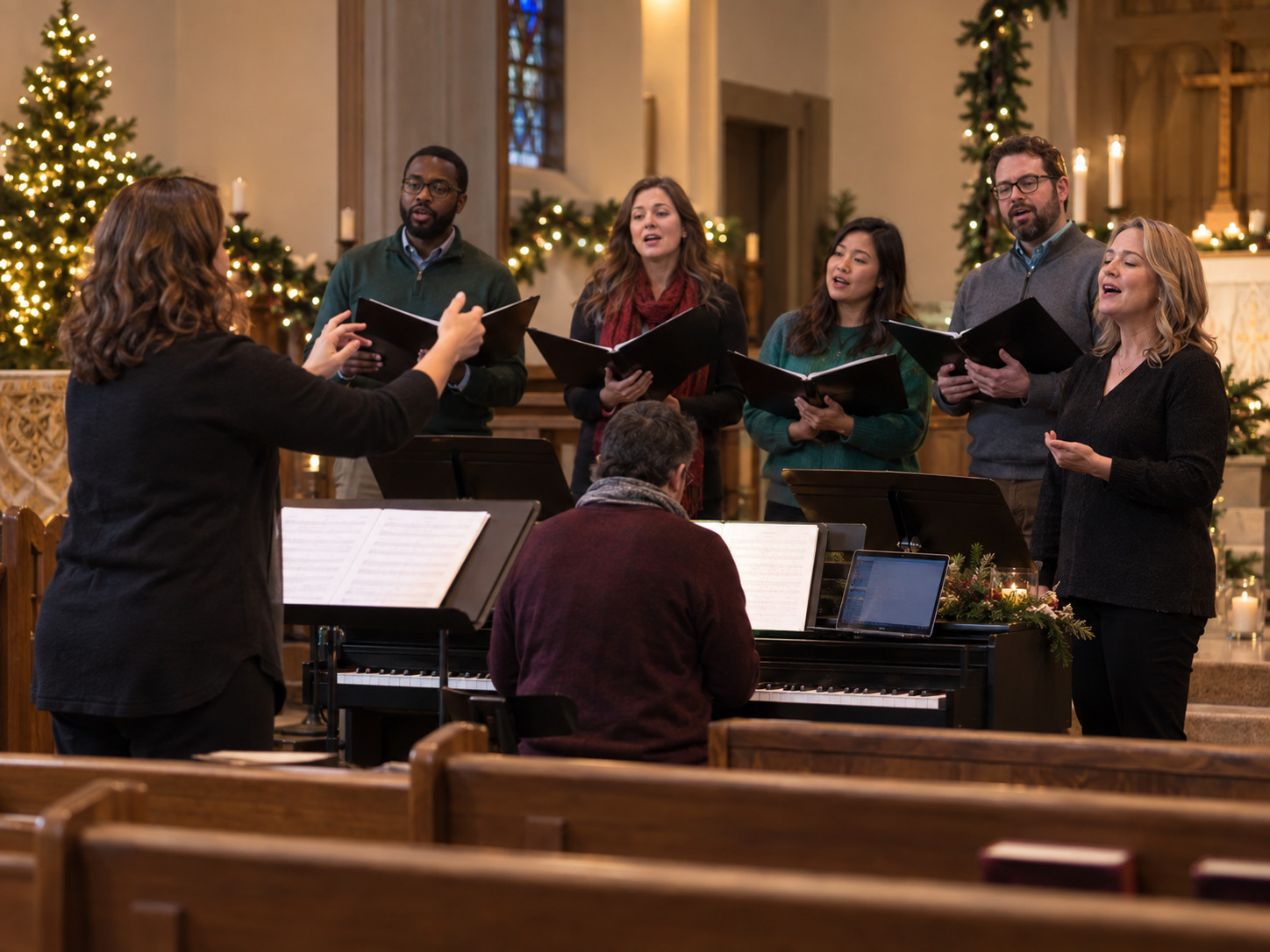
The short answer: choose the “Do You Hear What I Hear?” key for the people who will sing the entire arrangement, then rehearse the song as a growing exchange rather than one unbroken wall of sound. Make the first entrance clear, let each section add energy, and save the fullest sound for the point where the room is ready to receive it.
Spiritrax offers this mellow, pop-infused Christmas backing track in C, D, F, and A major. The product page identifies it as suitable for children, solo, or choral performance, so the best rehearsal plan begins by deciding who is actually leading and how everyone else joins.
Preview the exact arrangement first
“Do You Hear What I Hear?” exists in many recorded versions. Do not assume the introduction, verse plan, instrumental shape, or ending will match a familiar performance.
Open the Spiritrax “Do You Hear What I Hear?” backing track and preview the versions you are realistically considering. Confirm:
- the selected key;
- the introduction and first entrance;
- the arrangement’s mellow pop feel;
- where the accompaniment grows or settles;
- the complete verse sequence;
- any instrumental spaces;
- and the final ending.
The online preview includes a watermark voiceover; the downloaded accompaniment does not. Treat the voiceover as a preview marker, not a cue that will exist in rehearsal or performance.
Choose the key with the complete group in mind
The easiest opening is not always the best key. A soloist may feel comfortable at the beginning and still work too hard when the arrangement grows. A children’s group may sing the melody easily but lose clarity at the lower edge. A mixed choir may need a key that supports both the lead and the people joining later.
Use this practical key test:
- Preview C, D, F, and A major.
- Ask the lead singer or section to sing the opening in each realistic option.
- Jump to the strongest later passage instead of stopping after one phrase.
- Add the singers who will join at that point.
- Continue through the ending so the group proves stamina and clarity.
- Listen from the room, not only beside the speaker or monitor.
Choose the version in which words remain understandable and the group can finish without pushing. If none of the offered keys fits the actual singers, use the product’s customization option after the musical need is clear.
Decide who carries each part of the story
The song’s repeated questions and expanding images make it useful for a soloist, children’s group, worship team, or choir. The arrangement becomes clearer when every group has a job.
A simple plan might assign:
- the opening to one soloist or unison group;
- a later section to a second voice, section, or children’s choir;
- a fuller passage to the complete ensemble;
- and the final statement to the group that can carry the strongest sound without forcing.
These are planning choices, not a fixed requirement. Build the distribution around your singers, service, concert, or pageant. Write it into the rehearsal notes so no one has to guess who is active when playback begins.
If one soloist carries the complete song, the same principle still applies. The singer should know where the focus widens and how the vocal color changes as the arrangement grows.
Rehearse the question-and-response shape
Before singing the whole track, speak through the sequence of ideas in your own words. Identify who poses each question, who receives it, and what becomes newly understood.
Then rehearse short musical handoffs:
- Begin one phrase before a new singer or section enters.
- Name the audible landmark under the entrance.
- Ask the receiving group to listen before singing.
- Continue through the first complete phrase after the handoff.
- Repeat without verbal coaching.
This prevents the ensemble from sounding as if everyone is waiting for a turn. A response should feel connected to what came before it, even when the accompaniment file remains exactly the same every time.
Build dynamics without simply adding volume
The arrangement can grow through texture, focus, and participation as well as loudness.
Try one change at a time:
- move from solo to unison;
- add a small harmony group;
- broaden the vowel without pressing the tone;
- let the choir enter while the soloist remains visually active;
- shift the listener’s focus from one section to the full group;
- or use the room’s natural sound before raising amplification.
Record a short rehearsal from the audience position. Listen for words, balance, and the emotional arc. If the later passage only sounds busier, reduce a layer and clarify who carries the thought.
Save the fullest sound for a section that has earned it. Beginning at maximum intensity leaves the song nowhere to grow.
Give children and occasional singers a reliable entrance
When children or less experienced singers participate, consistency matters more than complexity.
Teach the entrance from the actual introduction, not from a spoken count that will disappear in performance. Give the group one visible leader and one clear breath. If they join after another singer, practice listening through the preceding phrase instead of starting directly on their line.
Keep the rehearsal file name and selected key identical across leaders, families, and playback devices. A child who practices in one key and arrives to a different version is being asked to solve a preventable problem.
Do not leave the group dependent on someone singing loudly beside them unless that person will lead in the final setting. Use that support while learning, then reduce it before the performance.
Set playback below the words
The track should establish the pulse and musical color without covering the singers.
At sound check:
- use the actual playback device and speakers;
- start from the real room position;
- test the opening at the planned level;
- add every singer who will participate;
- listen from the audience or congregation;
- check the strongest section separately;
- and continue through the ending.
Avoid setting volume in an empty room if the final gathering will absorb and reflect sound differently. Recheck after the choir, children, music stands, and seasonal decorations are in place.
If a soloist uses a microphone, set the vocal first, then bring the accompaniment underneath it. The singer should not have to push simply because the track level was chosen in isolation.
Rehearse the service or program handoff
The performance begins before the first note and continues after the last one.
Agree on:
- who introduces the song, if anyone;
- who starts playback;
- what the visible leader does during the introduction;
- how the first singer or group enters;
- what happens during instrumental spaces;
- who releases the final sound;
- and whether prayer, narration, silence, applause, or another cue follows.
Run from the event before playback through the first complete phrase. Then rehearse the final section into the next event. That short work prevents a prepared song from sitting awkwardly inside an otherwise unprepared service or program.
Christmas rehearsal checklist
- C, D, F, and A-major previews were compared with the actual singers.
- The selected file and key are written in the service or concert order.
- Every soloist, section, or children’s group knows where it enters.
- Each handoff has an audible and visible cue.
- The arrangement grows through texture and focus, not only volume.
- Words remain clear at the strongest point.
- Playback was tested from the audience position.
- The first entrance and final release were rehearsed with the operator.
- The next spoken, musical, or silent moment is planned.
FAQ: “Do You Hear What I Hear?” backing tracks
Which keys does the Spiritrax track offer?
The product page lists C, D, F, and A major. Preview the complete arrangement in the realistic options before choosing for a soloist, children’s group, or choir.
Can the track work for a children’s Christmas program?
The product page identifies the arrangement as suitable for kids, solo, or choral performance. Choose a singable key, give children a visible leader, and rehearse entrances from the actual playback introduction.
Should a soloist or choir lead?
Either can work. Decide who carries the opening, where other voices join, and which group can sustain the final section clearly. Write that plan down before rehearsal.
What if the four listed keys do not fit?
Identify the exact range or ensemble problem after testing the full arrangement, then use the customization route on the product page rather than asking generally for an easier version.
The useful final test is not whether the group can sing one strong passage. It is whether everyone can hear the opening, enter with confidence, carry the arrangement’s growing shape, and release the ending together. When those pieces are clear, the backing track supports the message without asking the room to chase it.
Preview the C, D, F, and A-major versions, then choose the key that keeps the complete arrangement clear for your soloist, children, or choir.
Preview the Available Keys