
Father’s Day Worship Music Works Best When It Stays Singable
Worship Music & Hymn Resources
By Spiritrax Content Studio · June 11, 2026
Updated June 11, 2026
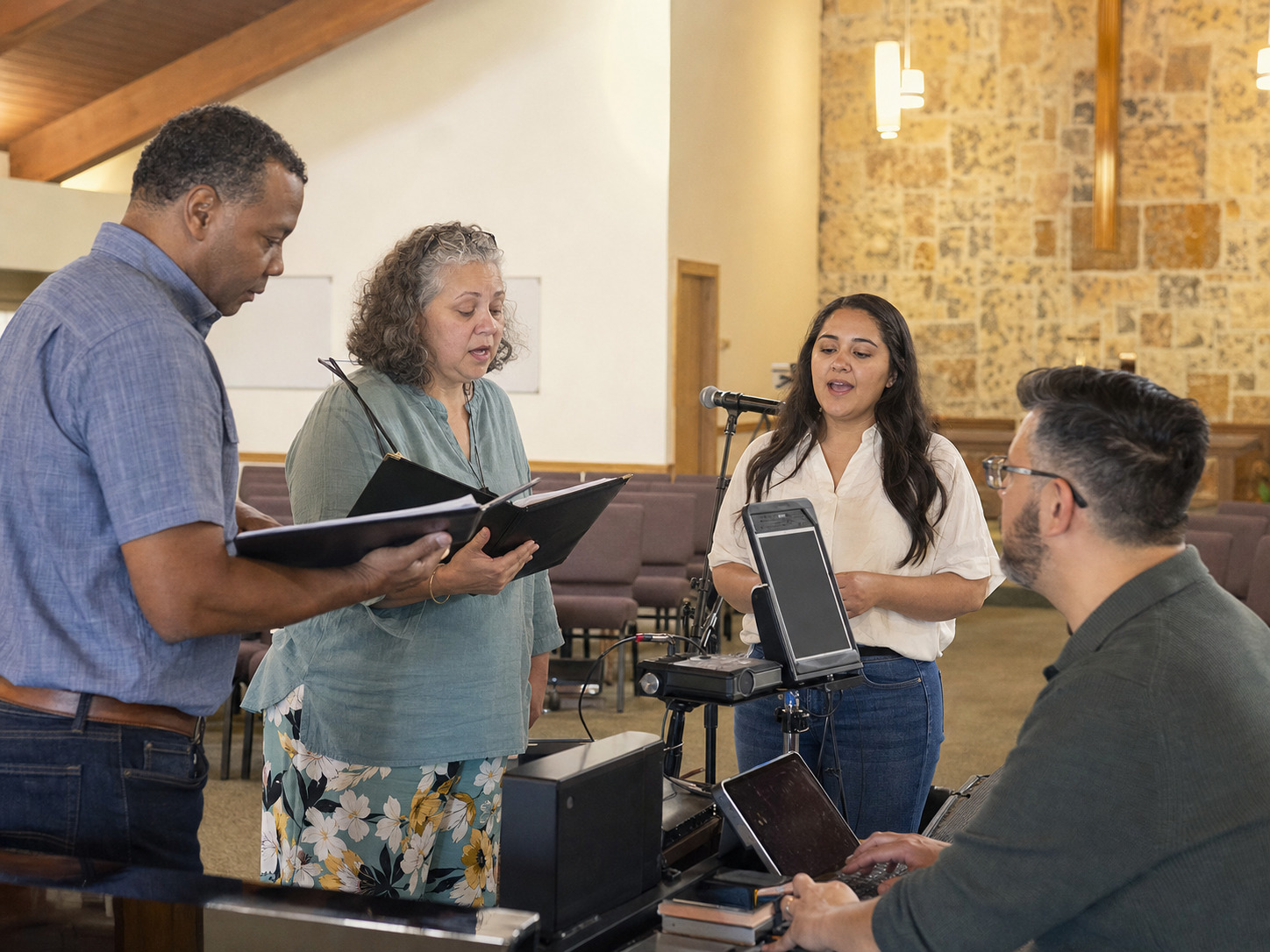
Father’s Day music can become too complicated when the service tries to make one song carry every emotion in the room.
Some people arrive ready to celebrate. Some arrive with grief, distance, gratitude, mixed memories, or quiet reflection. Worship music has to leave space for that range while still helping the congregation sing.
A backing track can help when the arrangement is clear, the key is comfortable, and the cue does not surprise the singer or sound team. The best plan is simple: choose a hymn or solo with a clear service purpose, test the key, and keep the moment grounded.
Start with the worship purpose
Before choosing a song, decide what the music is doing in the service.
It might be:
- a congregational hymn,
- a solo during offering or reflection,
- a prelude or postlude,
- a children’s or family ministry moment,
- or a quiet musical response after prayer.
Those settings need different energy. A congregational hymn should be singable for the room. A solo can be more expressive. Prelude music can settle people before the service begins. A response after prayer should leave room for the words that came before it.
Choose hymns that leave room for the congregation
Father’s Day does not require a crowded song list. One well-chosen hymn can often do more than several pieces that compete for attention.
Spiritrax search results include Father-related hymn options such as Faith of our Fathers and This Is My Father’s World. The right choice depends on the service tone, the singer, and whether the congregation will join.
For a broad worship moment, choose a song that supports gratitude, faithfulness, care, and prayer without forcing the service into sentimentality.
Test the key with the real singer
Many hymns feel familiar until someone has to sing them with a microphone, in front of people, and without a live accompanist adjusting in the moment.
Before service day, test:
- whether the first phrase starts comfortably,
- whether the highest phrase stays steady,
- whether the final verse still has enough breath,
- whether the congregation can join if invited,
- and whether the track introduction gives the singer enough time to enter.
The best key is not always the original key. It is the key that lets the words land clearly.
Give the sound team a simple cue
Backing tracks work best when the sound team knows exactly when to start and what happens next.
Write down:
- track title,
- service placement,
- who gives the start cue,
- whether the singer speaks before the track,
- microphone needs,
- volume level for solo or congregation,
- and whether the track should fade, stop cleanly, or continue under a transition.
That is especially helpful when the service uses volunteers or a rotating sound team.
Keep the moment pastorally aware
Father’s Day can be joyful, but it can also be sensitive. A service plan should respect both.
Music can help by staying warm, grounded, and singable. Avoid turning the song into a showcase if the service moment is meant to support prayer. Avoid overexplaining the theme if the hymn already carries the message. Let the worship leader frame the moment with care, then let the track support the singing.
Build a short rehearsal flow
A simple rehearsal can prevent most issues.
Try this sequence:
- Listen through the full track once without singing.
- Mark the intro, first entrance, any interlude, and ending.
- Sing the hardest phrase at service volume.
- Practice the spoken introduction into the track start.
- Confirm the sound team knows the start cue and stop point.
- Keep a downloaded backup file available.
The goal is not to over-rehearse. The goal is to remove surprises.
Use a track differently for solo and congregation
A soloist can follow a track closely and shape the phrase around the recording. A congregation needs more obvious entrances and a tempo that feels comfortable for many voices.
If the room will join:
- choose a moderate tempo,
- keep the introduction clear,
- avoid a key that sits too high,
- provide lyrics through the normal worship materials,
- and have the leader model the first entrance confidently.
If the song is a solo:
- check the singer’s breath plan,
- confirm microphone distance,
- rehearse the ending,
- and make sure the track does not start before the singer is emotionally ready.
Pair the song with the service order
Placement changes how the song feels.
A Father’s Day hymn can work as:
| Service moment | Music role | Planning note |
|---|---|---|
| Prelude | Settles the room | Keep volume gentle and unobtrusive |
| Congregational hymn | Lets the room sing | Choose a comfortable key and clear intro |
| Offering or reflection | Supports prayer | Let the soloist avoid rushing the text |
| Closing | Sends the room out | Keep the ending clean and confident |
The same track can feel different depending on where it appears. Choose the placement before final rehearsal.
FAQ: Father’s Day worship backing tracks
What songs work for Father’s Day worship?
Father-related hymns such as Faith of our Fathers or This Is My Father’s World can work when they fit the service tone. Broader hymns about faithfulness, care, creation, gratitude, and prayer may also be appropriate.
Should the congregation sing or should it be a solo?
Use congregational singing when the key and tempo are comfortable for the room. Use a solo when the service needs a quieter reflective moment or when the song is not easy for the full congregation.
How should we rehearse with a backing track?
Listen through once, mark the intro and ending, test the hardest phrase, rehearse the spoken cue into the track start, and confirm microphone and playback levels with the sound team.
Should a Father’s Day post or service include an ad-style interruption?
For worship planning, keep the reader and service experience focused. The planning path works best without interrupting the pastoral tone.
The takeaway
Father’s Day worship music does not need to be elaborate to be meaningful.
Choose one clear musical purpose, test the key with real voices, give the sound team a simple cue, and let the track support the service instead of taking over the moment.
Prepare a Father’s Day service, solo, or hymn moment with a dependable Spiritrax accompaniment track your singer, worship leader, and sound team can follow.
Listen to Faith of our Fathers