
Give Every Verse of “For All the Saints” a Clear Leader
Worship Music & Hymn Resources
By Spiritrax Content Studio · October 2, 2026
Updated October 5, 2026
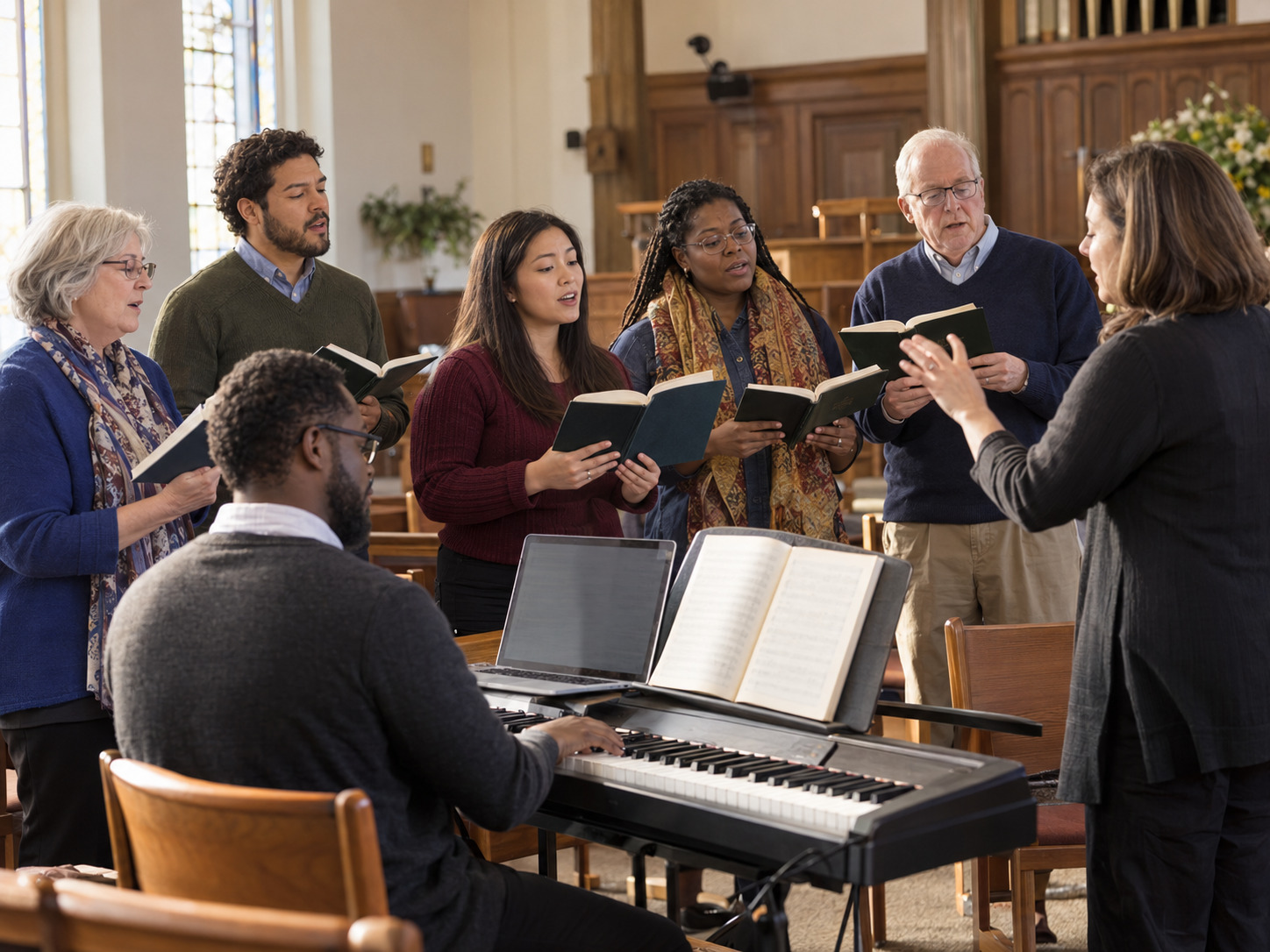
The short answer: choose a “For All the Saints” backing-track key by singing the complete fourth verse, then plan how each verse will widen or settle. The hymn should carry remembrance, confidence, and hope without asking the choir or congregation to push for four straight verses.
Spiritrax offers “For All the Saints” in G, E, B-flat, and C major. The product page describes a four-verse arrangement with solo piano and viola. That smaller texture can support a soloist, choir, or lightly led congregation when the leadership and service transitions are clear.
Choose the key with the last verse
Do not select a key after only the opening phrase. A hymn that feels comfortable at the start can become tiring after several verses, especially when the final section carries the greatest energy.
Use this key test with the people who will lead:
- Preview G, E, B-flat, and C major.
- Sing the first complete phrase in each realistic option.
- Move to the fourth verse and sing it through the ending.
- Listen for clear words, free tone, and a dependable final entrance.
- Choose the version the group can still carry after the preceding service music and spoken elements.
The lowest option is not automatically best. A key can sit too low for the text to speak clearly, just as a higher option can encourage pressing. Choose for the actual soloist, choir, or congregation rather than for a recording you remember.
If none of the listed versions fits, the product page provides a customization route. Identify the exact range or pacing problem after testing the complete arrangement.
Give every verse a clear job
Four verses can feel repetitive when the only plan is to sing each one louder. Instead, name who leads, what the room should hear, and how the accompaniment supports that moment.
One practical service plan is:
| Verse | Possible leader | Musical job |
|---|---|---|
| 1 | Soloist or small group | Establish a steady, prayerful center |
| 2 | Choir | Widen the sound while keeping the text clear |
| 3 | Choir and congregation | Invite shared participation without rushing |
| 4 | Full group | Carry a confident final statement and settled ending |
This is only a starting point. A soloist may lead all four verses, or the congregation may sing from the beginning. The important detail is that nobody has to guess who carries the next entrance.
Write the assignments into the service order. “Choir joins later” is too vague. Name the verse and the cue.
Let the arrangement shape the room
Piano and viola can create warmth and movement without the weight of a full orchestral track. Keep that character in mind when setting playback and directing the singers.
Listen once without singing and mark:
- the introduction and first entrance;
- the space between verses;
- any change in texture or motion;
- the cue that prepares each new verse;
- the final approach;
- and the length of the ending.
Do not fill every interlude with spoken explanation. Decide whether the room needs a breath, a visible cue, a procession movement, or simple listening.
At sound check, set the live voices first and bring the track underneath them. A quiet arrangement can disappear in a full sanctuary, but raising playback until it covers consonants defeats the purpose. Listen from the seating area, not only from beside the speaker or keyboard.
Rehearse remembrance without making it performative
All Saints services may include grief, gratitude, family memories, prayer, and the naming of people who have died. The hymn should support that pastoral work, not compete with it.
If names, candles, photographs, or a period of silence appear elsewhere in the service, decide whether the song comes before, during, or after that action. Do not assume a fixed backing track can stretch around an unpredictable reading of names.
For a flexible remembrance moment, keep the spoken action separate from the track or use a clearly rehearsed instrumental section only when the timing has been tested. One person should own the playback cue, and the service leader should know exactly when the music begins and ends.
Avoid adding volume simply to signal importance. A confident unison entrance, clear text, or a wider group of singers can create the needed lift while preserving the service’s tone.
Teach the verse handoffs
The spaces between verses are where a congregation often loses confidence. Singers may wonder whether the next verse begins immediately, after an interlude, or on a visible cue.
Practice each handoff in a short loop:
- Begin with the final phrase of one verse.
- Listen through the complete interlude.
- Give the intended visual or breathing cue.
- Sing the first complete phrase of the next verse.
- Continue far enough to establish the pulse.
Use the same cue in rehearsal and service. If the choir director gives one gesture, the soloist uses another, and the playback operator is watching a third person, the room will hesitate.
For congregational singing, let the choir or worship leader model the first consonant and vowel clearly. The cue should invite participation without turning the leader into a guide vocal over the entire verse.
Keep the words in front of the playback
Long hymn lines need steady breath and understandable consonants. Rehearse at the playback level the room will actually use.
Check:
- whether the first word of each verse speaks cleanly;
- whether sustained notes remain free rather than pressed;
- whether final consonants release together;
- whether the group can hear the piano pulse and viola line;
- and whether the last verse stays clear when more people join.
If the singers begin forcing, lower the playback before asking for more vocal sound. If the pulse feels uncertain, move the speakers or help the group hear the accompaniment’s rhythmic center rather than making the track louder everywhere.
Connect the hymn to the whole service
Plan the music on both sides of the track.
Before the hymn, confirm:
- what spoken, silent, or processional moment leads into it;
- who gives the playback cue;
- what the visible leader does during the introduction;
- and who begins verse one.
After the hymn, confirm:
- who releases the final sound;
- how long silence remains;
- whether prayer, a reading, Communion, a blessing, or dismissal follows;
- and whether the operator should stop, fade, or simply let the file finish.
Run those handoffs with the actual device and service leaders. A secure song can still create an awkward service moment when nobody owns the transition afterward.
A 20-minute rehearsal plan
Minutes 1–4: compare complete keys
Test the first phrase and full fourth verse in G, E, B-flat, and C major as appropriate. Select one version.
Minutes 5–8: assign the verses
Name who leads each verse and what changes in participation, color, or dynamic.
Minutes 9–13: loop the handoffs
Practice the end of each verse, the interlude, and the next entrance.
Minutes 14–17: balance the room
Sing the complete arrangement with the intended microphones, speakers, and positions. Listen from the congregation area.
Minutes 18–20: prove the service edges
Run the introduction from the preceding moment and the final ending into what follows.
All Saints hymn checklist
- G, E, B-flat, and C-major previews were compared with the actual leaders.
- The selected key works through the complete fourth verse.
- Every verse has a named leader and musical job.
- The spaces between verses have been rehearsed.
- The choir or congregation can hear the accompaniment without losing the words.
- Any remembrance action has its own clear timing and owner.
- The introduction and ending connect to the service order.
- The final file is downloaded and tested on the playback device.
- A backup copy is available to the operator.
- Performance, lyric, livestream, recording, and sound-recording permissions have been checked separately as applicable.
FAQ: “For All the Saints” backing tracks
Which keys does Spiritrax offer?
The product page lists G, E, B-flat, and C major.
How many verses are in this arrangement?
The Spiritrax product description identifies a four-verse arrangement with piano and viola accompaniment.
Should every verse get louder?
No. Give each verse a clear leader and purpose. Participation, tone color, text, and silence can create shape without a constant increase in volume.
Can the track run under a reading of names?
Only when the timing has been carefully tested. A fixed track cannot wait for a longer name or pause. Keeping the spoken remembrance and hymn separate is often the safer plan.
What if none of the listed keys fits?
Test the complete final verse, identify the specific range or pacing problem, and use the product’s customization option to describe the needed change.
The useful final test is whether the music helps the room remember and sing together without drawing attention to the mechanics. When the key, verse leadership, handoffs, and service transitions are settled, the accompaniment can remain quietly supportive.
Preview G, E, B-flat, and C major, then choose the track your singers can carry through all four verses.
Preview the Four Keys