
Fourth of July Backing Tracks for Church and Community Events
Holiday & Special Occasion Music
By Spiritrax Content Studio · May 7, 2026
Updated May 13, 2026
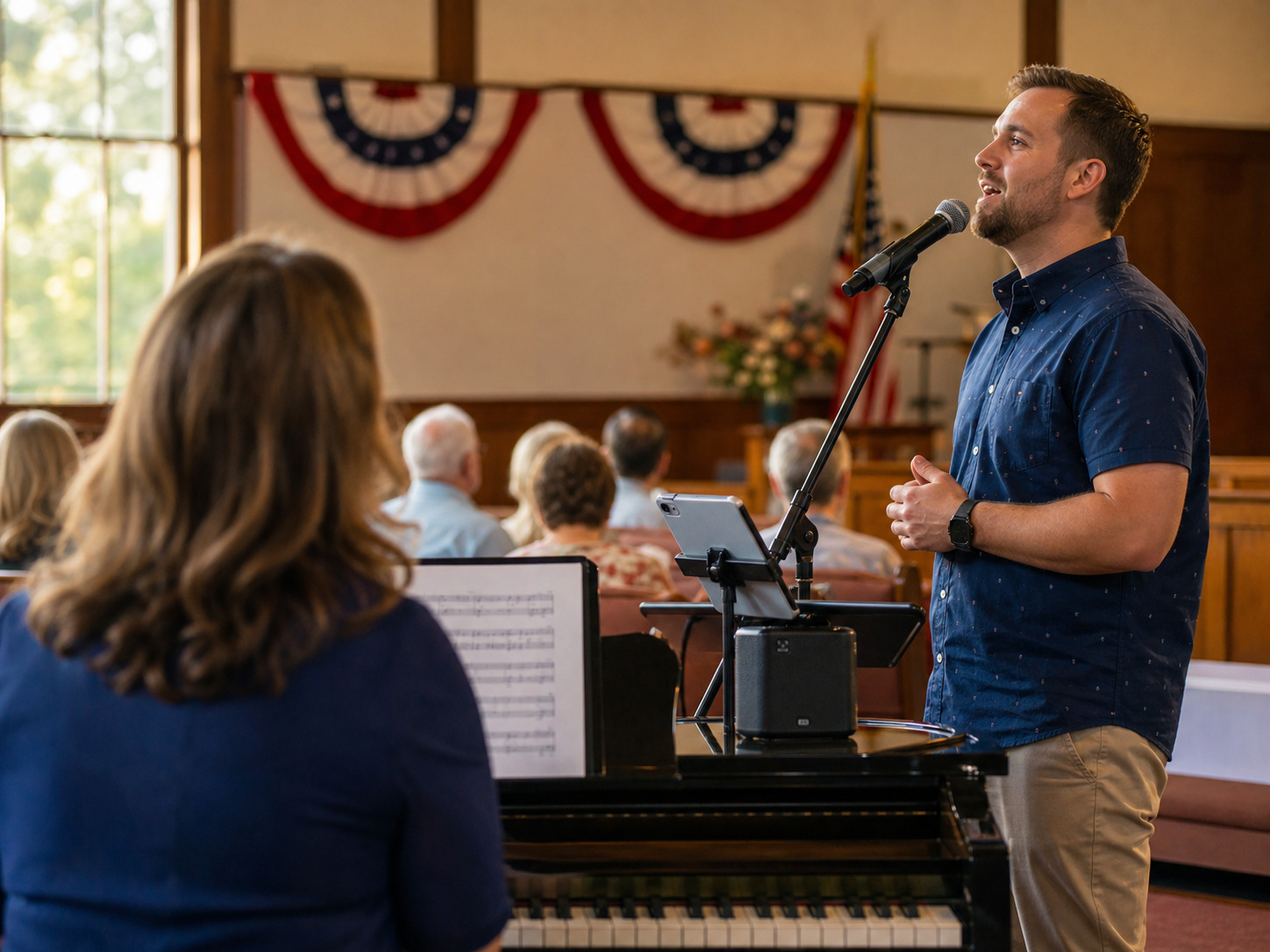
Fourth of July music works best when it feels prepared, singable, and appropriate for the people in the room. A church service, community ceremony, veterans event, or patriotic concert may all use familiar songs, but each setting needs a slightly different musical plan.
Backing tracks can make that plan easier. They give soloists, choirs, and small teams a dependable accompaniment even when a pianist, organist, brass ensemble, or full band is not available.
Quick answer: what backing tracks should you use for Fourth of July?
For most Fourth of July programs, start with a short, familiar patriotic set that includes one anthem, one congregational or audience-friendly song, and one reflective selection. Common choices include The Star-Spangled Banner, God Bless America, America the Beautiful, Battle Hymn of the Republic, and My Country, 'Tis of Thee.
Use instrumental accompaniment tracks when a soloist, choir, cantor, or worship leader will carry the melody. Use guide vocal versions during rehearsal so singers can learn entrances, phrasing, and pacing before the event.
Why Fourth of July music needs a clear plan
Patriotic music can feel simple because the songs are familiar. In practice, these pieces often create production questions:
- What key is comfortable for the soloist and the audience?
- Should the arrangement feel ceremonial, worshipful, concert-style, or community-oriented?
- Is the song being used as an opener, response, offertory, prelude, postlude, or closing number?
- Does the room need a track with enough energy to support group singing?
- Will the singer need a guide vocal in rehearsal but an instrumental track for the event?
Answering those questions early keeps the music from feeling improvised at the last minute.
Strong patriotic song choices for church services
For a worship setting, the strongest selections usually balance gratitude, reverence, and clarity. A few dependable options:
The Star-Spangled Banner
Use this when the service or ceremony begins with a formal patriotic moment. It works best with a confident soloist and a key that avoids pushing the highest notes too far.
God Bless America
This is often easier for a congregation or community audience to connect with than the national anthem. It can work as a solo, choir feature, or group singing moment.
America the Beautiful
A good choice when the service tone is reflective rather than ceremonial. It often fits well near a prayer, meditation, prelude, or closing response.
Battle Hymn of the Republic
Use this when the event needs a larger, more traditional sound. It can be effective for choirs, patriotic concerts, and community programs with a strong closing moment.
My Country, 'Tis of Thee
This is a practical option for congregational singing because the melody is familiar and the range is usually manageable.
A simple Fourth of July planning checklist
Use this checklist before choosing the final tracks:
- Confirm the event type: worship service, civic ceremony, concert, school program, livestream, or community gathering.
- Choose the vocal forces: soloist, duet, choir, worship leader, cantor, congregation, or audience.
- Pick the role of each song: opener, feature, response, background, transition, or closer.
- Check the key with the actual singer, not just the original recording.
- Rehearse with the track in the event space if possible.
- Save the final MP3s locally and test playback before the service or program.
- Keep guide vocal tracks separate from performance tracks so the wrong version is not played live.
How to use backing tracks in a live Fourth of July program
Backing tracks are most useful when they are treated as part of the production plan, not as a last-minute substitute. Before the event, assign one person to manage playback and give that person the exact track order.
If the program includes spoken remarks, prayers, readings, or awards, leave time between songs. Patriotic programs can feel rushed when tracks start too quickly after a speaker finishes.
For soloists, rehearse entrances and endings carefully. Many patriotic songs have introductions, held notes, tags, or ritards that need to feel natural. A guide vocal can help during rehearsal, but the final performance should normally use the instrumental accompaniment.
Can churches use patriotic backing tracks in worship?
Yes, many churches use patriotic music around Independence Day, Memorial Day, Veterans Day, and civic observances. The best approach is to choose music that fits the tone of the service and supports the worship context rather than turning the service into a separate concert.
If you are livestreaming, recording, broadcasting, or using the music in a ticketed event, check the licensing needs for your specific use. Downloading a track for performance accompaniment is different from clearing every possible broadcast, video, or commercial use.
Recommended set ideas
Here are practical ways to build a short Fourth of July music plan:
Church service set
- Prelude: America the Beautiful
- Feature or offertory: God Bless America
- Closing: Battle Hymn of the Republic or My Country, 'Tis of Thee
Community ceremony set
- Opening: The Star-Spangled Banner
- Mid-program: America the Beautiful
- Closing: God Bless America
Soloist-focused set
- Feature: God Bless America
- Reflective selection: America the Beautiful
- Formal anthem: The Star-Spangled Banner
Choir or ensemble set
- Processional or opener: Battle Hymn of the Republic
- Congregational moment: My Country, 'Tis of Thee
- Closing: God Bless America
Choosing the right key and arrangement
The right key matters more than matching a famous recording. Patriotic songs are often sung by mixed audiences or by soloists who need a comfortable range for a formal setting.
Before the event, run the highest and lowest phrases with the singer. If the song sits too high, the final note may sound strained. If it sits too low, the lyrics may lose energy. A track in the right key lets the singer focus on tone, diction, and connection.
How Spiritrax can help
Spiritrax offers patriotic accompaniment downloads that can support worship services, ceremonies, school events, community programs, and solo performances. Many selections include practical performance resources such as instrumental tracks, guide vocals, lead sheets, or lyrics where available.
For a Fourth of July event, the Patriotic Collection is the most efficient place to start. It gives planners a group of familiar songs that can be used across services, ceremonies, rehearsals, and seasonal programs.
Frequently asked questions
What is the best patriotic song for a church soloist?
God Bless America and America the Beautiful are often strong solo choices because they are familiar, expressive, and easier to place within a worship or community setting than a purely formal anthem.
What backing track should I use for a Fourth of July ceremony?
A common ceremony plan uses The Star-Spangled Banner to open, America the Beautiful as a reflective selection, and God Bless America near the end.
Should I use a guide vocal track during the event?
Usually no. Guide vocals are best for rehearsal. For the live service or program, use the instrumental accompaniment track unless the event specifically needs a vocal demo.
Do I need licensing for a patriotic backing track?
It depends on how the track is used. A live accompaniment use, livestream, posted video, broadcast, school event, or commercial production can each carry different requirements. Check the terms for the specific track and event use before publishing or broadcasting.
How early should we rehearse with Fourth of July backing tracks?
At least one rehearsal with the final track order is recommended. For soloists, rehearse the exact key, introduction, ending, and any spoken transitions before the event day.
Build a complete patriotic music set with instant MP3 downloads, lead sheets, guide vocals where available, and singable arrangements for services and community programs.
Browse the Patriotic Collection