
Funeral Music Tracks Should Make the Room Feel Held
Planning Guides
By Spiritrax Content Studio · June 26, 2026
Updated June 26, 2026
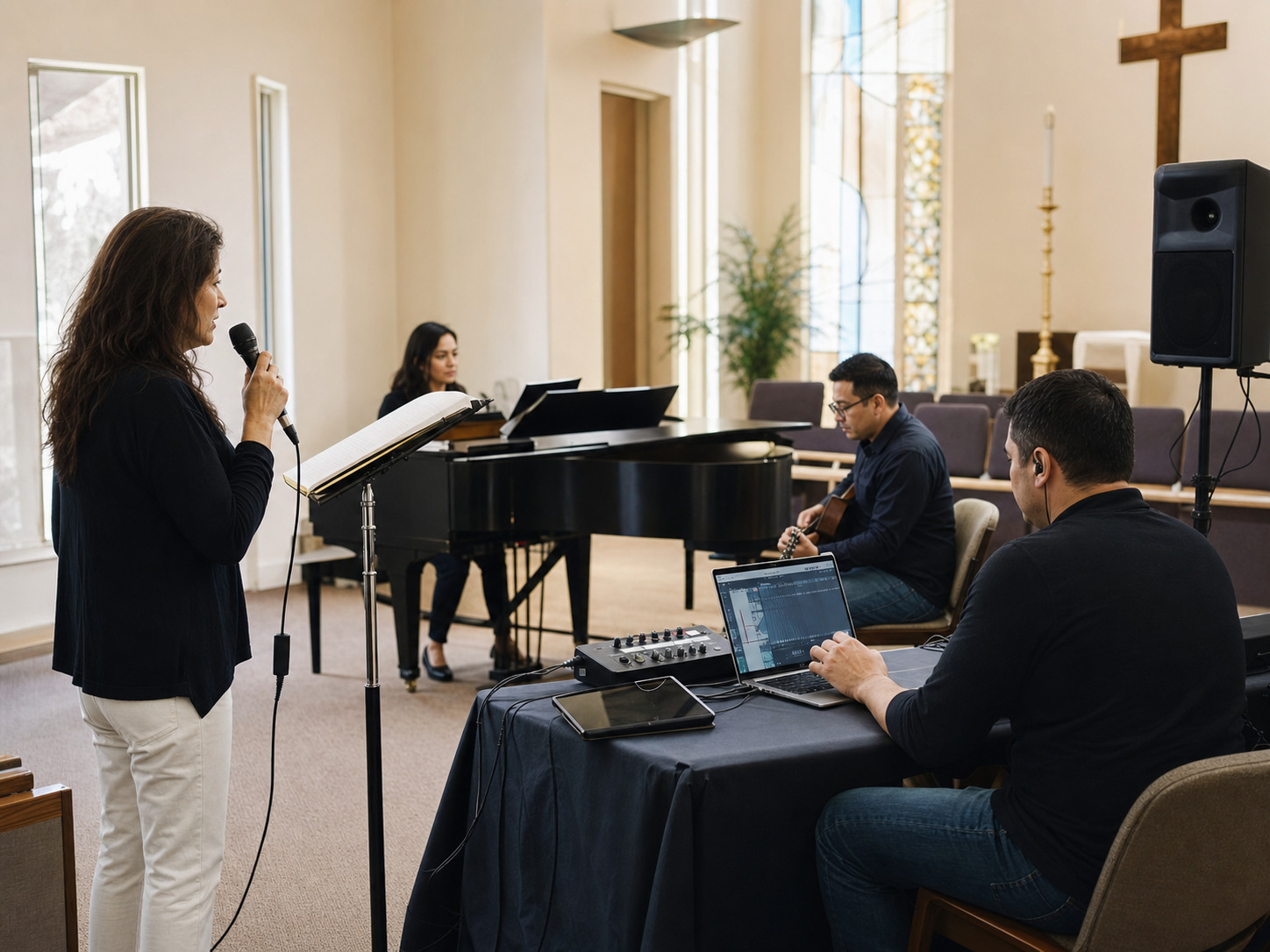
Funeral and memorial music asks for steadiness before anything else.
The song may be familiar, the singer may be emotional, and the room may be listening more closely than usual. A backing track can help when there is no live accompanist, when the service needs a fuller arrangement, or when the family wants a dependable musical moment. But the track has to support the room, not control it.
A good plan keeps the music clear, respectful, and easy to follow.
Start with the role of the song
Before choosing a funeral or memorial track, decide what the music needs to do in the service.
It may function as:
- a prelude while guests enter;
- a solo after a reading;
- a hymn-like congregational moment;
- a quiet reflection after a eulogy;
- a military or civic honor;
- a closing or recessional.
The right track for a prelude may not be the right track for a vocal solo. A reflective instrumental can sit under arrival or remembrance. A sung track needs a clear key, introduction, and ending.
Choose comfort over display
This is not the moment to choose a key because it sounds impressive in rehearsal.
Choose the key that lets the singer communicate the words with control. If the final phrase sits too high, if breath points are too tight, or if the singer is likely to be emotional, lower pressure is usually better than dramatic range.
For group singing, choose a track that ordinary voices can enter without strain.
Confirm the entrance and ending
The most common service problem is not the middle of the song. It is the first note and the final moment.
Before the service, confirm:
- how much introduction the singer has;
- whether anyone speaks before the track begins;
- who gives the cue;
- whether the track ends with a button, fade, or sustained final chord;
- what happens immediately after the music.
If the service leader, singer, and sound volunteer all know the ending, the room can stay calm.
Keep the audio setup simple
A funeral home, chapel, church, graveside service, or community room may not have the same sound system you use every week.
Test the track through the actual speaker or system, not only through a phone or laptop. Check:
- volume before the singer enters;
- whether the accompaniment covers the voice;
- whether the file starts instantly or has silence at the top;
- whether the room needs one speaker or the house system;
- whether the device can stay unlocked and connected.
Bring the downloaded file, a backup copy, and any cable or adapter the room may need.
Match the track to the tone of the service
Some services need a familiar hymn. Others need a classical interlude, a patriotic honor, or a quiet instrumental.
Spiritrax's funeral category includes reflective selections such as Jesu, Joy of Man's Desiring, Gymnopedie #1, and Taps. Those are different kinds of moments. One may support a sacred or choral feeling, another a quiet interlude, and another a military or remembrance context.
The best choice is the one that fits the family, the faith or civic setting, the singer, and the service flow.
Rehearse even familiar music
Familiar songs can become difficult in emotional rooms.
At least once before the service, the singer or leader should rehearse with the exact track and the exact device. Practice:
- the first entrance;
- any repeated verses;
- breath points;
- the final line;
- the handoff after the song.
If the singer will stand away from the speaker, rehearse from that distance. If the room uses a microphone, rehearse with a microphone.
Avoid making the music carry too much
A backing track is there to support the service. It does not need to make the moment larger than the family, congregation, or room can hold.
Avoid:
- overly loud accompaniment;
- a key that makes the singer push;
- long intros that leave people uncertain;
- endings that no one knows how to close;
- last-minute phone playback without a backup.
Simple, steady, and prepared is usually more compassionate than elaborate.
Licensing and service details
Music use can involve different permissions depending on whether the service is live, streamed, recorded, reposted, printed, or distributed afterward. Confirm any church, venue, streaming, recording, or lyric-printing requirements with the appropriate source.
Also confirm whether the family, service leader, or venue has any requests about song choice, volume, placement, or recording before the day of the service.
FAQ: funeral backing tracks
Can a backing track work for a funeral solo?
Yes. A backing track can support a funeral solo when the key is comfortable, the introduction is clear, and the singer rehearses with the exact file before the service.
What kind of music works for a memorial service?
Common choices include familiar hymns, reflective classical pieces, quiet instrumentals, patriotic honors when appropriate, and songs that have meaning for the family or community.
Should the track be played from a phone?
Use the most reliable playback setup available. A phone can work only if it is fully charged, connected properly, silenced from notifications, and backed up by another device or file.
How early should the track be tested?
Test it before the service, through the actual room speaker or sound system. A quick test through laptop speakers does not prove the service setup will work.
The takeaway
Funeral music should help the room breathe.
Choose the track for its role in the service, keep the key comfortable, rehearse the entrance and ending, test the audio setup, and let the accompaniment support the people in the room.
For a practical starting point, browse Spiritrax funeral backing tracks and choose the version that best fits the service moment, singer, and setting.