
Let “Good King Wenceslas” Tell the Story Before the Big Finish
Holiday & Special Occasion Music
By Spiritrax Content Studio · October 26, 2026
Updated October 26, 2026
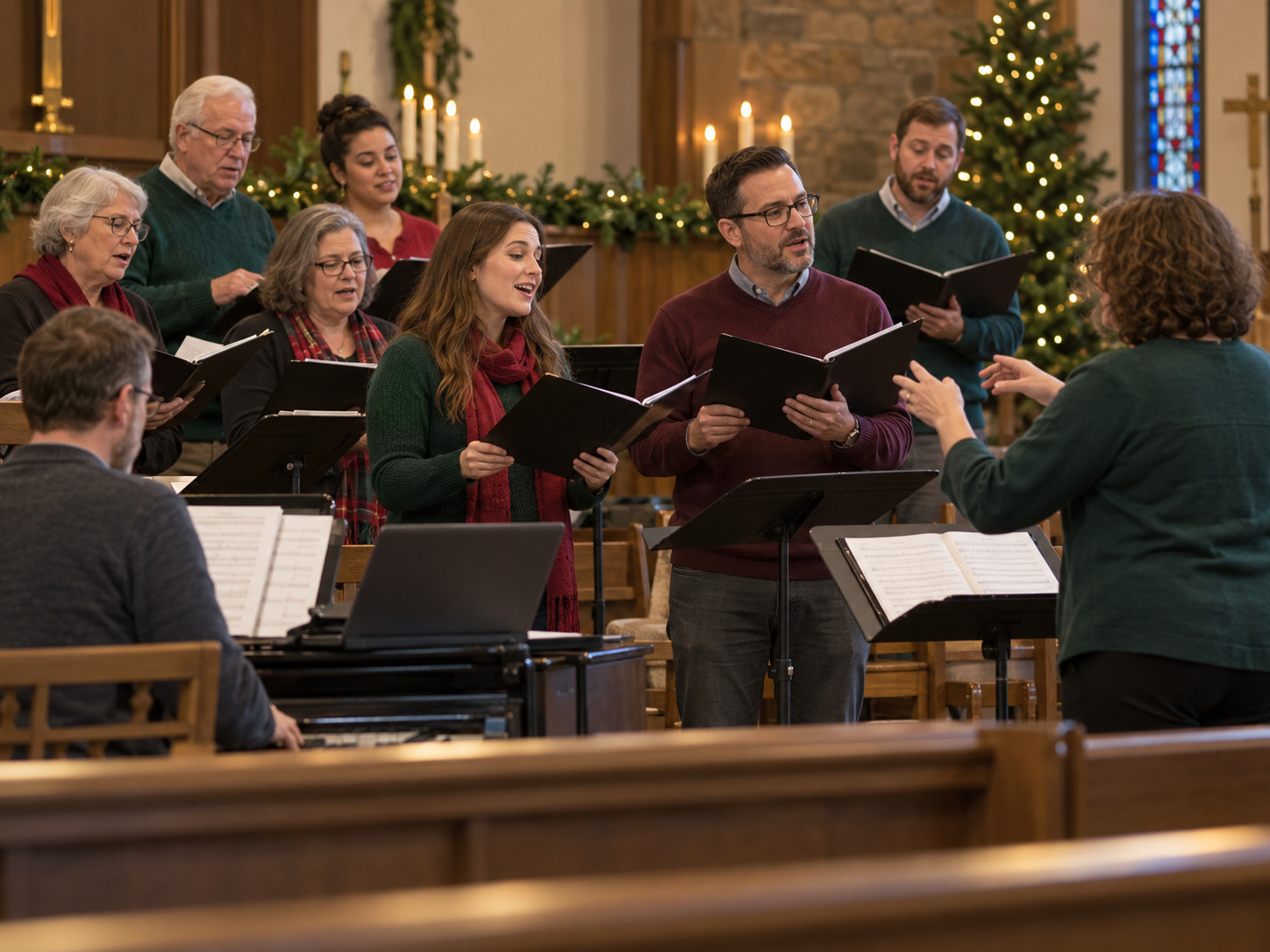
The short answer: rehearse “Good King Wenceslas” as a story shared by a leader, a page, and a community. Choose the key for the people who will sing the full melody, make every change of speaker easy to hear, and prepare the third-verse lift so it feels like the story moving forward rather than the choir suddenly getting louder.
This carol can become a row of identical verses if the group focuses only on staying together. Its strength is narrative: someone sees a need, asks a question, and chooses to act. A clear rehearsal plan lets the congregation or audience follow that movement while the backing track provides a dependable musical frame.
Decide who is telling each part of the story
Before choosing soloists or sections, read the three verses included with the current Spiritrax arrangement. Mark the voice behind each line: narrator, king, page, or full group.
A small choir might use:
- one reader or soloist for the narrative opening;
- a lower voice for the king;
- a second soloist or small section for the page;
- and the full choir for the moral and final statement.
A congregation-led version can be simpler. One worship leader may sing the complete melody while a reader briefly frames the story before the track begins. The important choice is clarity. Listeners should not have to guess when the text moves from description to dialogue.
Write the assignments into the service order and score. Do not rely on people remembering an informal plan from rehearsal.
Choose the key with the complete group
The current Spiritrax “Good King Wenceslas” backing track lists F major, C major, and A major versions. Use the product previews to compare the full melody with the actual people who will lead it.
Do not choose from the first phrase alone. Check:
- the lowest notes for the full group;
- the highest sustained phrase after everyone is warm;
- the comfort of each featured singer;
- whether the congregation can join without strain;
- and how the third verse feels after the arrangement lifts.
The product description notes that the third verse moves up a step for dramatic emphasis. That lift is already part of the arrangement. Rehearse into it; do not treat it as a surprise on the day of the service.
If one available key works for the congregation but not for a featured soloist, test a different assignment before assuming the whole track must change. If the group needs a different key, tempo, cut, or repeat, the product page provides a customization route. Confirm the exact request against the complete arrangement.
Keep the pulse walking forward
The carol's story is a journey, so a dependable forward pulse helps the text feel active. The thick orchestral writing and pop rhythm section in this arrangement can support that motion, but the choir still needs to agree on consonants, breaths, and releases.
Try a spoken rehearsal over a quiet beat:
- Speak the text in rhythm without singing.
- Mark the words that change the action.
- Agree on one breath plan for each verse.
- Speak through the transition into the third verse.
- Sing the complete arrangement without stopping.
Avoid dragging the narrative to make it sound reverent. Reverence comes from attention to the words, not from removing all motion. At the other extreme, do not let the rhythmic accompaniment turn the story into a march. The pulse should carry the group without flattening every sentence.
Make the dialogue audible
If the king and page are assigned to different voices, let the contrast come from intention and color rather than caricature.
The king can sound observant and decisive. The page can sound responsive and specific. The choir can widen the frame when it enters. Keep the diction natural enough that the story remains human.
For a choir, rehearse the dialogue in small groups first. Ask everyone else to follow the score and listen for the handoff. Then restore the full ensemble while preserving that conversational shape.
Place one listener at the back of the room. Ask three questions:
- Could you tell when the speaker changed?
- Which words disappeared under the accompaniment?
- Did the third verse feel prepared?
Repair the exact problem. More volume is not a universal solution.
Plan the third-verse lift
The upward change can make the final verse feel generous and expansive, but only when the group knows it is coming.
Mark the last dependable cue before the transition. Decide whether the director will continue beating, give a visible preparatory gesture, or let the arrangement itself carry the group. Featured singers should know whether their assignment changes after the lift.
Run only the end of verse two into the beginning of verse three several times. Then continue far enough to settle the new key. A successful transition is not merely arriving on the first note; it is maintaining breath, text, and balance after the modulation.
Keep the sound proportional to the room. A small congregation does not need to imitate a large festival choir. Let the orchestration add breadth while the singers keep the text present.
Place the carol where its story makes sense
“Good King Wenceslas” is traditionally associated with the Feast of Stephen and the day after Christmas. In a church or community program, it can work as a song about practical care, generosity, and following through on what we notice.
Possible placements include:
- a Christmas-season service focused on service or giving;
- a choir or community carol program;
- a school or family concert with a brief spoken introduction;
- a post-Christmas gathering;
- or a transition into an offering, collection, or community-care announcement.
Keep the introduction short and accurate to the event. Do not force the song into a generic “holiday cheer” slot if the service wants to honor its particular story.
For a broader seasonal set, the Spiritrax Christmas backing-track collection offers other arrangements for contrasting moments. Pair this narrative carol with music that changes the texture instead of adding another dense orchestral piece immediately beside it.
Test the playback handoff
A fixed backing track needs one named operator and one visible start cue.
Before the final rehearsal, confirm:
- the selected key and exact file;
- who starts the track;
- whether a spoken introduction comes first;
- the playback level beneath soloists and full choir;
- the cue into the third-verse lift;
- the final release and silence;
- and an offline backup on a second tested device.
Use the actual sanctuary, hall, or classroom sound system. Decorations, full rooms, and hard surfaces can change clarity. Listen where the audience will sit, then adjust the playback level and singer placement together.
The broader worship backing-track setup guide has a practical checklist for keys, files, room sound, and service handoffs.
A 20-minute focused rehearsal
| Minutes | Work |
|---|---|
| 0–3 | Read the three-verse story and assign voices |
| 3–7 | Test the selected key through the complete melody |
| 7–11 | Speak the text in rhythm and agree on breaths |
| 11–15 | Rehearse verse two into the third-verse lift |
| 15–18 | Run the whole track with final assignments |
| 18–20 | Listen from the room and repair one clarity issue |
If the group needs more work, name the missing piece. “Run it again” is less useful than “repeat the dialogue handoff” or “practice the modulation and the next four bars.”
Questions worship leaders and choir directors ask
Which key should we choose?
Choose the key that lets the actual leaders, choir, or congregation sing the complete melody comfortably. Compare the currently listed F, C, and A versions, including the third-verse lift, before deciding.
Should the king and page be separate soloists?
They can be, but they do not have to be. Separate voices may clarify the dialogue. One strong storyteller can also carry the complete song if the phrasing makes the changes of speaker clear.
Is this arrangement five verses?
The current Spiritrax product page describes a three-verse arrangement. Build the service plan around the exact file you select rather than assuming it follows another hymnal or recording.
Can children sing it?
The story can suit a family or school setting, but test the key, text, length, and third-verse modulation with the actual group. Assigning short lines to confident readers or singers may be more effective than asking every child to carry every verse.
Should an in-service reading happen over the track?
Keep important spoken words fully intelligible. If the event needs narration, place it before the track or in a specifically rehearsed musical space rather than improvising over dense orchestration.
The takeaway
“Good King Wenceslas” becomes more than a familiar tune when the group tells its story clearly.
Choose the key for the people in the room, assign the voices, keep the pulse moving, rehearse the third-verse lift, and give the playback operator a precise plan. The result can feel warm and full without losing the carol's central movement from noticing a need to acting with care.
Choose among the currently available keys, preview the three-verse arrangement, and prepare the third-verse lift before your choir or service rehearsal.
Preview Good King Wenceslas