
Grandparents Day Worship Music Should Help the Whole Church Sing
Holiday & Special Occasion Music
By Spiritrax Content Studio · August 4, 2026
Updated August 4, 2026
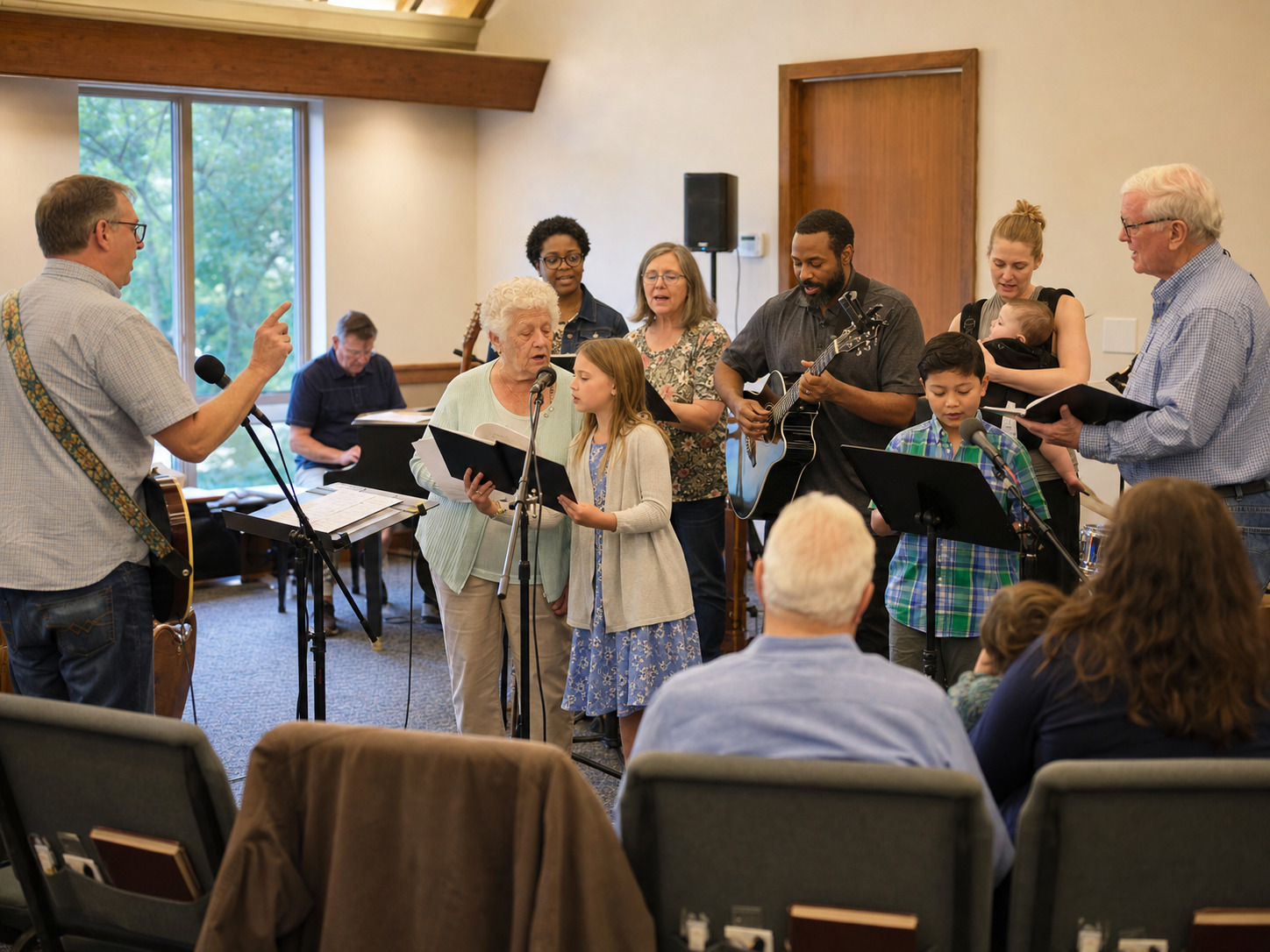
Grandparents Day worship music works best when it honors relationships without turning the service into a performance about age.
A familiar hymn, a comfortable key, and a clear invitation can help grandparents, grandchildren, older adults, families, and the wider congregation sing together. Backing tracks are useful when the church has a small music team, no accompanist that Sunday, or a multigenerational group that needs a dependable arrangement.
Plan the people first. Then choose the music.
What music works for a Grandparents Day church service?
Choose music that the congregation can actually share. Familiar hymns, songs about faithfulness, gratitude, guidance, service, and hope usually fit better than novelty songs that separate one age group from another.
The strongest plan often includes:
- one gathering or prelude selection;
- one familiar congregational hymn;
- an optional child, youth, solo, or choir contribution;
- a short reflective song under prayer or recognition;
- and a closing hymn that sends the whole church forward together.
Not every church needs all five. One well-supported hymn and a thoughtful spoken moment can carry more meaning than a crowded program.
Begin with the service purpose
Grandparents Day can mean different things in different communities. Some churches recognize grandparents by name. Others emphasize older adults, intergenerational faith, mentoring, caregiving, or the relationships that help people grow.
Before choosing songs, decide what the service is trying to do:
- invite shared gratitude;
- honor people who have offered care and wisdom;
- welcome children and older adults into the same worship moment;
- acknowledge grief, distance, adoption, foster care, or complicated family stories with care;
- or connect one Sunday recognition to the church's larger life together.
That purpose should shape the music and the language around it. Avoid implying that every person has the same family structure or experience.
Choose a familiar hymn before a special song
A multigenerational service benefits from at least one melody people already know.
Familiar hymns can reduce rehearsal pressure and help the room participate even when the music team is small. Useful themes include grace, faithfulness, trust, friendship, pilgrimage, prayer, and praise.
The Spiritrax Classic Hymns Collection offers downloadable accompaniment for familiar selections such as Amazing Grace, Be Thou My Vision, Blessed Assurance, Holy, Holy, Holy, The Old Rugged Cross, and What a Friend We Have in Jesus. Choose from the congregation's own tradition and approved service plan rather than forcing a title because it sounds old-fashioned or sentimental.
Familiar does not mean automatic. Confirm the verse plan, introduction, key, and ending before rehearsal.
Pick the key for the people who will sing
A worship leader may be comfortable in a key that does not serve children, older voices, or a mixed congregation.
Test the full melody with the actual singers. Listen for:
- high phrases that become strained by the final verse;
- low phrases that disappear when the room sings softly;
- children shouting instead of singing because the melody sits too high;
- a soloist losing support at the quietest line;
- or a congregation dropping out while the leader keeps going.
Choose the key that lets the intended singers carry the complete song with steadiness. If a child or grandchild begins and the congregation joins later, check both ranges instead of solving only the opening solo.
The Spiritrax guide to choosing a church-solo backing-track key provides a practical range-check process.
Give children and youth one clear job
Children do not need to carry the entire service to participate meaningfully.
They might:
- sing one verse with the congregation;
- offer a short refrain;
- read a prayer or scripture selected by the church;
- introduce a hymn with one prepared sentence;
- stand beside older members during a shared song;
- or help lead a simple response.
Keep the task small enough to rehearse well. A backing track can make the accompaniment predictable, but the live entrance still needs a cue. Give children an audible introduction, a visible leader, and a place to breathe before the first word.
If a children's group is involved, the Children's Music Collection may offer additional age-appropriate options. Use only songs that fit the approved worship context and the group's preparation time.
Build the service around shared moments
A simple Grandparents Day worship sequence might look like this:
| Service moment | Musical role | Track planning note |
|---|---|---|
| Gathering | Familiar instrumental or softly led hymn | Keep the volume low enough for people to enter and greet one another |
| Welcome | Spoken recognition | Stop the music cleanly before the welcome begins |
| Congregational hymn | Shared melody in a communal key | Use a clear introduction and an agreed verse plan |
| Child, youth, solo, or choir offering | One prepared selection | Rehearse the first entrance, microphone, and final cutoff |
| Prayer or blessing | Quiet instrumental support or silence | Keep speech fully intelligible; do not force music under every word |
| Closing | Hopeful shared hymn | Confirm whether the congregation stands and when the track begins |
This is a planning example, not a required liturgy. Follow the church's tradition, pastoral direction, and service order.
Keep recognition from becoming a contest
Public recognition can become uncomfortable when it ranks people by age, number of grandchildren, distance traveled, or family circumstance.
Music can help the service stay communal. Introduce the hymn as an invitation for everyone rather than as a test of who qualifies for attention. If the church recognizes individuals, keep the track underneath only when the words remain clear and the music does not rush the moment.
Consider language that includes:
- grandparents and great-grandparents;
- older adults who mentor or care for others;
- people remembering grandparents who have died;
- families separated by distance;
- and people whose family relationships are complex.
The service can be warm without pretending every story is simple.
Use backing tracks without losing flexibility
A backing track provides consistency, but the service still needs room to breathe.
Before Sunday, decide:
- the exact approved filename;
- who starts the track;
- the number of introductory measures;
- the verse order;
- whether a child, soloist, choir, or congregation enters first;
- the planned volume;
- what happens if recognition runs longer than expected;
- and how the music ends before the next spoken element.
If a prayer or recognition moment has an unpredictable length, a complete vocal song may not be the best underscoring. Use a quieter instrumental selection, an approved repeat point, a second prepared track, or silence.
Do not ask the operator to invent a loop during the service.
Rehearse the handoffs, not only the song
Run the complete transition at least once:
- The welcome or spoken introduction ends.
- The worship leader gives the agreed cue.
- The operator starts the correct file.
- Children, soloist, choir, or congregation enter after the introduction.
- Any invitation to stand or join happens at the planned point.
- The final note ends cleanly.
- The room moves into prayer, speech, or silence.
This rehearsal reveals problems a full-song practice may miss. The first words may be covered by applause. A child may be too far from the microphone. The track may start before people are ready to stand. The final chord may overlap the next spoken line.
Name the handoff, adjust it, and run it again.
Keep the sound supportive
The accompaniment should make participation easier, not overpower the people being honored.
Test through the real sanctuary system:
- set the track below the live voice;
- listen from the back of the room;
- confirm children and older singers can hear the introduction;
- keep spoken recognition understandable;
- watch for orchestral builds that make a quiet moment feel too large;
- and check the final cutoff at the volume the service will use.
Laptop speakers are not a meaningful sound check. Use the actual microphone, playback device, cable, speaker system, and room.
Grandparents Day worship music checklist
- Name the purpose of the recognition before choosing songs.
- Use inclusive language for different family experiences.
- Choose at least one familiar congregational melody.
- Test the key with the actual live singers.
- Give children or youth one clear, rehearsed role.
- Confirm the introduction, verse plan, and ending.
- Put only approved tracks in service order.
- Give the operator exact start, volume, repeat, and stop notes.
- Test spoken-to-musical handoffs through the real sound system.
- Prepare a quieter option or silence if the service timing changes.
- Keep an offline backup on a second tested device.
FAQ: Grandparents Day worship music
What hymns are appropriate for Grandparents Day?
Choose familiar hymns from the church's tradition that support themes such as faithfulness, grace, gratitude, guidance, prayer, service, and hope. The best choice is one the intended congregation can sing comfortably.
Should children sing a special Grandparents Day song?
They can, but a small shared role may work just as well. A child or youth group might sing one verse, lead a refrain, read a prayer, or join older adults for a familiar hymn.
Can a backing track play under recognition or prayer?
Yes, when the arrangement is quiet, speech remains clear, and the operator has an approved plan for timing and ending. Silence may be the better choice when the moment needs flexibility.
How many songs does the service need?
There is no universal number. Use the service's approved structure and available rehearsal time. One familiar hymn, one optional offering, and a clear closing can be enough.
What makes a backing track suitable for a multigenerational service?
Look for a singable key, clear introduction, predictable form, supportive dynamics, practical length, and an ending the music team can coordinate with the next service element.
The takeaway
Grandparents Day worship music should help the church sing together, not divide the room into performers and spectators.
Choose familiar music with a clear purpose, make space for different family stories, pick the key for the people who will sing, and rehearse every spoken-to-musical handoff. A dependable backing track can support the moment, but the relationships in the room are what give it meaning.
Build the shared service around familiar hymn accompaniment with clear introductions, practical keys, downloadable files, and arrangements a multigenerational group can rehearse together.
Explore the Classic Hymns Collection