
Hymns and Spirituals for Black History Month
Backing Track Guides
By Spiritrax Content Studio · February 25, 2026
Updated February 25, 2026
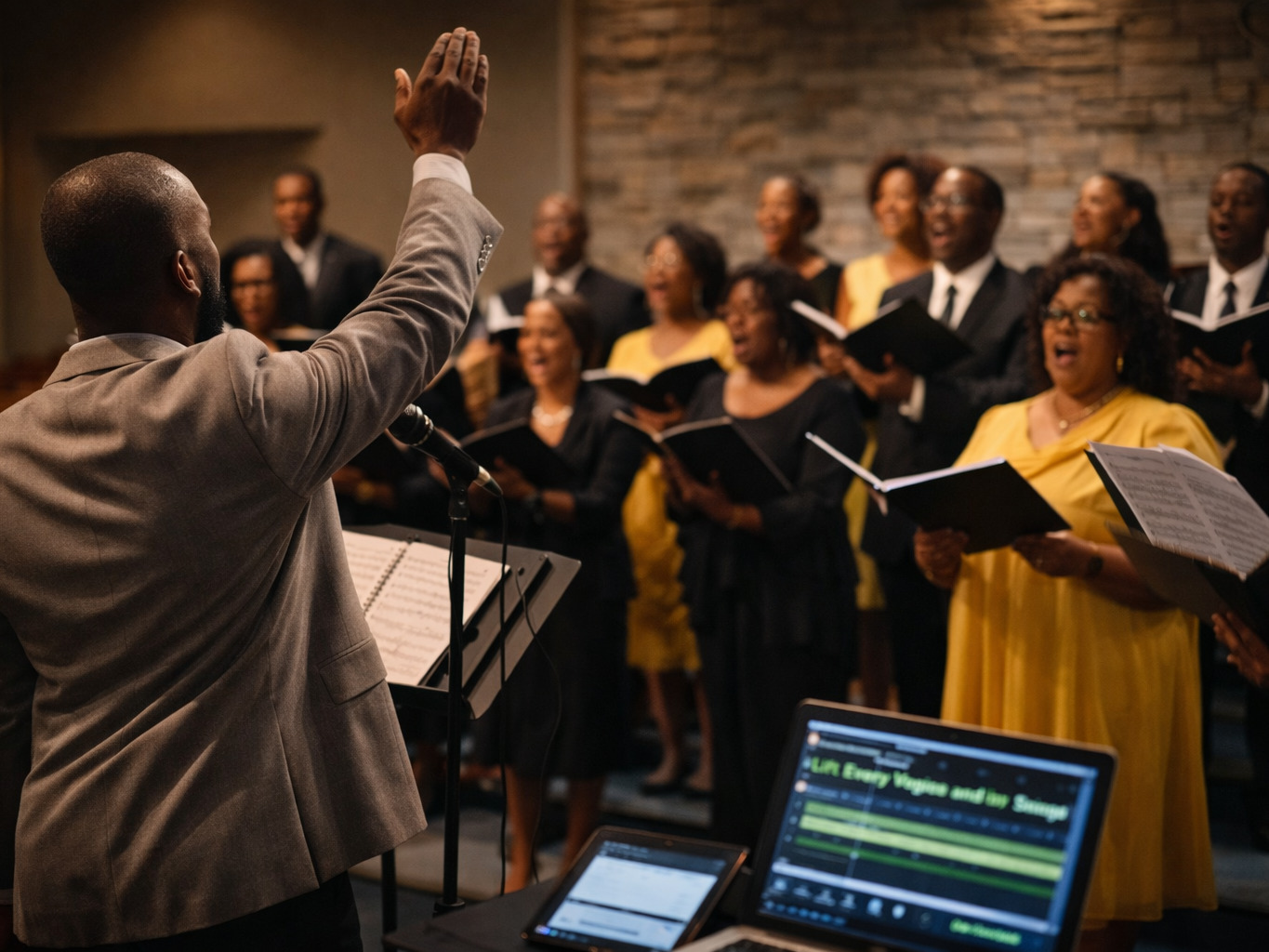
The room was quiet except for a soft pad in the speakers. The leader took a breath, lifted a hand, and the first line rang out. The track held the tempo. The choir answered the call. This simple setup can help small teams lead big moments for Black History Month when everything is clear and steady.
Spirituals arose from struggle and hope. They carried faith and lessons, teaching and healing communities. Many used call-and-response patterns, allowing everyone to join easily. Some even contained coded messages for safety and freedom Library of Congress—African American Spirituals. The hymn "Lift Every Voice and Sing" has grown to be a song of courage and is often called the Black National Anthem, uniting people in shared stories of pain and progress Smithsonian NMAAHC—Lift Every Voice and Sing.
Using backing tracks helps you carry this music with care, even with a small team. A reliable track provides a clean intro and keeps a steady tempo. Guide vocals show phrasing, so soloists and groups learn quickly. If your pianist is absent or your band is light, tracks maintain momentum during the service. For setup tips and gear basics, check the overview in the Ultimate Guide to Worship Music Backing Tracks.
Build your performance around songs everyone can sing. For call-and-response, "Wade in the Water" at a moderate swing (about 78–92 BPM) allows the leader to call on beat one, and the group can answer in time. "Swing Low, Sweet Chariot" works well a bit slower (around 72–84 BPM) for clarity. "Go Down, Moses" is strong and slow (near 60–68 BPM). For prayer, "There Is a Balm in Gilead" at 66–72 BPM allows for a deep breath to carry the line. "Sometimes I Feel Like a Motherless Child" can be very slow, at 56–64 BPM, and needs space. For community hymns, "Lift Every Voice and Sing" should have a firm march feel around 88–100 BPM. "Amazing Grace" in 6/8 feels comfortable at 48–56 BPM with gentle sway. To close, "This Little Light of Mine" at 108–120 BPM encourages clapping and joy. "Oh Freedom" at 86–96 BPM can send people out with purpose.
Choose keys that help everyone sing. For congregations, aim for high notes near D4 to E4, keeping peaks under F4 so no one strains. For soloists, select keys where high notes are two or three half steps below their top range. Test comfort with a guide-vocal version before deciding. Any track with a tag or key change should be taught early, and marked in charts. Always ensure every track has a two-bar count-in for unified entrances. If a track lacks this, add a click or soft pad at the start in your editor.
Rehearsal improves when broken into short steps. Start with a warm-up led by a guide vocal. Shadow the melody once, then sing alone with the track. Use tempo laddering: begin 8–10% below your goal tempo. Gradually increase the tempo in small jumps. Space your practice over days. Short, spaced sessions are more effective than a single long practice. This method is called the spacing effect and helps memory retention APA Dictionary of Psychology—Spacing Effect. For a deeper dive into count-ins, timing, and recording yourself, visit How to Practice with Backing Tracks.
Backtracks also make call-and-response easy. Set clear cues with your team: the leader breathes on 4, calls on 1, and the group answers right on the beat. Use clear hand signs: raise your palm to invite the response, and drop your hand for the cutoff at the bar line. Practice these cues with the track so endings align perfectly.
Body percussion adds energy if it matches the groove. Teach the group to clap on beats 2 and 4. Do a quick clap check over the intro of "This Little Light of Mine". Say it out loud: "No clap on 1, hit 2 and 4." Keep extra percussion light, like a shaker on steady eighth notes or a tambourine on 2 and 4. Avoid busy patterns that might obscure the backbeat.
Plan your tech setup to keep your message clear. One-device playback usually works for most teams. Send the stereo track to the audience. If the count-in is part of the track, ensure it is soft or musical to avoid distractions. Advanced teams can use a multideck app to send a click to in-ears while sending the track to the audience. Position the leader’s monitor so the backbeat is a bit louder to help the timing of claps and calls. If you have short reflections, use an 8–12 bar pad or intro to share a sentence or two. Mention the song’s origin or scripture that relates to the theme. Then, cue the downbeat with a clear breath.
Here’s a sample 25-minute program you can adapt. Start at 00:00 with "Lift Every Voice and Sing" for two verses and a short tag, ending by 04:00. From 04:00 to 08:00, do a call-and-response medley: "Wade in the Water" and "Swing Low," with one verse each and a two-bar transition. From 08:00 to 12:00, sing "There Is a Balm in Gilead" with a hum tag for quiet prayer. From 12:00 to 15:00, share a short scripture or story with a soft pad. From 15:00 to 20:00, lead "Go Down, Moses" with clear leader calls and choir responses. Finally, from 20:00 to 25:00, close with "This Little Light of Mine," building claps, teaching the room in the first chorus, and ending with a gentle slowdown and a clean cutoff.
You can prepare this plan over four weeks. In Week 1, pick four to six songs and test keys with guide vocals and forms. In Week 2, practice verses and responses with tempo laddering, marking tags and changes. In Week 3, run full passes with short, spaced daily sessions. In Week 4, fine-tune the program, setting mic levels, practicing transitions, and recording the final run to refine any tricky entrances. For more insight on when tracks shine in worship, check out Top 10 Uses for Backing Tracks in Worship.
A note on rights and respect: Many spirituals and early hymns are public domain in the U.S.; however, arrangements and recordings are protected. License track use properly. When introducing a song, honor its roots and meaning. A single sentence of context can help everyone listen thoughtfully. Your steady track and kind leadership will let the story shine through.
Planning a Black History Month set? Get custom spiritual and hymn backings in your exact keys and forms—with clear count-ins, call-and-response cues, and handclap-friendly grooves so your team can rehearse and lead confidently.
Start Your ProjectPlanning a Black History Month set? Download spiritual and hymn accompaniments in your exact keys and forms.
Browse Spiritual Backing Tracks