
Orchestral or Acoustic? Choose the “Joy to the World” Your Service Needs
Holiday & Special Occasion Music
By Spiritrax Content Studio · October 9, 2026
Updated October 12, 2026
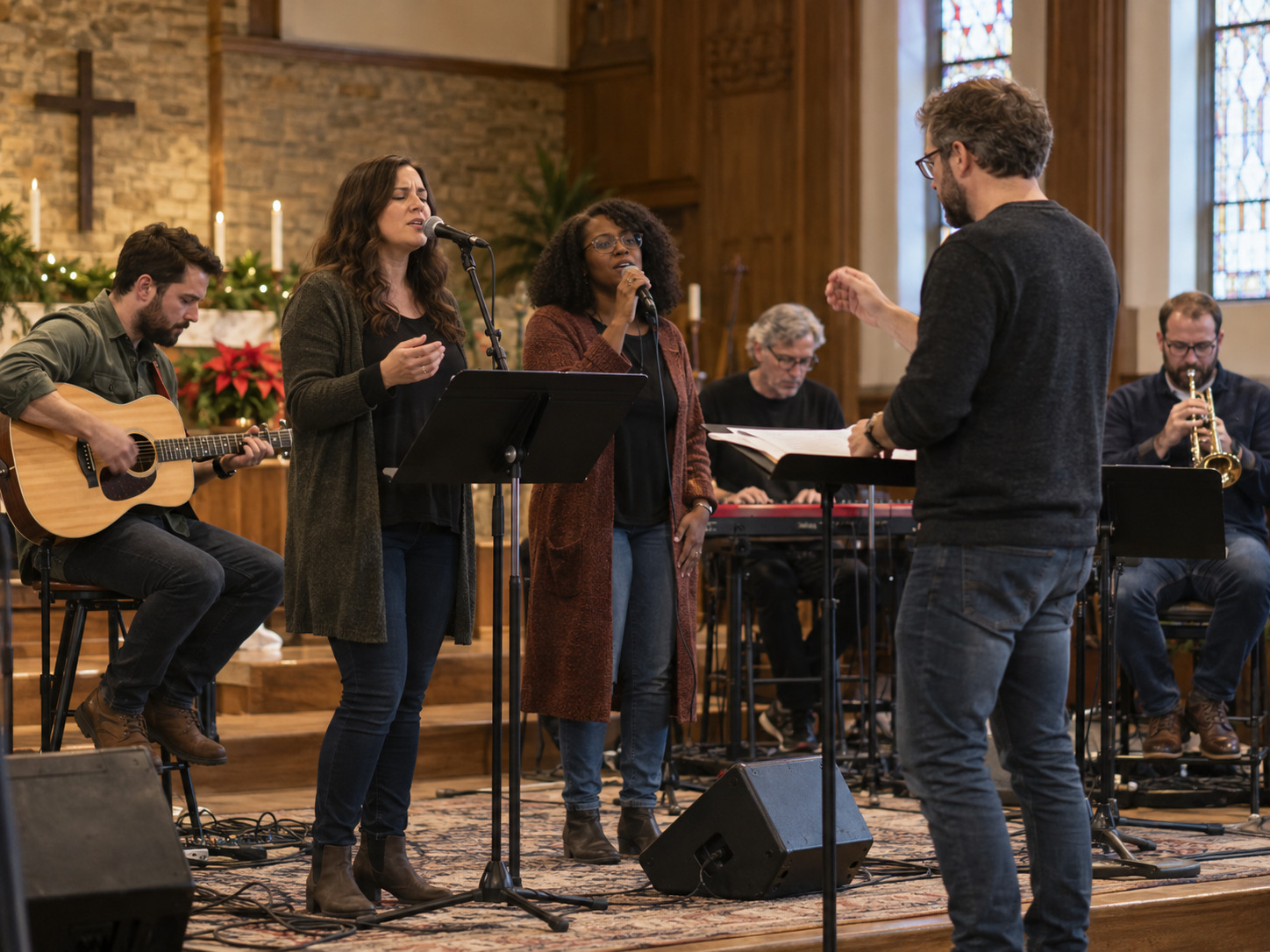
The short answer: choose a “Joy to the World” backing track by deciding what kind of invitation your Christmas service needs. A bright orchestral arrangement can open the room with ceremony and momentum. A smaller acoustic arrangement can feel immediate, warm, and easy to carry. The better track is the one that fits your singers, space, service position, and rehearsal plan.
Spiritrax offers both kinds of approach. The orchestral contemporary arrangement uses strings, piano, guitar, trumpets, and horns in B-flat major. The Campfire Christmas version uses three acoustic guitars and light hand percussion, comes in C and B-flat, and lifts the final verse by a whole step. Those are not simply different sounds; they create different jobs for the leader and congregation.
Begin with the service moment
Do not choose by listening to the first ten seconds in isolation. Write the sentence that comes immediately before the hymn and the sentence or action that follows it.
Ask four questions:
- Is this the gathering song, a response, a choir feature, or a closing celebration?
- Is the congregation expected to sing every verse or mainly listen?
- Does the room need a sense of ceremony or a sense of closeness?
- What must happen as soon as the track ends?
The orchestral version may suit an opening that needs a clear, festive arrival. The acoustic version may suit a smaller service, children or families gathered close to the front, an informal Christmas event, or a reflective set that still needs energy.
Neither choice is automatically more reverent. Reverence comes from how clearly the music serves the moment and how well the people leading it have prepared.
Compare the musical job, not only the instruments
The Spiritrax orchestral “Joy to the World” track has an energetic, up-tempo contemporary worship sound with orchestral color. It can carry a strong entrance without requiring a large live band.
That fullness creates a few rehearsal priorities:
- singers need a confident first entrance over the established texture;
- the sound operator must leave room for the congregation and microphones;
- the leader should keep the pulse broad enough that the words remain clear;
- brass and orchestral accents should energize the phrase without causing the group to rush.
The Campfire Christmas arrangement, listed in the Spiritrax Christmas backing-track catalog, uses three guitars and light hand percussion. Its smaller texture may expose uncertain entrances more clearly, but it also gives voices more room. The final verse moves up a whole step, so the leader must prepare that lift rather than treating it as a surprise.
Listen through both complete previews with your actual service role in mind. A track that sounds impressive alone may not be the best support for your room.
Choose the key with representative voices
Key choice should happen with the people expected to sing the complete hymn. The orchestral listing is in B-flat major. The Campfire Christmas listing offers C and B-flat major.
Test more than the opening line. Sing a middle phrase after the voice has been working, then test the final verse at realistic service energy. For the acoustic arrangement, rehearse the whole-step lift into the last verse in both available starting keys.
Use a simple test:
- Opening: Can ordinary voices enter without reaching?
- Middle: Does the melody sit comfortably after several phrases?
- Final verse: Can the room keep clarity when the arrangement grows or changes key?
- Ending: Does the chosen key allow a confident finish without turning the hymn into a vocal endurance test?
Ask a few representative singers rather than only the strongest vocalist. If the worship team will carry most of the sound while the congregation listens, say that plainly. A solo-feature key and a congregational key do not always serve the same purpose.
Rehearse the orchestral version without rushing
Full texture often makes singers and leaders move faster than they realize. Establish the pulse before adding microphones. Have the team clap or step the main beat while listening to one verse. Then speak the words in rhythm, allowing the repeated phrases to remain understandable.
Mark the musical accents that matter. Not every brass entrance needs a physical cue. Choose the moments that help the congregation enter, continue, and finish together.
During sound check, listen from the seating area. If the track feels exciting but the words disappear, reduce the masking range before adding more vocal gain. Check low-end buildup, bright brass frequencies, and whether piano or guitar competes with the lead microphone.
The leader’s gesture can become larger as the arrangement grows without becoming faster. Rehearse the last verse after a short break, when singers are no longer relying on the energy of a complete run.
Prepare the acoustic key change
The Campfire Christmas arrangement plays three verses and raises the final verse by a whole step. That lift can create a natural sense of arrival, but only if singers know how it is introduced.
Listen for the instrumental signal before the new key. Decide who gives the visible breath and whether the congregation should be invited verbally before the track starts. Do not speak over the transition unless the arrangement clearly leaves room for it.
Loop four parts:
- the last phrase before the change;
- the instrumental transition;
- the first line in the new key;
- the phrase that confirms the congregation has settled.
If the lift feels abrupt, the fix may be leadership rather than volume. Make the preparation visible. A calm breath, open posture, and clear first consonant can tell the room that the change is intentional.
If B-flat leaves the final verse too high for the group, compare the C version carefully rather than assuming the lower-looking option will always feel easier throughout. The starting key and the lifted key both matter.
Match the arrangement to the room
A large sanctuary with reflective surfaces can make an orchestral track feel much denser than it does in headphones. A dry multipurpose room may make the acoustic version feel exposed. Test through the actual speakers.
Walk the room while the team sings. Listen at the front, center, back, and sides. Confirm:
- the first entrance is easy to hear;
- the melody stays present over the accompaniment;
- repeated words remain clear;
- the final verse grows without becoming harsh;
- the ending leaves a clean transition into the next service element.
Use one documented level for rehearsal and service. A playback operator should not rebuild the mix from memory on Christmas Eve.
For a dependable setup sequence, use the Spiritrax church sound-check checklist with the exact file, speakers, microphones, and leaders who will serve.
Give every verse a purpose
Even a familiar hymn can flatten when each verse is performed the same way. Decide what changes without inventing drama the text or service does not need.
For an orchestral approach, you might begin with a focused lead, widen into fuller congregational sound, and let the last verse carry the broadest energy. For the acoustic approach, the intimacy can remain consistent while leadership shifts from solo voice to ensemble and then to the whole room after the key change.
Write the leader and texture beside each verse:
| Verse | Lead responsibility | Participation cue |
|---|---|---|
| First | Establish tempo and pronunciation | Clear breath and first entrance |
| Middle | Keep the pulse grounded | Invite fuller congregational sound |
| Final | Prepare the larger texture or key lift | Visible cue and confident release |
The plan does not need to be complicated. It needs to be shared.
Keep the file and handoff simple
Download the purchased file before the service and use the same version in rehearsal. Name it with the song, arrangement, key, and service date. Keep one backup on a second device and make one person responsible for the final file.
The cue sheet should include:
- orchestral or acoustic arrangement;
- selected key;
- exact filename;
- who calls the start;
- microphone state;
- any key-change preparation;
- ending and next service action;
- backup device and operator.
If the service needs a different key, tempo, cut, repeat, or ending, use Spiritrax’s custom track request early enough that the team can rehearse the final version. Do not introduce a new file at the last sound check unless the current one cannot be used safely.
A 25-minute comparison rehearsal
Minutes 0–4: name the service job
Write what comes before and after the hymn and whether the room is expected to sing.
Minutes 4–9: hear both arrangements
Listen to a complete representative section from the orchestral and acoustic tracks. Note what each asks of the leader and room.
Minutes 9–13: compare keys
Test the opening, middle, final verse, and ending with representative singers.
Minutes 13–17: rehearse the defining challenge
For the orchestral track, hold the tempo steady through the fuller texture. For the acoustic track, loop the whole-step key change.
Minutes 17–21: test the room balance
Use the actual speakers and microphones. Listen from the congregation’s seats.
Minutes 21–25: run the service handoff
Begin with the sentence before playback and continue through the action after the ending.
Common problems and practical fixes
The orchestral track overwhelms the singers
Reduce the masking range and overall level before raising every microphone. Listen from the room, not only the sound desk.
The acoustic version feels tentative
Clarify the first breath, pulse, and leader. Smaller instrumentation needs confident human direction.
The final key change surprises the congregation
Loop the transition and make the leader’s preparation visible. Do not wait for the first note in the new key to explain the lift.
The team keeps debating which track sounds better
Return to the service job. Choose the arrangement that best supports the intended participation, room, and transition.
Different devices have different files
Choose one approved version, name it clearly, and copy only that file to the primary and backup playback devices.
FAQ: choosing a “Joy to the World” backing track
What is the difference between the Spiritrax versions?
The orchestral contemporary version uses strings, piano, guitar, trumpets, and horns in B-flat major. The Campfire Christmas version uses three acoustic guitars and light hand percussion, offers C and B-flat, and moves up a whole step for the final verse.
Which arrangement is better for congregational singing?
Either can work. Choose according to the room, the people singing, the service position, and the leadership your team can provide. Test the complete arrangement with representative voices.
Should we choose the key from the first verse?
No. Test the middle and final verses too. For the acoustic arrangement, include the lifted final verse in the key decision.
Can a small church use the orchestral track?
Yes, if the mix leaves room for the leaders and congregation. Rehearse through the actual system and keep the playback level supportive rather than dominant.
Can the track be customized?
Spiritrax offers custom key, tempo, cut, repeat, and other track requests. Submit changes early enough to rehearse the exact final file.
The right arrangement will make the invitation easier to understand, not merely make the room sound larger or smaller. Decide what the service moment needs, choose the key with real voices, rehearse the defining challenge, and let one prepared track carry the congregation into the hymn together.
Compare Spiritrax Christmas backing tracks, preview the full arrangements, and choose the key and texture that fit your singers, room, service position, and final handoff.
Compare Christmas Backing Tracks