
Kol Nidre Needs a Rehearsed Beginning and a Quiet Ending
Holiday & Special Occasion Music
By Spiritrax Content Studio · September 7, 2026
Updated September 7, 2026
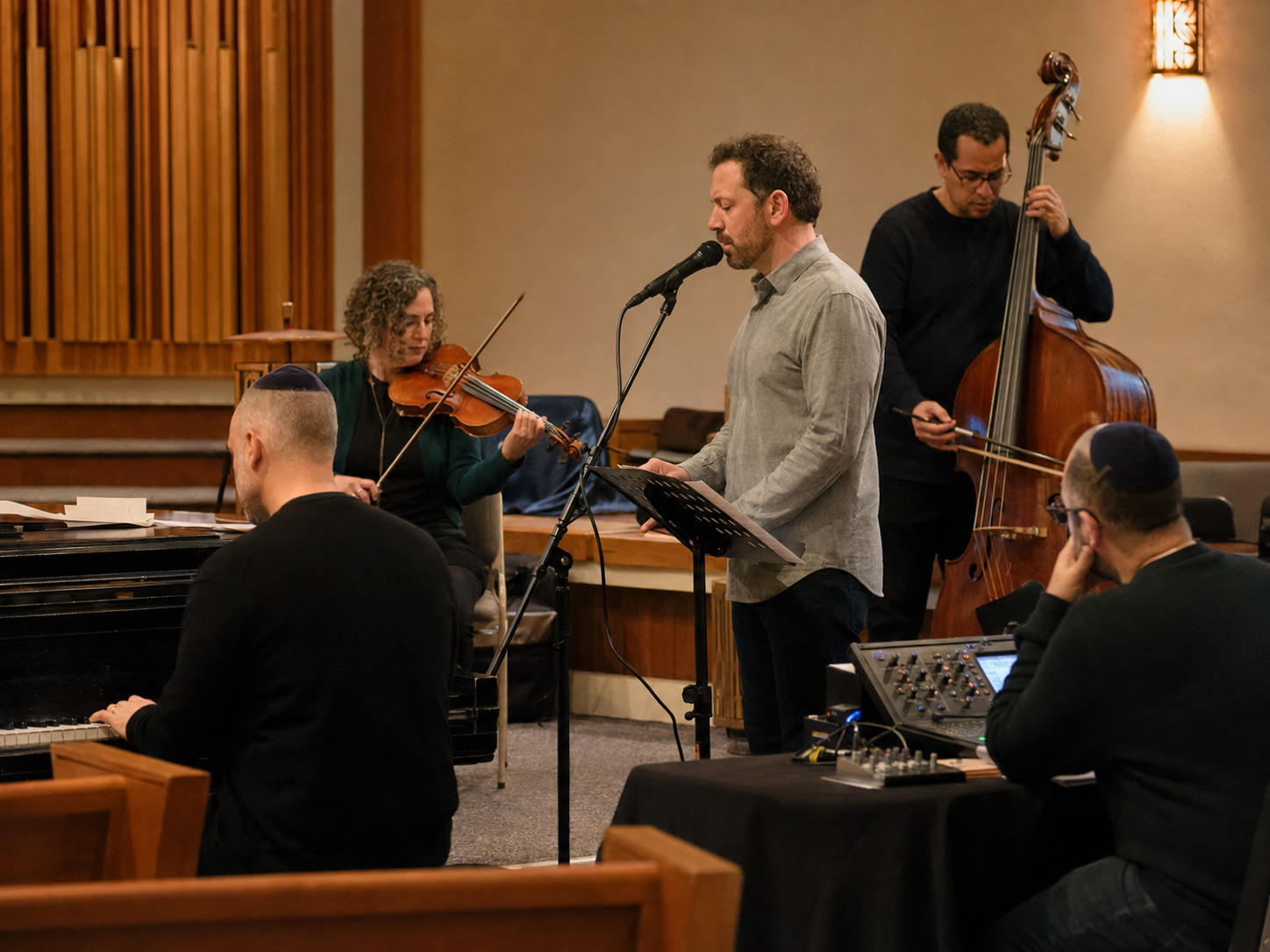
The short answer: a Kol Nidre backing track should be rehearsed as part of the service’s opening flow, not treated as a standalone recording that can be dropped in at the last minute.
Kol Nidre opens the evening service at the beginning of Yom Kippur. The moment carries deep meaning, established local practice, and a sound world that may differ from one congregation to another. A recorded accompaniment can support a cantor or singer when the congregation has chosen that approach, but the service plan should remain under the guidance of the rabbi, cantor, music leader, and community using it.
The practical work is straightforward: choose the appropriate version, learn the introduction, decide exactly where the track begins and ends, test the balance in the room, and preserve enough space for prayer and spoken liturgy.
Begin with the congregation’s service plan
Do not let the availability of a track decide the liturgy.
First confirm how the congregation observes the opening of Yom Kippur and what role music should have in that setting. The cantor or clergy should determine how Kol Nidre is introduced, repeated, chanted, spoken, accompanied, or followed in the local service.
The Spiritrax recording is a shortened musical arrangement with an instrumental introduction, one time through the melody, and an instrumental tag ending. That makes it a specific musical resource—not a complete replacement for a congregation’s prayer book, chant tradition, or clergy-led service plan.
Before rehearsal, write down:
- who gives the opening cue;
- whether the singer enters from the front, a side aisle, or another position;
- whether the track supports a solo voice, cantor, ensemble, or another planned use;
- what spoken or silent moment comes before the first sound;
- what follows the ending;
- and who can approve musical and liturgical decisions.
Those answers keep the recording in service to the gathering.
Choose the key with the complete phrase in mind
The Spiritrax Kol Nidre backing track is available in F minor, A-flat minor, and C minor. The right key is the one the intended singer can carry with steadiness, clarity, and appropriate expression across the whole version.
Do not choose from the first phrase alone. Test:
- The opening entrance after the instrumental introduction.
- The lowest sustained material.
- The highest or most intense phrase.
- The final vocal release before the instrumental ending.
A singer may reach every pitch and still feel crowded by the key once breath, room acoustics, nerves, and the emotional weight of the service are present. Rehearse at the effort level approved by the singer and music leader; do not use the final service as the first complete run with the selected key.
Learn the introduction as a cue, not background
An instrumental introduction gives the singer time to hear pitch, tempo, atmosphere, and the exact point of entry. That preparation only helps when everyone knows what they are listening for.
During rehearsal, mark:
- the first audible sound;
- the musical landmark that confirms the chosen key;
- the singer’s preparation breath;
- the exact entrance;
- and the gesture or cue that tells the operator and singer the service is beginning.
Run the introduction several times without continuing through the whole piece. The goal is to make the entrance calm and repeatable.
If the cantor or singer moves before beginning, rehearse that movement with the real introduction. A walk that takes ten seconds in an empty sanctuary can take longer when the room is full and quiet.
Decide who controls playback
One person should own the track start. The singer should not have to wonder whether the sound operator, accompanist, clergy leader, or another volunteer is about to press play.
Use a simple cue map:
| Moment | Owner | What is confirmed |
|---|---|---|
| Silence before the service begins | Clergy or service leader | The room and platform are ready |
| Playback start | One named operator | Correct file, key, volume, and device |
| Vocal entrance | Cantor or singer | The introduction has reached the rehearsed landmark |
| Final vocal release | Singer and music leader | The instrumental tag may continue without a premature spoken pickup |
| Transition after the track | Clergy or service leader | The next prayer, reading, or silence begins as planned |
In a small congregation, one person may hold more than one role. The assignments still need to be spoken and rehearsed.
Balance for text and presence
The Spiritrax arrangement uses viola, piano, and acoustic bass. Those colors can create a contemplative setting, but the recorded accompaniment should not overpower the live voice or make the room feel like it is listening to background music.
Test from several listening positions:
- near the singer;
- in the center of the seating area;
- toward the back of the room;
- and anywhere the architecture produces a strong echo or uneven coverage.
Listen for the singer’s words and line, the clarity of the introduction, and whether the instrumental ending leaves the intended amount of space. If the room is reverberant, more volume can reduce clarity rather than improve it.
Make one change at a time. Adjust speaker position, monitor level, microphone technique, or playback balance, then repeat the same passage. A careful sound check should make the room calmer, not turn the rehearsal into an endless search for a perfect setting.
Rehearse the ending and what follows
The track includes an instrumental tag after the vocal material. Decide how that ending functions in the service.
Ask:
- Does the singer remain in place through the tag?
- Does the congregation remain standing or seated according to the local plan?
- Is the next moment silence, prayer, a reading, or another musical cue?
- Who decides when that next moment begins?
- Does the operator let the file finish, stop at an approved point, or follow another rehearsed instruction?
Do not allow a volunteer to discover the answer while the track is already playing. Run the final vocal phrase, the complete instrumental tag, and the next service transition together.
The most respectful ending is the one the congregation has intentionally planned.
Build a dependable playback setup
Yom Kippur services can be long, and the opening carries unusual focus. Keep the technical plan simple.
Prepare:
- one clearly named final file in the chosen key;
- a tested primary playback device;
- an offline copy that does not depend on a live internet connection;
- a second tested device or another approved backup path;
- a wired connection when practical;
- power, adapters, and cables already checked in the room;
- notifications and automatic updates disabled for the service;
- and a printed cue note the operator can understand at a glance.
The cue note should name the file, key, start owner, singer entrance landmark, ending instruction, backup location, and the person who decides any change.
Do not keep multiple uncertain versions beside the final file. A label such as Kol Nidre - F minor - service is more useful than final new version.
Practice recovery without disturbing the moment
A backup plan should be quiet, brief, and known only to the people who need it.
Agree on what happens if:
- the wrong file begins;
- the track does not start;
- the singer misses the entrance;
- the volume is clearly wrong;
- or playback stops unexpectedly.
The congregation’s music and clergy leaders should decide whether to restart, continue without the track, move to another approved service path, or pause. The operator’s job is to follow that decision—not invent one from the booth.
Test one recovery in rehearsal. A plan that has never been spoken can become surprisingly difficult in a silent room.
Keep local practice and pronunciation authoritative
Kol Nidre belongs inside a living liturgical tradition. Pronunciation, melody, repetition, posture, timing, and the relationship between music and prayer can vary by community.
Use the congregation’s rabbi, cantor, prayer book, and established practice as the authority for those decisions. Online summaries can explain the calendar; they cannot choose the service for a local community.
For calendar planning, Hebcal notes that Yom Kippur begins at sundown and ends at nightfall on the corresponding dates each year. The Union for Reform Judaism’s Yom Kippur overview provides general holiday context. Neither source replaces the congregation’s own clergy and service materials.
A final rehearsal checklist
Before the service, confirm:
- The congregation has approved this musical use of the track.
- The intended singer and key are final.
- The singer knows the introduction and first entrance.
- The operator knows the exact file and cue.
- The singer can hear the support needed without the room being overpowered.
- The instrumental tag and next service transition have been rehearsed.
- Primary and backup files work offline.
- The final file is clearly separated from demos and alternate keys.
- The rabbi, cantor, or music leader owns any last musical or liturgical decision.
Then stop changing the system. A settled, modest plan is better than a complicated plan that has not been proved.
FAQ: Kol Nidre backing tracks
What does the Spiritrax Kol Nidre track include?
It is a shortened arrangement for viola, piano, and acoustic bass, with an instrumental introduction, one pass through the melody, and an instrumental tag ending. Review the product preview and details before deciding whether it fits the congregation’s plan.
Which keys are available?
The product page lists F minor, A-flat minor, and C minor. Test the complete vocal line with the intended singer before choosing the service file.
Can a backing track replace the cantor or service leader?
No. A backing track is accompaniment. The congregation’s rabbi, cantor, singer, and music leadership determine the liturgical and musical use.
Should we stream the track from the website during the service?
Use the purchased download and prepare an offline playback plan. Product previews contain a watermark voiceover; downloaded accompaniment files do not contain that preview watermark.
Can the track be customized?
The Spiritrax product page provides a customization path for requests such as a different key, tempo, cut, repeat, or other specific need. Submit any request early enough to review and rehearse the final result.
Let the track support the opening
Preview the Kol Nidre arrangement, choose the key for the actual singer, and rehearse the introduction, ending, balance, and playback cues with the congregation’s service leaders.
A dependable accompaniment plan should become almost invisible. The singer knows where to enter. The operator knows when to begin. The room can hear the voice. The ending has space. And the congregation’s own practice remains at the center of the service.
Preview the shortened viola, piano, and acoustic-bass arrangement in three available keys, then rehearse the final service file with your congregation's cantor, clergy, and playback volunteer.
Preview Kol Nidre