
Labor Day Worship Music Should Make Room for Work and Rest
Holiday & Special Occasion Music
By Spiritrax Content Studio · July 29, 2026
Updated July 29, 2026
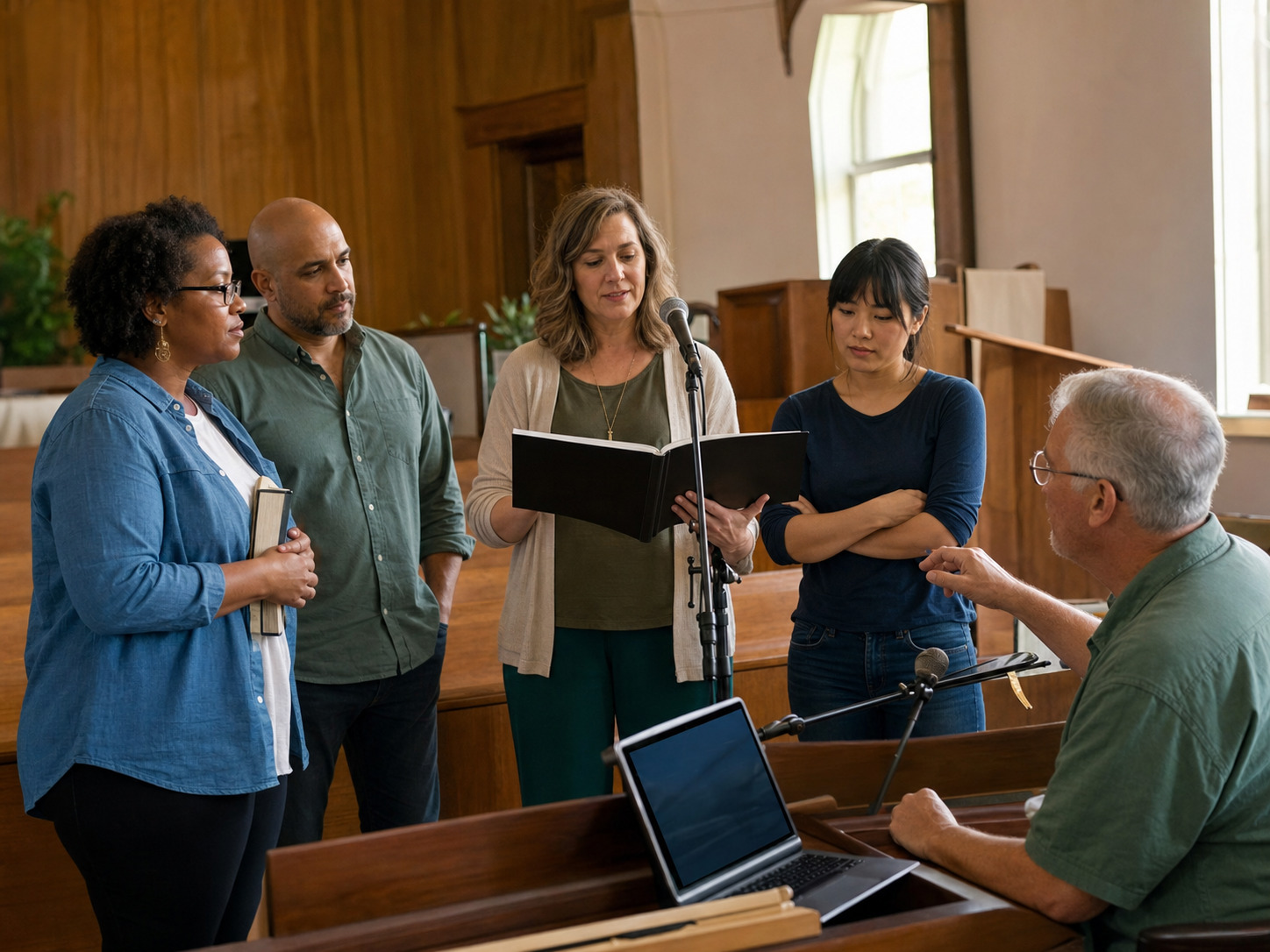
Labor Day worship music works best when it honors people’s daily work without turning the whole service into a holiday program.
The most useful songs connect work with gratitude, service, rest, justice, stewardship, creation, and care for neighbors. A small church, choir, soloist, senior-living community, or outdoor gathering can build a thoughtful musical arc with only a few well-placed hymns and dependable accompaniment.
The short answer
For a Labor Day weekend service, choose music that helps the congregation do three things:
- Give thanks for gifts, skills, provision, and shared labor.
- Pray for people whose work is difficult, dangerous, insecure, unseen, or unavailable.
- Leave with a sense of service that continues beyond the sanctuary.
One gathering hymn, one reflective response, and one confident sending song may be enough. Choose familiar melodies, comfortable keys, clear introductions, and arrangements that leave room for the people who are actually singing.
Begin with the service purpose
“Work” can mean paid employment, caregiving, study, volunteering, homemaking, creative labor, job seeking, retirement, ministry, and the quiet tasks that support a community.
Decide which part of that wide experience the service needs to hold.
| Service emphasis | Musical role |
|---|---|
| Gratitude | Celebrate gifts, provision, creation, and shared effort |
| Vocation or calling | Connect daily responsibilities with service and purpose |
| Justice and dignity | Make room for workers who are underpaid, unsafe, excluded, or overlooked |
| Rest | Let quiet music and silence resist the pressure to make every moment productive |
| Community | Emphasize cooperation, neighbor care, and work done together |
| Sending | Move from reflection toward practical service in the week ahead |
You do not need to cover every theme in every song. Let the service carry the full arc.
Choose hymns by function, not only by keyword
Few hymn titles say “Labor Day.” Many familiar hymns can still support the day because their texts address service, creation, stewardship, generosity, perseverance, peace, or neighbor care.
When reviewing options, ask:
- What does the text say about people and their work?
- Does the song honor a range of experiences, or only one kind of job?
- Can the congregation sing the melody comfortably?
- Does the arrangement fit the emotional place where it will appear?
- Will the words still make sense for someone who is unemployed, retired, overworked, caregiving, or grieving?
A song about service may fit the sending. A creation hymn may fit the gathering. A quiet prayer song may support intercessions for workers and families. Placement can make a familiar hymn feel newly relevant without forcing it into a theme.
Build a simple three-part musical arc
Gathering: gratitude without spectacle
Open with music that brings people together and establishes a clear, singable pulse.
The track should provide:
- an introduction the leader and congregation can hear;
- a key that supports ordinary voices;
- enough rhythmic shape to keep the room together;
- and an ending that leads naturally into welcome, prayer, or a reading.
Avoid beginning with the largest arrangement merely because the weekend feels special. The gathering song should help the room arrive.
Response: leave space for real lives
The middle of the service may hold prayers for workers, people seeking work, caregivers, teachers, first responders, farmers, service workers, business owners, public servants, artists, volunteers, and families under economic pressure.
Use a solo, choir response, instrumental hymn, or lightly led congregational song that can sit beside those prayers without competing with them.
A smaller arrangement can help the room listen. Check that the ending does not rush the next spoken moment.
Sending: connect worship with the week
The closing song can be confident without becoming a rally.
Choose an arrangement that:
- supports a clear final refrain;
- keeps the text understandable;
- gives the leader a dependable start;
- and ends in a way that supports the benediction, dismissal, or next community action.
The sending should feel like a next step, not a musical advertisement for busyness.
Keep the room inclusive
Labor Day language can unintentionally center only full-time paid employment.
Review spoken introductions and song choices for the people who may be:
- unemployed or underemployed;
- retired;
- unable to work;
- working more than one job;
- studying or training;
- caring for children, elders, or family members;
- volunteering;
- recovering from burnout;
- or doing essential work that is rarely noticed.
The service can honor work while also honoring rest, dignity, dependence, community, and human worth beyond productivity.
Use accompaniment to support participation
Backing tracks are especially useful when a pianist or full worship team is unavailable, a choir has limited rehearsal time, or a soloist needs a stable arrangement.
For each song, confirm:
- exact title and version;
- key;
- length of introduction;
- who begins the melody;
- any instrumental interlude or repeat;
- the ending;
- target playback level;
- and what happens immediately afterward.
Use a guide-vocal demo during preparation when it helps the singer or choir learn the melody and entrances. Move to the accompaniment-only file before the service so the live voices know what they must carry.
The Spiritrax guide to choosing a worship backing-track style can help compare piano-led, traditional, contemporary, choral, orchestral, acoustic, and reflective arrangements by service role.
Match the arrangement to the moment
A Labor Day service does not require one musical style.
| Moment | Useful track qualities |
|---|---|
| Gathering hymn | Familiar pulse, clear melody, comfortable key |
| Choir or solo feature | Enough musical support without covering the singer |
| Prayer response | Spacious texture, gentle ending, predictable shape |
| Instrumental reflection | Calm pacing that does not demand attention |
| Sending song | Confident entrance, clear final refrain, settled ending |
Listen from the seating area. A full arrangement that feels balanced through headphones may cover live voices in a small sanctuary. A quiet piano track may need enough volume for the congregation to hear the pulse.
Rehearse the transitions, not only the songs
The awkward moment is often between the track and the next spoken cue.
Run:
- the welcome into the first introduction;
- the reading or prayer into the response;
- the final chord into silence;
- the benediction into the sending song, if that is the chosen order;
- and the ending into dismissal or postlude.
Decide who starts playback, who gives the visible or spoken cue, and how much silence belongs after a reflective ending.
Keep the service from becoming a list of “work songs”
A search result can provide dozens of titles. The service does not need all of them.
Choose fewer pieces and give each one a clear job. Three well-placed songs usually create a stronger arc than six loosely related selections.
A practical plan might include:
- A familiar hymn of gratitude or creation for gathering.
- A solo, choir selection, or instrumental response around prayer for workers and neighbors.
- A hymn of service, stewardship, peace, or commitment for sending.
Use readings, prayers, silence, and spoken context to carry the parts of the theme that do not belong inside a song.
Review text and permissions carefully
Confirm that the words match the service’s pastoral and community context. Avoid introducing a song with claims the text does not make.
Also confirm the permissions that apply to:
- public performance;
- printed or projected lyrics;
- livestreams;
- archived video;
- recorded services;
- and the use of the specific sound recording.
Do not assume that a blanket music license, lyric license, livestream permission, and backing-track license are the same thing. Check the applicable license terms and the requirements of the rights holder.
Choose tracks early enough to test the key
A familiar hymn can still be difficult in the wrong key.
Test:
- the highest sustained phrase;
- the lowest text-heavy phrase;
- the final verse after the group is tired;
- the first entrance after the introduction;
- and the balance between the track and live voices.
If the arrangement is right but the key, tempo, lead-in, ending, or structure does not fit the confirmed service need, Spiritrax custom-track support can help with practical changes.
A Labor Day worship music checklist
- Name the service purpose before choosing songs.
- Include work, rest, dignity, service, and community with care.
- Choose each hymn by its function in the service.
- Use fewer songs with clearer roles.
- Test the key with the actual singer, choir, or congregation.
- Confirm the introduction, interludes, repeats, and ending.
- Keep guide vocals out of the service playlist.
- Rehearse spoken transitions into and out of tracks.
- Balance playback so live voices remain present.
- Download files before the service and keep a verified backup.
- Confirm performance, lyric, livestream, recording, and track permissions separately.
- Review language for people whose relationship to work is difficult or changing.
FAQ: Labor Day worship music
What hymns are appropriate for Labor Day?
Look for hymns about gratitude, creation, service, stewardship, justice, neighbor care, vocation, peace, and rest. Choose the exact text, key, arrangement, and placement for the service rather than relying on the title alone.
How many songs should a Labor Day service include?
The service does not need a large themed set. A gathering hymn, reflective response, and sending song can create a complete musical arc when readings and prayers carry the rest.
Should every song be about work?
No. Songs about gratitude, rest, creation, compassion, peace, and service can support the day without repeating one idea.
Can a small church use backing tracks for the whole service?
Yes, when the keys, introductions, levels, transitions, and endings are rehearsed. Use each track to support live participation rather than replace it.
Should the in-article music plan be celebratory or reflective?
It can include both. Begin with the community’s purpose and the placement of each song. Labor Day weekend can hold gratitude and confidence while also making room for fatigue, economic pressure, unsafe work, unemployment, and rest.
The takeaway
Plan Labor Day worship music around people, not a theme. Choose familiar, singable songs with clear service roles; make room for gratitude, work, rest, dignity, and neighbor care; and rehearse the transitions as carefully as the music. A simple, inclusive plan will serve the room better than a crowded list of holiday titles.
The Spiritrax Classic Hymns Collection brings together familiar accompaniment tracks in commonly sung keys so a church, choir, soloist, or small worship team can build a simple, participatory service plan.
Explore the Classic Hymns Collection