
Let the Silence Do Some of the Work in This Advent Hymn
Holiday & Special Occasion Music
By Spiritrax Content Studio · October 14, 2026
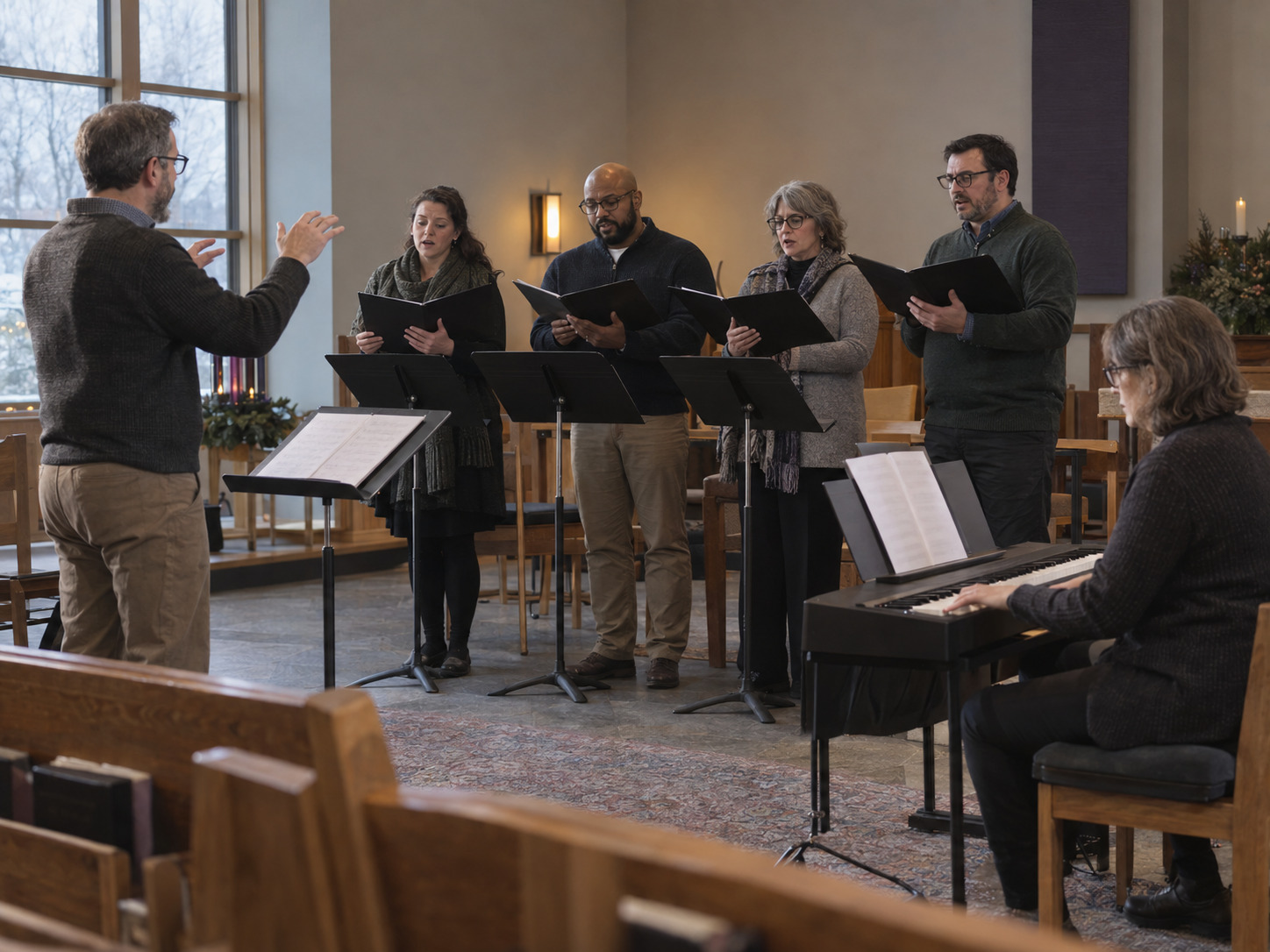
The short answer: “Let All Mortal Flesh Keep Silence” works best when the service plans the silence as carefully as the singing. Choose a comfortable key, learn the arrangement’s deliberate phrase spacing, keep the first verse restrained, and rehearse the transition into and out of the hymn so the room never feels hurried.
This Advent hymn does not need a large production to feel significant. It needs one shared pulse, clear breath, and enough space for the congregation or choir to receive each phrase. A backing track can make that structure dependable, but the worship team still has to decide who cues it, how the singers use the rests, and what the final sound leads into.
Decide what the hymn is doing in the service
Begin with placement. The same arrangement will feel different as a call to worship, a choir anthem, a response after a reading, an Advent candle moment, or a quiet Christmas Eve transition.
Ask:
- Does the room need to gather attention or continue an already quiet moment?
- Will a choir, soloist, small ensemble, or congregation sing?
- Is the hymn leading into prayer, Scripture, Communion, another song, or silence?
- Who will cue playback?
- What should happen after the final note?
Name the job before choosing a key or volume. A processional opening may need a clearer pulse and longer visual lead-in. A response after a reading may need less announcement and more stillness.
Learn the extra space inside the arrangement
The Spiritrax “Let All Mortal Flesh Keep Silence” backing track uses string orchestra, piano, and French horn across three verses. Its product description notes an added bar of rest after each phrase to create even four-bar phrasing.
That space is a musical feature, not dead air. If singers do not expect it, they may enter early, lose the pulse, or make the rests feel accidental.
Rehearse the phrase pattern without singing:
- Play one full verse.
- Have the leader conduct or gently mark the pulse through every rest.
- Ask singers to breathe during the planned space without rushing the next entrance.
- Repeat while speaking the text in rhythm.
- Sing at half volume before adding the full orchestral shape.
The goal is for everyone to feel that the silence belongs to the hymn. No one should have to guess whether playback stopped or the next phrase is late.
Choose the key around the people who will sing
The track is available in D minor, C minor, and F minor. Preview the same verse in each usable key with the actual singers who will lead it.
For each key, check:
- whether the lowest phrases remain supported and audible;
- whether the highest sustained notes stay free rather than pressed;
- whether the congregation can enter comfortably if it is invited to sing;
- whether the choir keeps clear diction at a quiet dynamic;
- whether the arrangement sits well with any live organ, piano, or instruments being added.
Choose the key that supports the whole service role. A choir feature may tolerate a different range than congregational singing. A soloist who begins comfortably still needs enough room to sustain the later verses without forcing.
Keep the first verse smaller than you think
The orchestral color can tempt the team to begin at the emotional level of the ending. Resist that. A restrained opening gives the arrangement somewhere to travel and keeps the text clear.
Try a simple three-verse arc:
| Verse | Musical role | Rehearsal cue |
|---|---|---|
| First | Gather the room | Quiet focus, clear consonants |
| Second | Deepen attention | Broader breath, warmer blend |
| Third | Let the full statement arrive | Supported sound, no rushing |
The exact dynamics should fit the room and singers. What matters is contrast. Record one rehearsal from the back of the sanctuary. If the first verse already sounds like a finale, reduce track or vocal intensity before adding more sound later.
Give every rest a purpose
The added bars between phrases can support worship when the team knows what the room is meant to do with them.
Use the rests to:
- complete a thought instead of clipping the final consonant;
- take one calm, shared breath;
- let the orchestration settle in a reverberant room;
- allow a processional or visual action to continue without musical crowding;
- prepare the next phrase in the same pulse;
- preserve stillness before the service moves on.
Avoid filling every gap with spoken direction, extra instrumental notes, or visible uncertainty. The worship leader does not need to explain the silence while it is happening. The cue should be clear enough that the room trusts it.
Rehearse the transition before the track begins
A quiet hymn can be unsettled by a noisy setup. Decide how the preceding service element ends, when playback begins, and how singers receive their first pitch.
A reliable sequence might be:
- The reading or spoken introduction ends.
- The room holds one intentional breath of silence.
- The designated leader gives a small visual cue.
- The sound volunteer starts the exact approved file.
- Singers hear the introduction and prepare the first entrance.
Practice this sequence from the previous element rather than beginning with everyone already poised to sing. Check practical details: music stands, page turns, microphone placement, and whether a late movement near the platform distracts from the opening.
If the hymn accompanies a procession, rehearse the walkers and singers together. The movement should follow the music’s pace, not force the track to feel rushed.
Let the room determine the playback level
Strings, horn, piano, and voices can accumulate quickly in a live sanctuary. A track level that sounds rich near the speakers may cover the choir in the center of the room or become cloudy in the back.
During sound check:
- listen from several seating areas;
- test the quiet first verse and the fullest final verse;
- confirm that consonants remain understandable;
- make sure singers hear enough pitch and pulse without an overpowering monitor;
- check whether long reverberation makes the phrase rests feel shorter;
- rehearse the final decay and the silence that follows it.
If words disappear, lower or reshape the accompaniment before simply making the choir louder. The arrangement should carry the singers, not make them compete.
For a livestream, listen through the stream mix as well. The natural room may hold the silence beautifully while the online feed needs a slightly clearer vocal-to-track relationship.
Plan the ending as part of the service
The final note is not the end of the task. Decide what follows and how quickly it happens.
Possible endings include:
- several seconds of unbroken silence;
- a spoken prayer;
- the next Scripture reading;
- a candle-lighting action;
- an instrumental transition;
- a quiet move into Communion or another act of worship.
Write the plan into the service cue sheet. The sound volunteer should know whether to let the track decay completely, when microphones remain open, and who initiates the next element.
Do not allow page shuffling, stage movement, or an immediate spoken pickup to erase the ending by accident. Rehearse the final release and the first action afterward as one sequence.
A 30-minute rehearsal plan
Minutes 0–5: name the service role
Confirm placement, singers, key options, playback owner, and what follows the hymn.
Minutes 5–10: learn the phrase spacing
Listen through one verse while conducting the pulse through the added rests. Speak the text in rhythm.
Minutes 10–15: choose the key
Test the lowest and highest phrases in D minor, C minor, and F minor as appropriate. Choose for the actual singers and service role.
Minutes 15–20: shape the three verses
Run the opening and final verse at deliberately different dynamic levels. Protect text clarity.
Minutes 20–25: rehearse the transition
Begin from the preceding reading, announcement, or movement. Practice the exact playback cue and first entrance.
Minutes 25–30: run the ending
Complete the final phrase, release, track decay, silence, and next service action. Listen once from audience distance.
Common problems and practical fixes
Singers enter early after the rests
Conduct or mark the pulse through the full added bar. Practice the pattern without singing, then speak and sing it.
The hymn feels heavy
Reduce the opening volume, clarify consonants, and let the accompaniment move in a steady pulse. Reverence does not require dragging.
The choir loses pitch at a quiet dynamic
Check monitor placement, choose a more comfortable key, and rehearse the first sound after each rest in small groups.
The room becomes muddy
Listen away from the platform. Lower the track, simplify added live instruments, and allow reverberation to finish before the next phrase.
The ending gets interrupted
Put the final silence and next cue in the service plan. Rehearse everyone who moves or speaks immediately afterward.
FAQ: planning “Let All Mortal Flesh Keep Silence” with a backing track
Which keys are available?
The Spiritrax arrangement is available in D minor, C minor, and F minor. Preview the range with the singers who will actually lead it.
Why is there extra space after each phrase?
The arrangement adds a bar of rest after each phrase to create even four-bar phrasing. Count through that space and treat it as part of the musical plan.
Is the track better for choir or congregation?
It can support a choir, soloist, ensemble, or congregation when the key, playback level, and service placement fit the people singing. Test the complete setup in the room.
Should we add organ or piano?
Only if the live instrument has a clear role and has been rehearsed with the exact track. Extra sound should support entrances and singing, not crowd the orchestration.
The hymn becomes spacious when everyone trusts the same plan. A comfortable key, counted phrase rests, restrained opening, careful room balance, and a rehearsed final silence let the music support Advent worship without crowding it.