
Meditation Music Works Best When It Leaves Space
Genre & Audience Music Resources
By Spiritrax Content Studio · June 24, 2026
Updated June 24, 2026
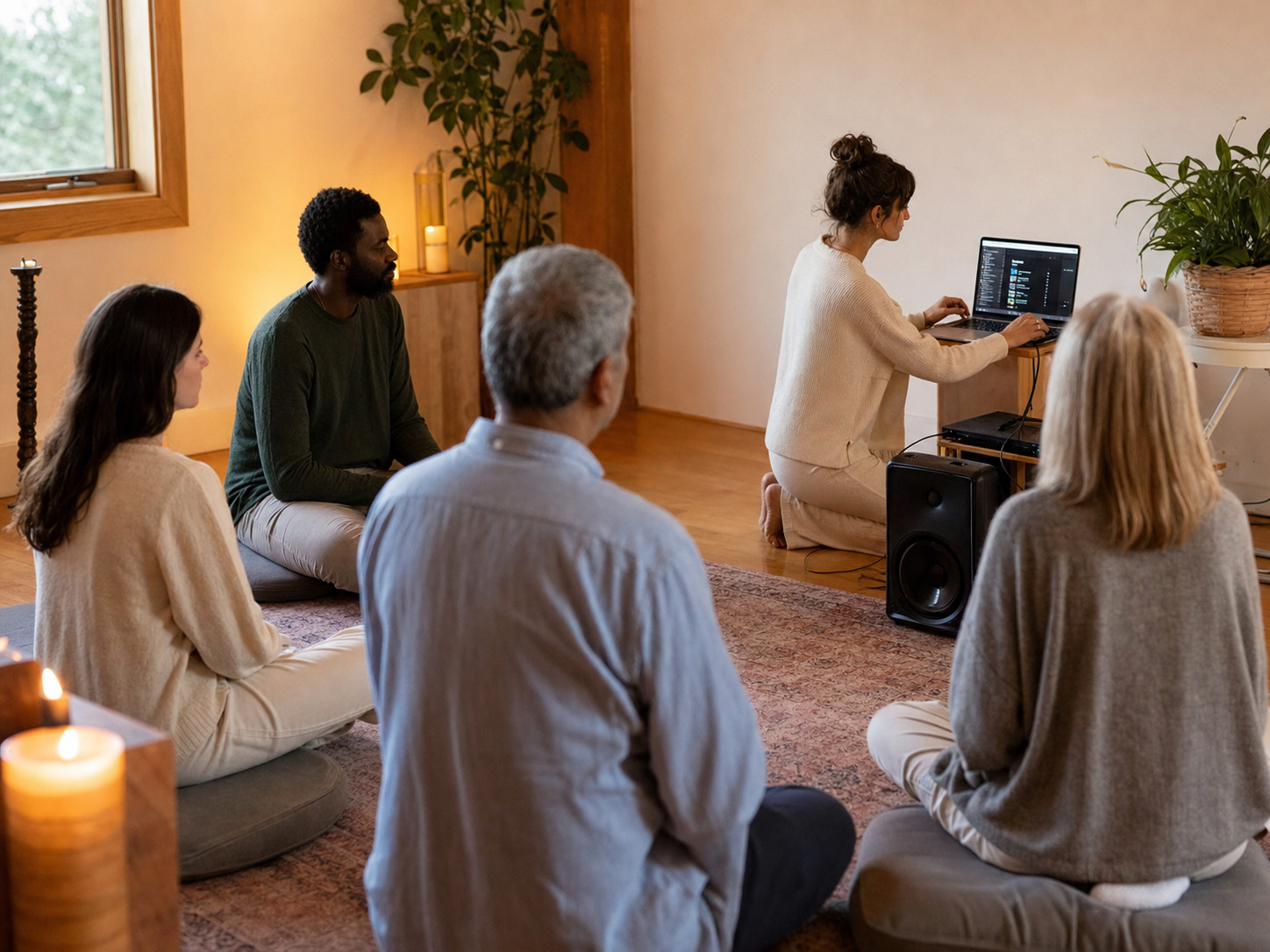
Meditation music works when it gives people something steady without asking for attention every few seconds.
That is true for a prayer circle, yoga class, guided relaxation session, sermon podcast, quiet video, small group reflection, or personal spiritual practice. The backing track should support the pace of breathing, speech, movement, and silence. If it keeps announcing itself, the room has to work around the music instead of settling into it.
Start with the role of the track
Before choosing a file, decide what the music is supposed to do.
A meditation track can serve several different jobs:
- create a calm room tone before people arrive,
- support quiet prayer or reflection,
- sit beneath guided spoken instructions,
- mark a transition between readings or movements,
- give a video or podcast a reflective bed,
- or provide a simple practice track for someone at home.
Each job needs a different amount of musical motion. A track that works beautifully as arrival music may be too active under spoken meditation. A soft ambient track may be perfect for prayer but too open-ended for a timed class.
Choose texture before length
Length matters, but texture matters first.
Listen for how the track changes over time. Does it stay steady? Does it build? Does it introduce rhythmic motion? Does it include nature sounds, bell tones, piano, synth pads, or a drone? Those details affect how people breathe, speak, and move.
For guided meditation or spoken prayer, choose a track that leaves space around the voice. For relaxation, a little warmth and movement can help the room settle. For yoga or breathwork, a gentle pulse may help pacing as long as it does not become a performance cue.
Spiritrax has practical options in the Prayer & Meditation catalog path, including tracks built for meditation, prayer, and relaxation contexts.
Test the track with the actual voice
Do not choose meditation audio by listening only on laptop speakers.
Play the track under the actual person who will speak, sing, pray, or guide the room. Then listen from several places if the event is in person. A track that seems quiet at the table can become too loud through a speaker. A nature sound that feels peaceful alone may distract when someone is reading.
Check three things:
- Can the speaker's words stay clear?
- Does the music support the pace instead of pulling it faster?
- Does the ending feel calm, or does it create an awkward cutoff?
If the answer is no, choose another version before the session begins.
Make a simple cue plan
Reflective settings still need practical cues.
Write down when the track starts, who starts it, how loud it should be, and how it ends. If the session includes silence, decide whether the music stops before the silence or continues quietly underneath it. If the room includes movement, decide whether the track should change volume during transitions.
A small cue sheet can prevent the most common problems:
- music starts while the leader is still speaking,
- the track is too loud for the first instruction,
- the ending arrives before the prayer or exercise is complete,
- a phone or laptop notification interrupts playback,
- or the wrong file is used because several versions were downloaded.
Keep the final file, backup file, and cue notes together.
Use the right amount of sound
Meditation and prayer do not need to sound empty, but they do need room.
If the music is for a live group, keep the volume low enough that people can hear their own breathing and the leader's voice. If the music is for a podcast or video, check the mix on phone speakers, earbuds, and a laptop. Quiet tracks can disappear on small speakers, while low drones can become heavy on headphones.
For multimedia use, leave extra care around rights and permissions. A downloaded backing track gives you the recording you purchased, but public posting, livestreaming, film, TV, or other distribution can involve separate usage questions depending on the project and platform.
A quick selection checklist
Use this before the room is full:
- Match the track to the purpose: arrival, guided voice, prayer, movement, or background bed.
- Listen for texture, not only length.
- Test the track under the actual speaking voice.
- Set the volume in the real space or on the real publishing format.
- Save the final file in one place with a clear name.
- Keep a backup playback device if the session depends on audio.
- Confirm any permissions needed for public posting, streaming, or commercial multimedia use.
FAQ: meditation and prayer backing tracks
Can a backing track be used under spoken meditation?
Yes, if the arrangement leaves room for speech and the volume is tested with the actual voice. Avoid tracks that become too busy under instruction or prayer.
What kind of track works for relaxation?
Gentle piano, soft pads, drones, nature textures, or light rhythmic motion can work. The right choice depends on whether the session is guided, silent, movement-based, or meant for personal listening.
Should the music stop during silence?
That depends on the purpose. Some leaders prefer silence with no music; others use a very quiet bed to hold the room together. Decide before the session and write the cue down.
Can meditation tracks be used in videos or podcasts?
They can be useful for multimedia, but distribution may involve additional rights or licensing questions. Check the terms for your specific use before posting or monetizing content.
The takeaway
A good meditation track should make the room easier to lead.
Choose the purpose first, test the texture under the real voice, write down the cue, and keep the playback plan simple. Then browse Spiritrax Prayer & Meditation tracks for calm, downloadable options that fit prayer, relaxation, meditation, and reflective content.