
Messiah Excerpts Need a Plan Before the Choir Sings
Worship Music & Hymn Resources
By Spiritrax Content Studio · June 29, 2026
Updated June 29, 2026
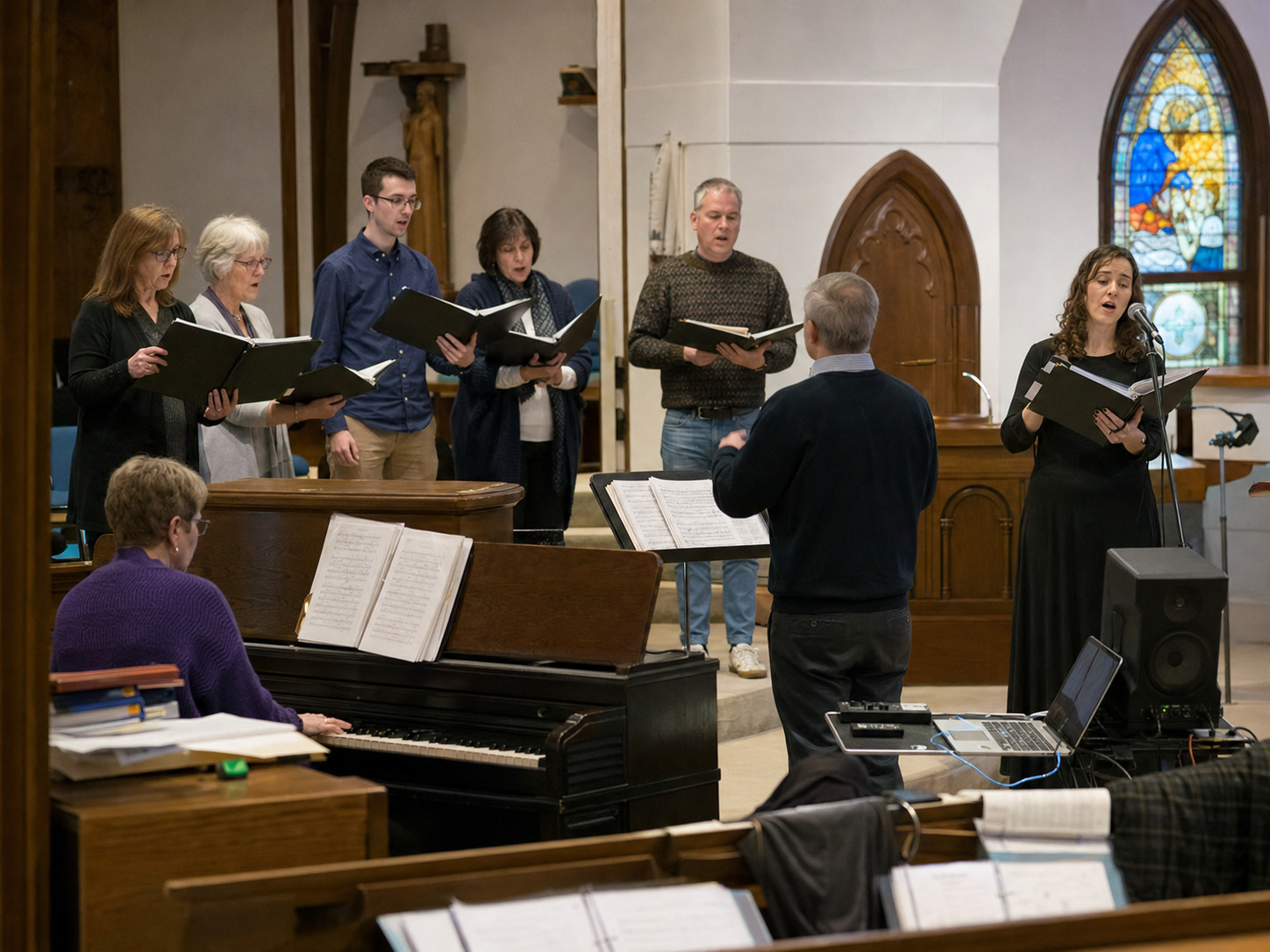
Handel's Messiah can enter a service or concert in many different ways. A choir may need the "Hallelujah Chorus." A soloist may need one aria. A worship leader may want a short Advent, Christmas, Lent, Holy Week, or Easter moment. A community group may be preparing excerpts instead of the whole oratorio.
That flexibility is useful, but it also creates planning problems. Messiah is not one song with one setup. Each excerpt has its own entrance, breath, tempo, ending, and rehearsal need.
A backing track can make the plan more stable when the choir, soloist, or small ensemble does not have a live orchestra available. The key is choosing the excerpt for the moment, then rehearsing the track like part of the service rather than a last-minute audio file.
Decide what the excerpt is doing
Before choosing a track, name the job.
Is the excerpt meant to:
- open a Christmas worship service;
- support an Easter celebration;
- give the choir a familiar anthem;
- feature one trained soloist;
- let a small ensemble sing with more support;
- provide a recital or concert excerpt;
- underscore a reflective service moment?
The answer affects the length, placement, volume, and rehearsal time. A triumphant closing chorus asks for a different room setup than a quiet solo aria.
Separate choir needs from soloist needs
Choirs and soloists use accompaniment differently.
A choir usually needs:
- a clear introduction;
- steady tempo;
- enough accompaniment detail to support entrances;
- a rehearsal process that locks consonants and cutoffs;
- a playback level that does not cover the choir.
A soloist usually needs:
- a comfortable key or range decision;
- a reliable first pitch;
- breathing room in phrases;
- a track that supports line and diction;
- a final cadence that leaves space for the room.
Those needs can overlap, but they are not identical. If the same Messiah movement is being used by both a choir and soloist in different settings, treat each use as its own plan.
Rehearse the entrance and the ending first
Most track problems show up at the edges.
The entrance tells singers when the music has truly begun. The ending tells the room when to breathe, applaud, pray, move, or remain silent. If those two moments are uncertain, the middle of the piece will feel less secure.
During rehearsal, mark:
- the first audible cue;
- who gives the starting signal;
- whether the choir or soloist enters after a count, chord, or pickup;
- how long the final sound rings;
- whether the next service element begins immediately or after silence.
This keeps the track from feeling separate from the event.
Use the full collection as a planning tool
Spiritrax offers The Complete Messiah album download for teams that need multiple Handel accompaniment options in one place.
That matters because many worship and concert plans change. A choir may start with one chorus, then add a soloist. A Christmas service may need one familiar excerpt and one quieter moment. An Easter program may use a different movement than originally planned.
When the collection is the planning hub, the team can compare options without rebuilding the whole accompaniment plan from scratch.
Build a short excerpt map
A simple map prevents confusion during rehearsal week.
| Moment | Excerpt | Singers | Track use |
|---|---|---|---|
| Prelude | quiet solo or instrumental-style excerpt | soloist | sound check early |
| Anthem | familiar chorus | choir | rehearse entrances |
| Reflection | shorter aria or excerpt | soloist | keep volume low |
| Closing | larger chorus | choir | confirm ending cue |
The map does not need to be complicated. It only needs to show which excerpt belongs to which moment and who is responsible for the cue.
Check the playback setup in the actual room
Messiah can sound thin if the track is too quiet and crowded if it is too loud. The goal is support, not competition.
Before the service or concert, test:
- speaker placement;
- microphone balance;
- whether the choir can hear the track;
- whether the congregation or audience hears the words clearly;
- whether piano, organ, or live instruments are also being used;
- the transition into and out of each excerpt.
If the room has a strong natural echo, keep the track clear and avoid overloading the low end. If the room is dry, make sure the singers still feel supported.
Match the excerpt to the season without forcing it
Messiah is often associated with Christmas and Easter, but individual movements can serve different settings. Some are celebratory. Some are reflective. Some need a strong choir. Some are better for a trained soloist.
A practical seasonal plan asks:
- Does this text fit the service theme?
- Is the tempo right for the room?
- Can the singers prepare it well with the rehearsal time available?
- Does the track support the moment without making it feel oversized?
It is better to choose one excerpt that lands cleanly than to crowd the service with too many ambitious pieces.
FAQ: Messiah backing tracks for excerpts
Can a choir rehearse Messiah with a backing track?
Yes. A backing track can give a choir consistent tempo, entrances, and accompaniment texture when a live orchestra is not available. The choir should still rehearse starts, cutoffs, diction, and balance with the exact track before performance.
Is the Hallelujah Chorus the only Messiah excerpt churches use?
No. The "Hallelujah Chorus" is the best-known excerpt, but Messiah includes many solo and choral movements that can fit Christmas, Easter, concerts, and worship services when chosen carefully.
Should a soloist practice with the track before the service?
Yes. A soloist should rehearse with the exact accompaniment track early enough to learn the introduction, pacing, breath points, and ending. Messiah solos can feel exposed if the first rehearsal with the track happens too late.
Is a full Messiah collection useful if we only need one excerpt?
It can be, especially for churches, choirs, schools, and community groups that use Messiah across multiple seasons. A collection gives the music leader more options when the service plan changes.
The takeaway
Messiah works best when the excerpt has a clear job.
Choose the movement for the moment, separate choir needs from soloist needs, rehearse the entrance and ending, and test the track in the actual room. A strong backing-track plan lets the music feel steady without making the service or concert feel overbuilt.
Start with the Spiritrax Complete Messiah album download when you need flexible accompaniment options for choir, soloist, worship, and seasonal excerpt planning.
Prepare choir, soloist, and worship-service excerpts with the Spiritrax Complete Messiah album download, including accompaniment tracks that can support rehearsal and performance planning.
View the Complete Messiah Album