
Let “Now Thank We All Our God” Grow with the Congregation
Holiday & Special Occasion Music
By Spiritrax · September 22, 2026
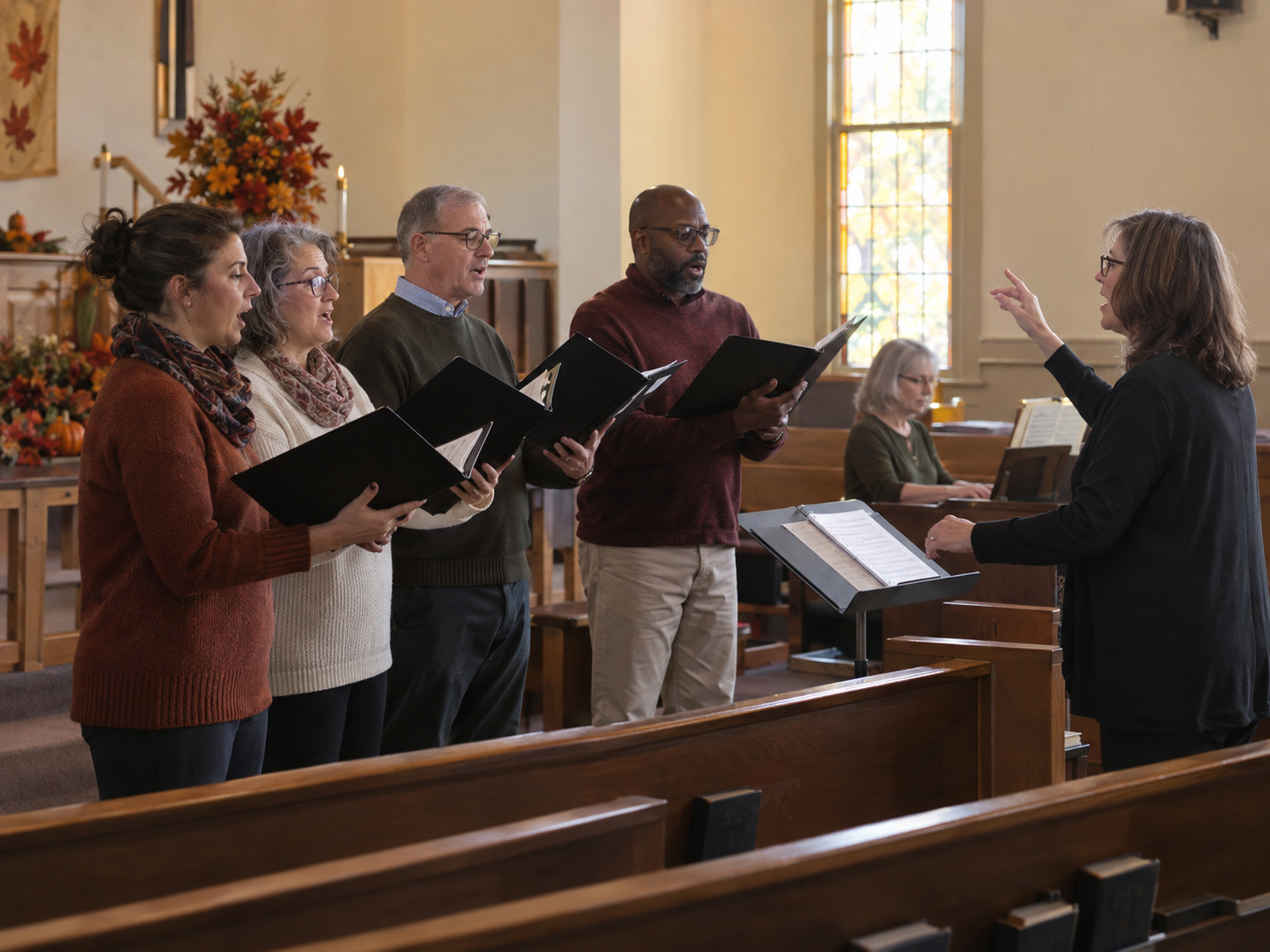
“Now Thank We All Our God” can anchor a Thanksgiving service without turning the entire service into a long sequence of seasonal selections. For a small choir or congregation using a backing track, the main preparation is musical: settle on the key, listen through the actual arrangement, and decide how the voices enter and how each verse grows.
Spiritrax's “Now Thank We All Our God” accompaniment is an orchestra-and-organ arrangement. Its catalog page lists F major as the original key, with C and A major previews, and says the instrumentation builds across the verses. Those are reasons to rehearse the whole selection, not just its familiar opening.
Choose a key for the people who will sing
Compare the available previews with the actual choir or congregation's range in mind. Sing the complete melody, including the last verse, rather than selecting a key from the first phrase. The leader should be able to start confidently, and the congregation should not have to strain to stay with the recorded arrangement.
If a soloist begins and the room joins later, test both roles in the same key. A comfortable solo opening is not enough if the group cannot carry the final verse. Keep the chosen key in the service plan and the playback filename so volunteers do not have to guess among downloads.
The online previews contain an audio watermark voiceover; the catalog says purchased accompaniment files do not. Use previews to compare versions, then rehearse with the actual downloaded file rather than assuming the preview is a service-ready source.
Map the arrangement's growth
Because more instruments enter as the arrangement progresses, make a simple verse map while listening:
| Moment | Rehearsal question |
|---|---|
| Opening | Who gives the congregation its pitch and first entrance? |
| Between verses | How much instrumental time does the room hear before singing again? |
| Fuller final verse | Can the words still be heard when the accompaniment becomes larger? |
| Ending | Will the leader let the last chord finish before speaking? |
This is not a request to force every verse into the same volume. It is a way to keep the recorded growth from surprising the singers. Have a leader or choir model the first entrance when the congregation needs it. Listen from the back of the room while a rehearsal group sings the fullest section; adjust playback balance before asking people to sing harder.
Rehearse the handoffs around the hymn
The hymn may follow a reading, a prayer, or a spoken invitation. Give the operator one exact start cue and let the person leading the music know what they will hear before the first sung word. If the service has a pause for reflection, do not make the backing track responsible for guessing when that pause ends.
Run the complete sequence once: spoken transition, playback start, first entrance, every verse-to-verse return, last chord, and the next speaker's first words. A rehearsal that begins at the first sung note misses the fragile moments on either side. Our Thanksgiving service music plan puts this decision in the wider order of worship; this guide focuses on the exact hymn recording.
If a small choir sings while the congregation listens, agree whether singers need a conductor cue at the start of each verse. If the congregation joins, consider a brief verbal invitation before playback rather than talking over the introduction. Practices vary by community; use the form that fits your own service.
A short rehearsal checklist
- Preview the available keys and sing the complete melody in the selected one.
- Confirm the exact purchased track and the correct key in the operator's folder.
- Mark the opening cue and every verse-to-verse return.
- Listen from the room, especially where the orchestration is fullest.
- Name the person who starts playback and the person who leads the first entrance.
- Let the final sound end before the next reading or announcement.
- Confirm any permissions needed for the actual use of the recording and hymn in your service or stream.
Is this arrangement suitable for congregational singing?
The Spiritrax product describes a moderate tempo and small melodic range intended to make congregational singing approachable. Test the available key and full arrangement with your own room; that description does not substitute for rehearsal.
Can I use the online preview in the service?
The preview includes an audio watermark. Compare the previews to choose a key, then use the purchased accompaniment file and verify any applicable permissions for your setting.
Should the choir sing every verse at the same volume?
Not necessarily. The recorded orchestra-and-organ texture grows over the verses. Rehearse the final verse at realistic playback level so the text remains clear without forcing voices against the track.
Compare the available keys and preview the orchestra-and-organ accompaniment before planning the hymn with your singers.
Preview the Hymn Track