
Let “Now Thank We All Our God” Grow Verse by Verse
Holiday & Special Occasion Music
By Spiritrax Content Studio · October 21, 2026
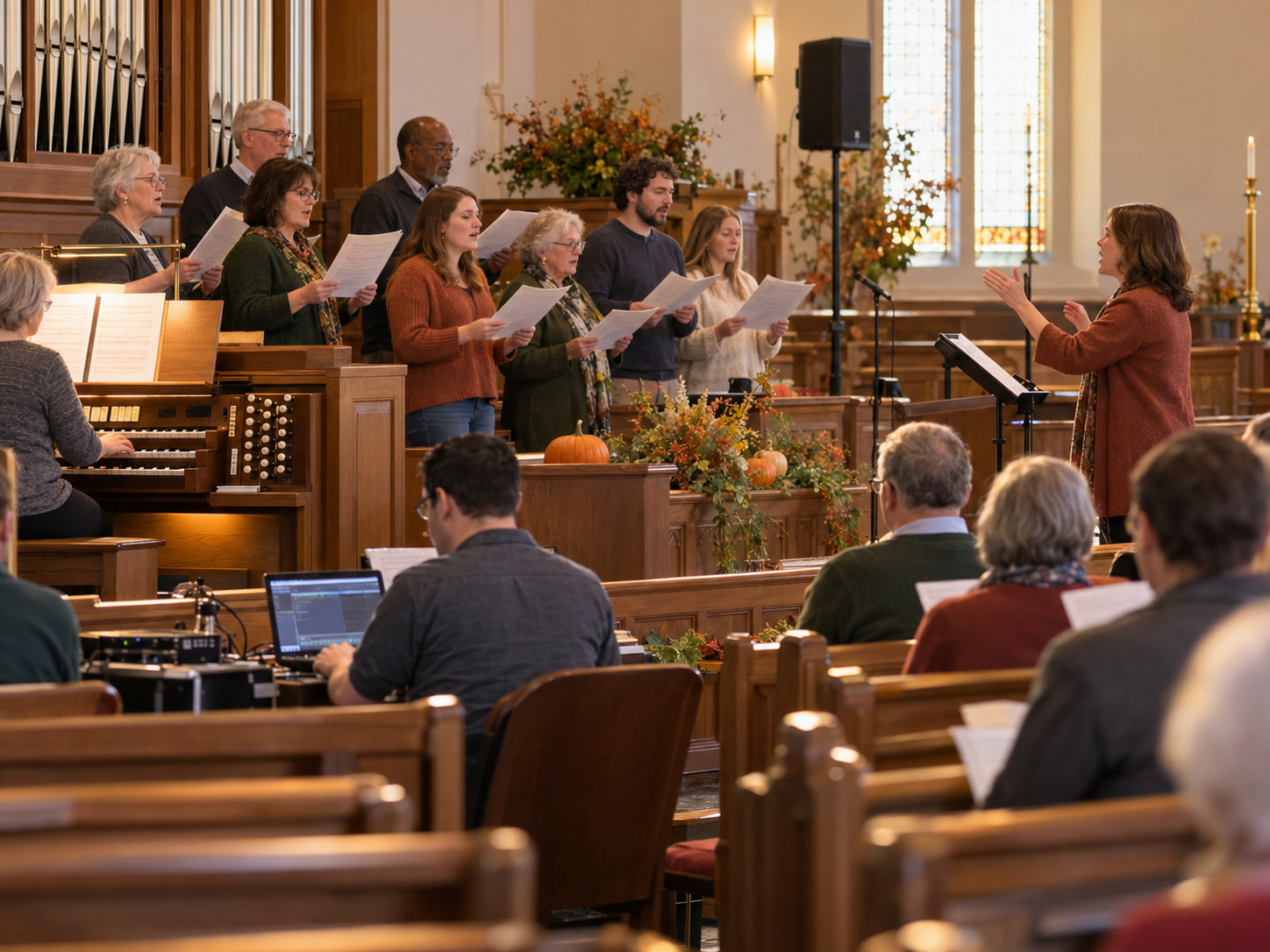
The short answer: lead “Now Thank We All Our God” as a shared act of gratitude, not a performance the congregation watches. Choose the key for ordinary voices, teach the first entrance, let the orchestral build grow across the verses, and plan the final cadence and silence before the service begins.
The Spiritrax “Now Thank We All Our God” backing track is available in F, C, and A major. Its traditional organ-and-orchestra arrangement moves at a moderate tempo and adds instruments as it progresses, which can help a congregation feel the hymn gathering strength without asking a volunteer team to build a live arrangement from scratch.
Decide who is meant to sing
The same hymn can serve as a congregational song, choir-led hymn, solo, offering response, or closing piece. Those jobs need different plans.
| Service use | Primary rehearsal question |
|---|---|
| Congregational hymn | Can ordinary voices hear the entrance and carry the full range? |
| Choir-led singing | Does the choir support participation without covering the room? |
| Solo or small group | Does the key let the text remain clear and warm? |
| Offering or reflection | Does the arrangement draw the right amount of attention? |
| Closing hymn | Does the final verse and cadence feel like a confident sending? |
Name the role in the service order. If the congregation is invited to join, say when. If a soloist begins and the room enters later, rehearse that handoff instead of assuming people will recognize it in real time.
Choose the key with the room, not one singer
Spiritrax provides F, C, and A major versions. Do not choose only from the leader’s most comfortable opening phrase.
Test the complete melody with the people who will actually lead it. Pay particular attention to:
- the highest repeated phrase;
- lower words that must still carry through the room;
- the final verse after voices have already sung the earlier material;
- older or untrained singers who may join from the pews;
- and whether the leader can stay present without oversinging.
For congregational use, the useful key is the one that keeps the melody inside a shared, singable range. A soloist may prefer more brilliance or warmth, but that choice should not force the room into listening when the service plan expects participation.
Run one verse in each realistic option, then choose. Changing keys during the final sound check creates uncertainty for singers, slides, printed materials, and the playback operator.
Teach the entrance before teaching the whole hymn
A familiar tune can still begin weakly if people do not know what to listen for.
Play the introduction once during rehearsal and ask the choir or leaders to identify the exact breath and first word. Repeat only the entrance and the first phrase. Then stop.
Confirm:
- who gives the visible cue;
- whether the organ or another orchestral voice carries the clearest pickup;
- when the congregation is invited to stand or look up;
- whether spoken words finish before the track begins;
- and whether the sound volunteer can hear the same cue as the singers.
Do not solve an uncertain entrance by making the track excessively loud. The congregation needs a clear musical invitation and a leader whose breath is visible.
Let each verse have a purpose
The arrangement builds as more instruments enter. Use that shape instead of singing every verse with the same weight.
Assign one simple purpose to each verse in the service plan. For example:
- Remember: sing with clear text and enough space for people to recognize what has carried them.
- Trust: let the middle verse feel steadier and more communal rather than merely louder.
- Praise: allow the final verse to receive the fullest sound and most confident leadership.
The exact language should fit the congregation and occasion. The point is to give the musical build a reason. When the orchestra grows, the room should feel the thought widening with it.
Avoid adding constant spoken commentary between verses. If a reading, testimony, or prayer belongs in the same service section, place it before or after the hymn unless the track has been intentionally prepared for an interruption.
Balance organ, orchestra, leader, choir, and congregation
A full recorded arrangement can feel supportive in headphones and oversized in a live sanctuary.
Begin sound check at a moderate level. Ask a listener to move through the room while the choir or a representative group sings. Check the front, middle, rear, and any side area where the speaker coverage changes.
Listen for four things:
- Can people hear enough track to stay together?
- Can they still hear their own voices and nearby singers?
- Does the leader remain understandable without pushing?
- Does the final orchestral build grow without swallowing the words?
If the track covers the room, lower the playback before raising every microphone. Congregational singing depends on shared acoustic feedback; people participate more confidently when they can hear that others are singing too.
If only a soloist or choir will sing, check that the accompaniment leaves the text in front. The arrangement should frame the words, not compete with them.
Rehearse the verse transitions
Many hymn performances lose confidence between verses rather than inside them.
Listen for the final note of one verse, the inter-verse movement, and the pickup into the next. Decide whether singers breathe together immediately, release and reset, or follow a short instrumental link.
Practice the transitions in this order:
- last phrase of verse one into verse two;
- last phrase of verse two into the final verse;
- the final phrase into the closing cadence and silence.
The sound volunteer should keep the file running unless the service plan explicitly includes a stop. The leader should avoid speaking over an orchestral transition that the congregation needs as its cue.
Fit the hymn into the Thanksgiving service
“Now Thank We All Our God” can work as gathering music, a response after testimony or prayer, an offering hymn, or a closing song. Placement changes the way the track should enter the room.
After spoken gratitude
Let the final speaker finish. Hold one unhurried breath, then give the playback cue. The pause separates the testimony from the musical introduction without making the hymn feel disconnected.
During offering
Confirm whether the congregation sings, listens, or joins on a later verse. Time the service action during rehearsal so people are not still moving when the strongest final cadence arrives.
As a closing hymn
Keep the introduction and first entrance direct. Plan whether a benediction follows immediately or after a brief silence. If people are leaving, decide whether the music ends before movement begins.
In a community or intergenerational service
Provide printed or projected words at a readable size, explain participation simply, and choose the key around the full room rather than the strongest choir section.
For a broader seasonal plan, Spiritrax’s guide to choosing Thanksgiving music the congregation can carry can help keep the service focused instead of overfilled.
Prepare the playback volunteer
Give the operator one final file and one plain-language cue.
The run sheet should include:
- exact filename and key;
- service position;
- who gives the
GO; - what the first audible cue sounds like;
- whether the congregation begins immediately or after a leader;
- expected playback level;
- final cadence behavior;
- what follows the hymn;
- and the location of the tested backup file.
Download the track before the service. Silence notifications, connect the actual device to the actual sound system, and test the backup on a second prepared device. A backup is useful only if the volunteer knows how to play it through the room.
A 20-minute rehearsal plan
Minutes 1–4: compare keys
Sing one complete verse in the realistic options. Choose the key for the group that will lead and participate.
Minutes 5–8: learn the entrance
Practice the introduction, shared breath, first phrase, and visible cue.
Minutes 9–12: map the build
Name the purpose of each verse and listen for the orchestral additions.
Minutes 13–16: rehearse transitions
Run the end of each verse into the next entrance, then rehearse the final cadence.
Minutes 17–20: test the room
Sing one uninterrupted run with the actual sound system while one listener checks balance from the congregation’s position.
Final checklist
- The service role is clear: solo, choir, congregation, reflection, or closing.
- The key was tested with the actual leaders and representative ordinary voices.
- The first entrance has one audible cue and one visible leader.
- Each verse has a musical and service purpose.
- The orchestral build grows without covering the text.
- The choir supports participation instead of performing over the room.
- Verse transitions and the final cadence have been rehearsed.
- The playback volunteer has one approved file, cue, level note, and backup.
- The final silence or next spoken action is planned.
- Lyrics, licenses, and recording-use permissions are handled separately from musical preparation.
FAQ: using “Now Thank We All Our God” with a backing track
Which keys are available?
The Spiritrax product page lists F, C, and A major. Test the complete melody with the people who will sing before choosing the service file.
Can the congregation sing with this arrangement?
Yes. Its moderate tempo and relatively compact range are designed to support congregational use, but the key, playback level, introduction, and visible leadership still need to fit the room.
Should the choir sing every verse?
The choir can lead throughout, begin the hymn, add harmony later, or support only selected verses. Choose one plan and make the congregation’s invitation clear.
How loud should the backing track be?
Loud enough to provide pulse, harmony, and entrances, but low enough that people hear their own voices and the leader’s words. Check from the pews rather than judging beside the speaker.
Is this hymn only for Thanksgiving Day?
No. It can serve any worship moment centered on gratitude, trust, praise, remembrance, or a confident sending. The Thanksgiving season simply gives the congregation an especially clear frame.
The strongest result is not a large sound. It is a room that knows when to enter, can sing the chosen key, hears the arrangement grow, and reaches the final cadence together.
Preview Now Thank We All Our God in F, C, and A major, then choose the traditional organ-and-orchestra version that helps your soloist, choir, or congregation sing with confidence.
Preview the Three Keys