
Let “Now Thank We All Our God” Build One Verse at a Time
Holiday & Special Occasion Music
By Spiritrax Content Studio · November 13, 2026
Updated November 13, 2026
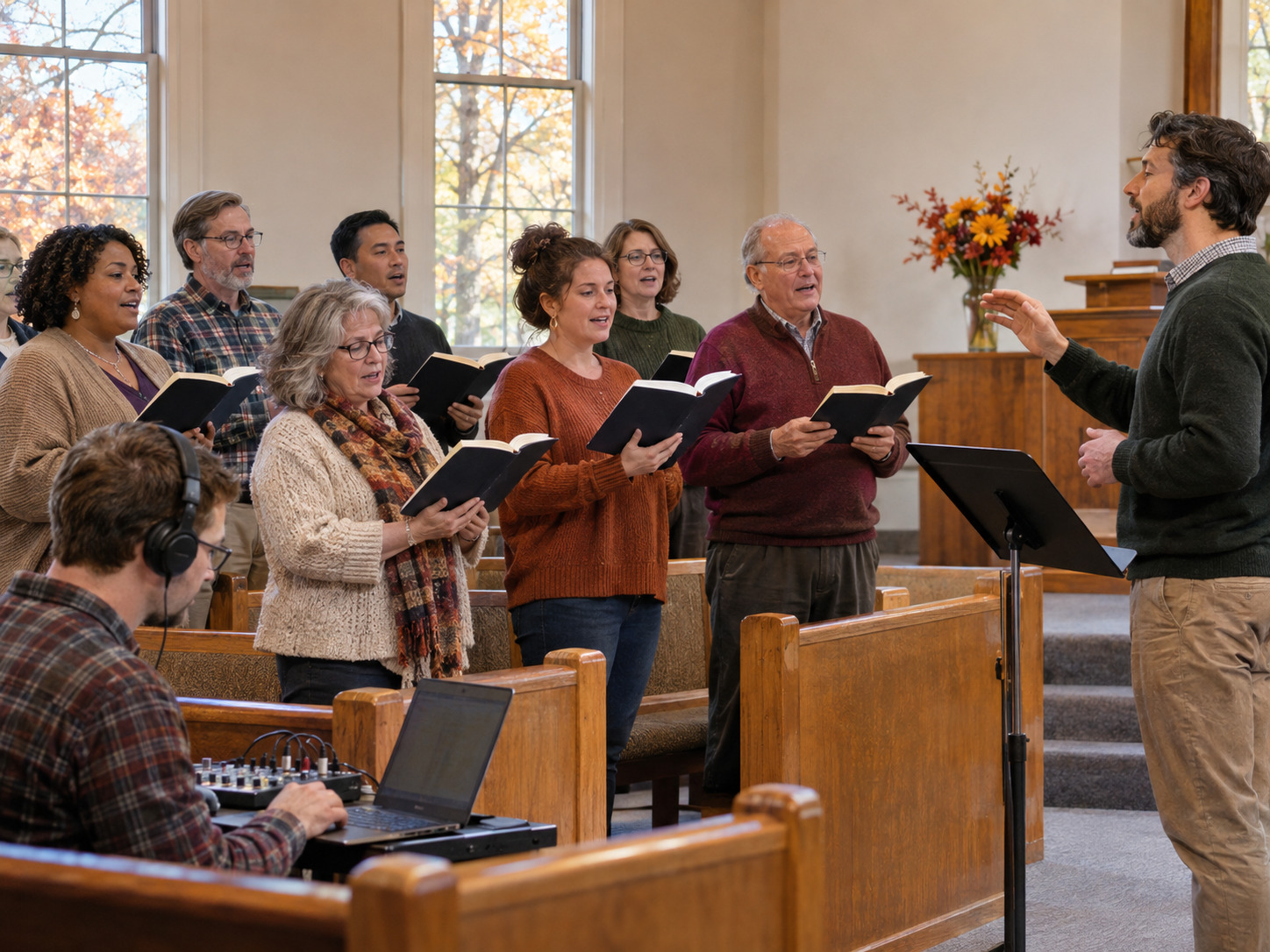
The short answer: let the arrangement grow while the congregation stays comfortable. Spiritrax’s current “Now Thank We All Our God” accompaniment uses traditional orchestra and organ at a moderate tempo. The product page describes a small vocal range and an arrangement that adds more orchestral instruments as it progresses, making the main rehearsal job clear: choose the key for the room, then plan how each verse gains energy without pushing the singers.
A hymn of gratitude can sound confident without becoming hurried or overly grand. The growth should come from a shared pulse, clear entrances, and the arrangement’s changing color.
Choose the key for the people who will sing
The current Spiritrax product page offers F major, C major, and A major, with F major identified as the original key. Test all three with the actual leaders and a representative group of congregational voices.
Do not choose from the first phrase alone. Sing through the complete melody and listen for:
- whether lower voices can begin with presence,
- whether upper voices remain free near the top of the line,
- whether the words stay clear at the moderate tempo,
- and whether the final verse still feels comfortable after the arrangement has grown.
The strongest singer in the room should not set the key for everyone else. Choose the version that ordinary voices can enter quickly and sustain without strain.
Establish one dependable moderate pulse
Moderate tempo can be deceptive. If the opening feels too cautious, singers may drag. If the operator starts too brightly, the congregation may rush the text.
Before singing, listen to the introduction and identify the larger pulse. Ask the worship leader, singers, and sound volunteer to agree on where the first breath happens and which instrumental cue leads into the opening word.
Rehearse the introduction and first entrance several times without continuing. A reliable beginning is more useful than a complete run that starts differently every time.
Once the entrance is settled, sing one verse while keeping the same underlying motion through long notes and phrase endings. Gratitude can feel spacious without losing direction.
Decide what each verse adds
The product page says the arrangement adds more orchestral instruments in each verse. Let that built-in progression do the work.
Write one simple intention for each stage of the hymn:
- Begin with a clear, welcoming sound that leaves room for the text.
- Let the middle of the hymn gain warmth and confidence while keeping the same tempo.
- Allow the fuller orchestration to support the closing praise without asking the congregation to overpower the track.
Avoid creating growth only by raising the playback level. More volume can make the room sing less, especially when the orchestra and organ become fuller.
The leader can create energy through clearer consonants, a more unified breath, and a stronger sense of direction into each phrase. Those changes help the room participate without turning the hymn into a vocal contest.
Rehearse the handoff from one verse to the next
Transitions often expose whether a congregation and backing track are truly together. Mark the end of each verse and the exact cue for the next entrance.
The sound volunteer should know:
- the approved filename and key,
- who gives the start cue,
- the intended opening level,
- where the orchestration becomes fuller,
- whether the leader gives a visible cue between verses,
- and how the final release will be handled.
Practice one transition at a time. Start several measures before the end of a verse, continue through the next entrance, then stop and repeat.
If singers consistently enter late, identify the instrumental landmark immediately before the entrance. If they rush, ask the leader to breathe visibly with the room rather than adding spoken counting during the service.
Balance the organ and orchestra with live voices
A full accompaniment should support the congregation, not hide it. Test playback from the middle and back of the room, not only beside the sound desk.
Listen for three practical problems:
- If the organ masks the words, lower the playback slightly before changing the singers’ delivery.
- If the growing orchestra makes the pulse feel heavier, keep the leader’s gestures simple and forward-moving.
- If the track sounds distant, check speaker placement and room balance before increasing the volume.
Use the same microphones, playback device, and speaker setup planned for the service. A rehearsal through a different system can create false confidence about balance.
Keep the final verse strong without forcing
As more instruments enter, the final verse may feel like an invitation to sing harder. Instead, ask for a more unified sound.
The leader can prepare the room with one visible breath, a clear first consonant, and steady motion through the phrase. The congregation should feel carried by the accompaniment rather than challenged by it.
Plan the ending as carefully as the opening. Confirm whether the track finishes cleanly, who holds the final release, and how long the room will wait before the next spoken element begins.
A confident ending does not need a dramatic pause. It needs everyone to expect the same finish.
FAQ: rehearsing a congregational Thanksgiving hymn
Which keys are available?
The current Spiritrax product page lists F major, C major, and A major. F major is identified as the original key. Test the complete melody with the people who will actually lead and sing before selecting a version.
Why does the arrangement feel bigger later?
Spiritrax describes the track as building as it progresses, with more orchestral instruments added in each verse. Plan the vocal growth around that progression instead of relying on repeated volume increases.
Is the arrangement suitable for congregational singing?
The product page describes a small range and moderate tempo intended to make the hymn easy for congregational singing. The service team should still test the chosen key, entrance, and playback balance with its own room and voices.
How much of the hymn needs a sound check?
At minimum, rehearse the introduction and first entrance, one verse-to-verse transition, the point where the orchestration becomes fullest, and the final release. Those landmarks reveal most cue and balance problems.
The takeaway
“Now Thank We All Our God” works best when the congregation remains comfortable while the accompaniment grows around it. Choose the key for ordinary voices, establish one dependable pulse, rehearse the transitions, and let the organ and orchestra create the larger arc.
The result is a hymn of gratitude that builds naturally because the service team prepared the shape together.
Choose a comfortable key and rehearse the growing verse-by-verse arc with the Spiritrax accompaniment track.
Hear the accompaniment