
Choose the “O Holy Night” Key Before You Rehearse the High Note
Holiday & Special Occasion Music
By Spiritrax Content Studio · September 24, 2026
Updated September 24, 2026
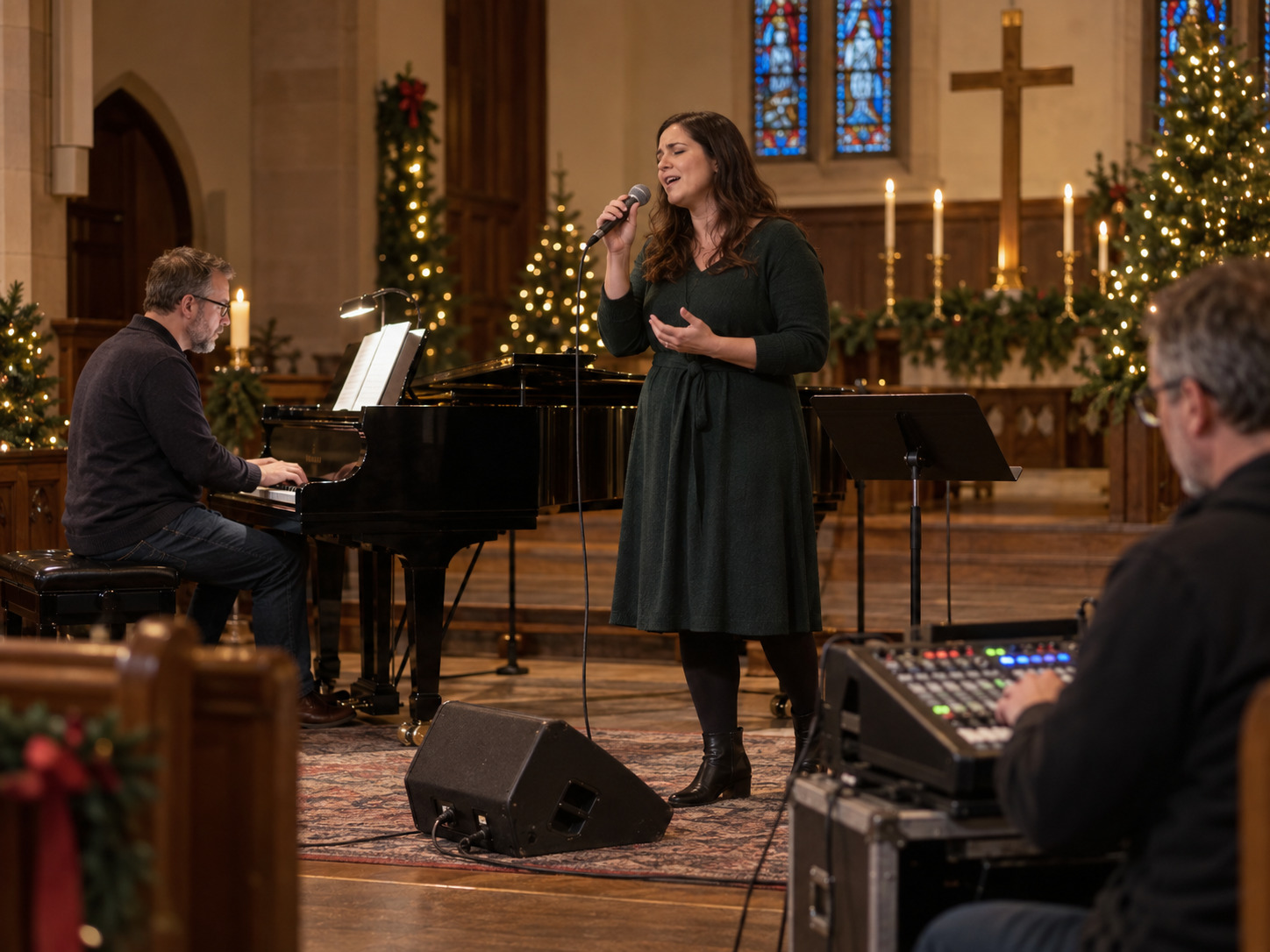
Choose the “O Holy Night” key by testing the entire song, not only the climactic phrase. A singer needs a key that supports the quiet opening, the long middle lines, the build, and the final release with the same dependable tone.
Spiritrax offers its orchestral “Oh Holy Night” accompaniment track in A major, C major, and F major, with a guide vocal recorded in A major. Those choices give a soloist and worship team useful starting points, but the key decision still belongs in rehearsal with the actual singer, room, microphone, and service plan.
Start with the story arc, not the highest note
The song grows. If the rehearsal begins by attacking the largest moment again and again, the singer may prove that one phrase while missing the pacing that makes it meaningful.
Run the song in four sections:
- Quiet beginning: Can the singer enter calmly and sustain the opening line without pushing?
- Gathering motion: Does the middle sit comfortably enough for clear words and steady breath?
- Climactic build: Can the voice open into the high point without changing into a different, strained sound?
- Final release: Does the singer have enough control left to finish the phrase and let the room settle?
Listen for consistency rather than spectacle. The best key lets the soloist communicate from the first phrase to the last. A key that makes the climax exciting but leaves the opening unsupported is not yet a complete solution.
Compare the available keys with one repeatable test
Do not compare keys from memory on different days. Use the same short test in each available version.
For A, C, and F major:
- play the full introduction;
- sing the first complete phrase;
- test a representative middle phrase;
- sing the approach into the climax, not only the destination note;
- and finish through the ending.
Record simple observations after each pass:
| Key | Opening | Middle | Build | Ending |
|---|---|---|---|---|
| A major | settled / low / pressed | clear / effortful | free / tight | controlled / tired |
| C major | settled / low / pressed | clear / effortful | free / tight | controlled / tired |
| F major | settled / low / pressed | clear / effortful | free / tight | controlled / tired |
The words in the table are prompts, not grades. Use language that the singer and music leader understand. The goal is to compare the whole performance under the same conditions.
If more than one key works, choose the one that best serves the service and the singer’s reliable voice that week—not the version that resembles a favorite recording.
Rehearse the introduction until the first entrance feels calm
An orchestral backing track establishes atmosphere before the singer begins. That can help the room settle, but it also means the soloist needs to know the introduction rather than waiting for someone to point at them.
Mark:
- the first sound in the track;
- the final orchestral cue before the voice enters;
- who starts playback;
- whether the soloist can see the worship leader or sound operator;
- where the first breath happens;
- and what the congregation is doing during the introduction.
Practice from the real preceding event. If the song follows a reading, prayer, candle lighting, or spoken welcome, begin there. The transition should feel like part of worship, not like the room is waiting for a file to load.
The first entrance is especially useful for key selection. A version can look comfortable at the top of the range yet feel too low or unsupported at the beginning. Test both ends before deciding.
Let the accompaniment support the voice, not compete with it
An orchestral arrangement can fill a sanctuary quickly. Balance it in the room with the singer’s microphone, not only through headphones.
During sound check:
- Set a clear vocal level with the singer using normal performance energy.
- Bring in the backing track underneath the voice.
- Listen from the center and back of the room, not only at the console.
- Confirm that the singer can hear the introduction and important orchestral landmarks.
- Check the loudest section without letting the track cover the words.
- Return to the quiet opening and make sure the balance still feels natural.
If the sanctuary is reverberant, more volume may create less clarity. Give the words room. If the soloist needs monitoring, place it so the track supports pitch and timing without forcing the singer to compete.
The Spiritrax church sound-check guide offers a broader checklist for entrances, microphones, playback cues, and service handoffs.
Use the guide vocal as a reference, not a duet partner
The A-major guide vocal can help a singer hear the melody, entrance, pacing, and relationship between the voice and orchestra. Use it to answer a specific rehearsal question.
Then move to accompaniment only:
- Listen to the guide while following the musical form.
- Sing with the guide and mark difficult entrances or breath decisions.
- Repeat those passages with the accompaniment track.
- Run the complete song without the demonstration voice.
- Return to the guide only when a specific rhythm or cue needs checking.
If the chosen accompaniment is C or F major, do not assume the A-major guide vocal can serve as the final practice file for every singer. Use it as a structural reference, then spend rehearsal time in the actual performance key so the singer’s ear and body learn the version that will be used.
Plan the climax without spending it too early
The large phrase is the result of the song’s build. Rehearse the approach as carefully as the high point.
Ask the singer to identify:
- where intensity first begins to rise;
- which phrases still need restraint;
- where a full breath is available;
- what orchestral sound supports the approach;
- and how the line releases after the climax.
This turns “save something for the end” into a musical plan. The accompaniment provides the same architecture every time, so the soloist can practice shaping energy across it instead of treating each large phrase as an isolated test.
Avoid repeated full-power runs when the rehearsal objective is cueing, balance, or key comparison. Marking can protect the voice while the team solves technical details. Use appropriate vocal coaching for the individual singer; a backing track is a rehearsal resource, not a substitute for healthy technique.
Give the ending a service job
The final note does not decide the transition by itself. The room needs to know what happens after the track ends.
Choose the intended next moment:
- silence;
- prayer;
- a spoken transition;
- applause in a concert setting;
- movement to another part of the service;
- or a clean handoff into the next piece.
Rehearse the full ending without speaking over it. Let the sound decay in the actual room, then take the planned next action. If the track has ended but the sanctuary is still ringing, that resonance is part of the transition.
Give the sound operator the exact filename and a written next cue. A simple note such as “hold silence; pastor begins after visual cue” is more useful than “fade into prayer” when no fade is actually intended.
An “O Holy Night” rehearsal checklist
Before the service or concert, confirm that:
- the soloist has tested A, C, and F major where appropriate;
- the selected key works from the opening through the final phrase;
- the singer rehearses with the exact performance accompaniment;
- the first entrance has a clear orchestral landmark;
- playback begins from the real preceding service event;
- microphone and track levels have been checked in the room;
- the loudest section keeps the words clear;
- the sound operator has the approved file and a backup copy;
- and the ending leads to one agreed next moment.
Questions worship teams ask
What keys are available for the Spiritrax “Oh Holy Night” backing track?
The product page currently offers accompaniment versions in A major, C major, and F major. The guide vocal is recorded in A major. Preview the available versions and confirm the final choice with the singer.
Should we pick the key from the high note alone?
No. Test the opening, middle, build, climax, and ending. The useful key supports the whole musical and vocal arc.
Can the soloist rehearse only with the guide vocal?
Use the guide to learn melody, entrances, and form, then move to the accompaniment-only track. The final rehearsal should use the exact key and file planned for the service or performance.
How loud should the orchestral track be?
Loud enough to support the soloist and establish the arrangement, but not so loud that the words or natural vocal tone disappear. Set the balance in the actual room and listen beyond the sound booth.
What should happen after the final note?
Choose the next service action in advance and rehearse it. Silence, prayer, speech, applause, or movement can each work when the room knows which one is intended.
The strongest performance is not the one that treats the final high point as a stunt. It is the one that chooses a workable key, builds patiently, keeps the words clear, and lets the accompaniment carry the soloist and room through one complete arc.
Preview the Spiritrax “Oh Holy Night” accompaniment in A, C, and F major, then choose the key that supports your soloist from the quiet opening through the final release.
Preview the Available Keys