
Plan the Final-Verse Lift Before “Oh Come All Ye Faithful” Begins
Holiday & Special Occasion Music
By Spiritrax Content Studio · November 6, 2026
Updated November 6, 2026
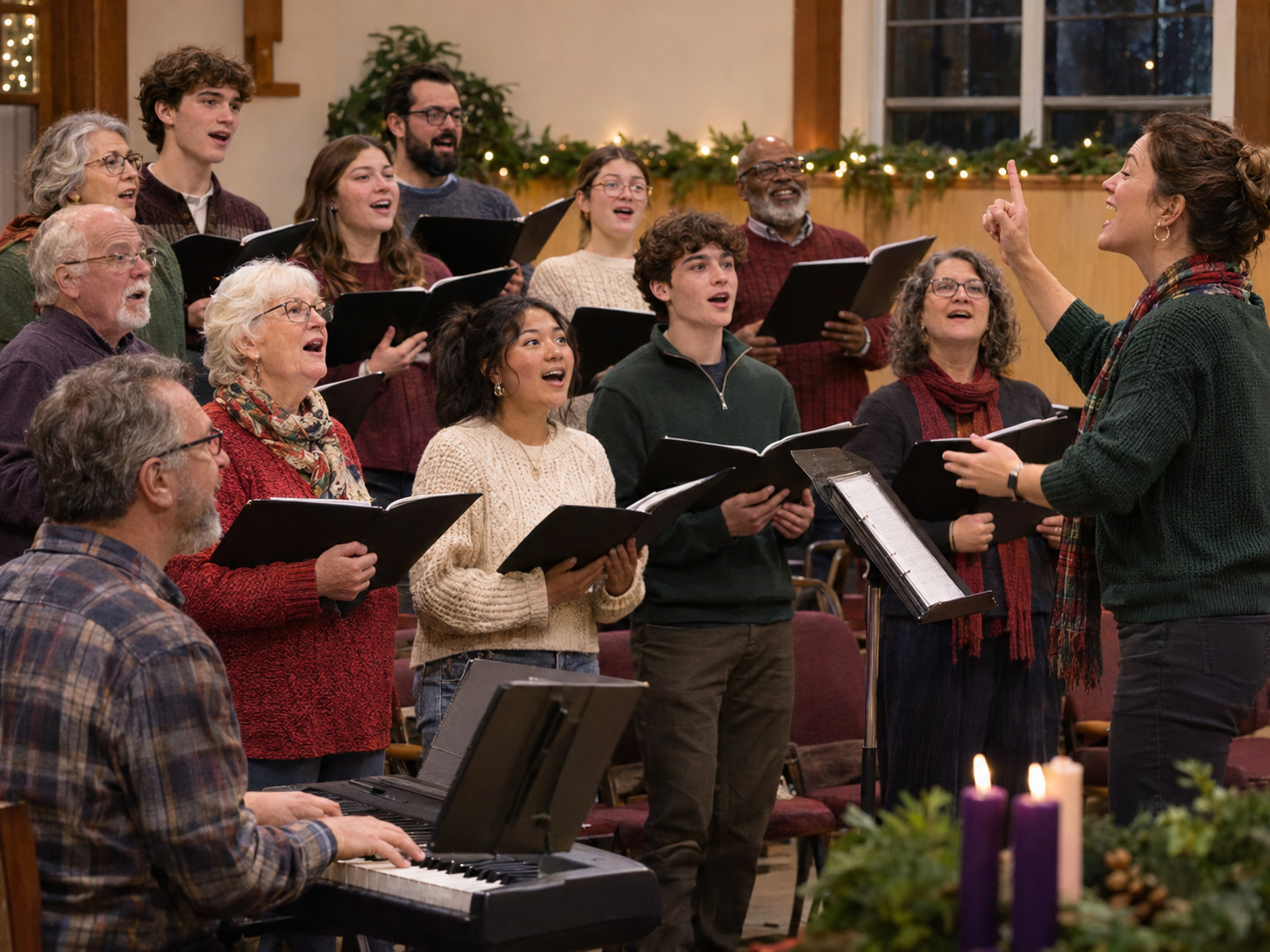
The short answer: choose the key for the people who will sing all four verses, establish the energetic pulse before rehearsal, and plan the final-verse step-up as a service cue rather than a surprise. The lift should widen participation and meaning without pushing the congregation, choir, or sound team out of control.
The Spiritrax “Oh Come All Ye Faithful” backing track is a contemporary guitar-and-strings arrangement with four verses, an instrumental interlude, and a step up on the last verse. The product page offers E-flat, G, C, and B-flat major versions. That gives a church or community ensemble useful options, but the key change will feel secure only when singers, leader, and playback operator know exactly how the final verse begins.
Choose the key for the complete journey
Do not select a version after testing only the first refrain. The final verse rises, so the opening key must leave enough room for the people who will still be singing at the end.
Compare E-flat, G, C, and B-flat major with the actual leaders. Use this sequence:
- listen to the full introduction in each realistic option;
- sing the opening verse at the planned service dynamic;
- move to the highest or most sustained phrase in the arrangement;
- test the final-verse key change;
- ask whether ordinary voices can keep clear words without pushing;
- choose one version and remove the others from the live playback folder.
For congregational use, the strongest soloist is not the measure. Listen for the center of the room. For a choir feature, check every section that carries the melody or upper harmony after the lift. For an intergenerational group, make space for changing, aging, and less-trained voices.
The best key is the one that supports the whole arc, not the one that makes the first verse sound most impressive.
Give each verse a service purpose
Four verses can become four repetitions unless the leader names a reason for the shape.
Plan a simple arc:
| Section | Possible participation | Service purpose |
|---|---|---|
| Verse 1 | leader, choir, or lighter unison | establish the invitation and pulse |
| Verse 2 | fuller choir or congregation | deepen shared participation |
| Interlude | instrumental space; leader resets the room | prepare breath, posture, and the final lift |
| Verse 3 | chosen full or reduced texture | keep the words clear before the change |
| Final verse after the step-up | widest appropriate participation | let the musical lift carry the conclusion |
This is a planning model, not a required arrangement. Follow the approved music and the service leader’s direction. The useful principle is that participation, dynamics, and texture should explain why the music grows.
Avoid asking everyone to sing louder on every verse. A larger sound can come from more voices, firmer consonants, confident pulse, and clearer leadership rather than added force.
Rehearse the interlude as a cue
The instrumental interlude is not empty time. It prepares the final verse and gives the room information.
Decide:
- whether the congregation remains singing, listens, or receives a visible invitation;
- when the conductor or worship leader shows the new breath;
- whether the choir changes formation, harmony, or participation;
- which instrumental sound confirms the approaching key change;
- and what the playback operator watches while the interlude runs.
Listen to the interlude without singing. Have every participant point to the moment they expect the final breath. If the answers differ, the cue is not clear enough yet.
Then rehearse only the last few seconds of the interlude into the first phrase after the step-up. Repeat that seam several times before running the whole carol. A key change becomes dependable when the room recognizes its preparation, not merely its new pitch.
Keep the pulse energetic without rushing
The product page describes a steady, energetic beat. That energy should support the text and the room, not turn the hymn into a race.
Start by having the choir or leaders step or tap the larger pulse while listening. Speak the opening words in rhythm, then sing on a neutral vowel before returning to the text.
Mark:
- the introduction length;
- the first clear breath;
- shared consonant releases;
- phrases that tend to pull ahead;
- the instrumental cue into the final verse;
- and the complete ending.
Ask the leader for clear, buoyant gestures. A rushed group often needs a more visible pulse, not a slower recording. If the singers are consistently behind or ahead, solve monitoring, diction, and cue clarity before requesting a tempo change.
Prepare the final verse before the first full run
Many groups rehearse from the top until time runs out, then discover the key change at the end. Reverse that order.
Begin the music rehearsal with:
- the final phrase before the interlude;
- the interlude’s last musical cue;
- the breath into the raised key;
- the first complete phrase after the lift;
- the ending and release.
When that sequence is secure, return to the opening. The choir can then sing the earlier verses knowing where the arrangement is going.
For a congregation, teach the leader’s visual cue during rehearsal or sound check. The congregation will not have the same preparation, so the platform team must make the new entrance obvious without turning the moment into a lecture.
Let the track support real voices
A contemporary guitar-and-strings arrangement can feel full before the singers enter. Set the live voices first, then bring the accompaniment underneath them.
Listen from the center and sides of the room. Confirm that:
- the introduction is audible but not startling;
- consonants remain clear over the steady groove;
- lower voices are not swallowed by the accompaniment;
- the final-verse lift does not trigger an automatic volume jump at the sound desk;
- the choir can hear the pulse without asking for excessive monitor level;
- and the ending leaves room for the next service action.
Record a short rehearsal from audience distance. Listen once for the words and once for balance. Do not judge the mix only from the keyboard, choir risers, or sound booth.
If singers begin to force after the key change, lower the track and monitoring before asking for more vocal energy. A musical lift should feel brighter, not harsher.
Decide who leads the room
The conductor, worship leader, soloist, and playback operator should not all give different signals.
Name one visible leader for the congregation and one musical authority for the ensemble. They may be the same person, but the responsibilities should be clear.
The visible leader owns:
- the invitation to sing;
- the breath into each verse;
- the cue after the interlude;
- and the final release.
The playback operator owns:
- the approved file and key;
- the exact start;
- the playback level;
- any authorized stop or restart;
- and the transition to the next service item.
Agree on what happens if the leader misses the final-verse cue. A fixed backing track will continue. The recovery should be rehearsed: keep the pulse, give the next clear breath, and rejoin at the next agreed landmark rather than stopping the room unless safety or the service leader requires it.
Rehearse the moments around the carol
“Oh Come All Ye Faithful” may open a service, support a procession, follow a reading, introduce a Christmas message, or close a gathering. The event before and after the music changes how the track should begin and end.
Confirm:
- what the room is doing during the introduction;
- who gives the playback cue;
- whether people are standing, seated, or moving;
- whether microphones must be cleared before the interlude;
- how the final sound decays;
- and who owns the next spoken, musical, or visual event.
Run the complete handoff at least once. Do not let a reader begin over the final chord because the team rehearsed only the song.
If the carol accompanies movement, follow the organization’s established safety plan. The musical timing should support safe movement, not pressure it.
Use one approved playback file
After comparing keys, put only the selected version in the live service order. Label it with the title, key, and date or service name. Keep alternate keys and previews in a separate planning folder.
The product page notes that online previews contain a watermark voiceover while downloaded accompaniment tracks do not. Rehearse with the purchased service file, not the preview.
Disable crossfade, autoplay, notifications, and device sleep. Test the exact output route, and keep a labeled backup on a second authorized device.
If the standard key, tempo, repeat structure, or ending does not fit the service, the Spiritrax product page provides a customization route. Test the current version first, then describe the precise musical location, requested change, and service need. Do not request a change merely because the first rehearsal felt unfamiliar.
A 20-minute key-change rehearsal
Minutes 1–4: compare the full range
Test the realistic opening keys and the raised final verse with the actual leaders. Choose one version.
Minutes 5–8: establish pulse and text
Tap the larger beat, speak the words in rhythm, and mark shared breaths and consonant releases.
Minutes 9–12: isolate the lift
Repeat the end of the interlude into the first phrase after the key change. Make the visual cue unmistakable.
Minutes 13–16: balance the room
Sing with the intended microphones and playback level. Listen from audience distance.
Minutes 17–20: prove the handoffs
Run the event before the carol through the opening, then rehearse the final verse and ending into the next service moment.
Service checklist
- E-flat, G, C, and B-flat major were compared with the full vocal range in mind.
- Only the approved key is in the live playback folder.
- The first breath and introduction are clear.
- Each verse has a named participation or dynamic purpose.
- The interlude is treated as a cue, not a pause.
- The final-verse lift has been rehearsed separately.
- One visible leader owns the congregational entrance.
- The operator knows the approved start, level, and recovery points.
- The track supports the words without covering live voices.
- The final verse grows through participation and clarity, not forcing.
- The actual sound system and playback device have been tested.
- The ending has been rehearsed into the next service event.
Common questions
Which key should a congregation use?
There is no universal congregational key. Compare the complete range—including the raised final verse—with the people who will lead and the room that will join. Choose the version that keeps the ending clear and singable.
How do we keep the key change from surprising the congregation?
Make the interlude and final breath visible. The leader should prepare the room before the new entrance, while the choir and musicians model confidence in the raised key.
Should every verse get louder?
No. Shape can come from changes in participation, texture, diction, and focus. Save the broadest appropriate sound for the final verse without asking singers to push.
Can the track be customized?
Yes. Spiritrax provides options for key, tempo, cuts, repeats, and comments. Test the current version first, then name the exact service need and how the team will verify the result.
The final lift works when it feels prepared long before the pitch changes. Give the room one clear pulse, one visible invitation, and enough vocal space for the last verse to open rather than strain.