
Pachelbel's Canon Needs a Calm Cue Before the Processional
Holiday & Special Occasion Music
By Spiritrax Content Studio · May 21, 2026
Updated May 21, 2026
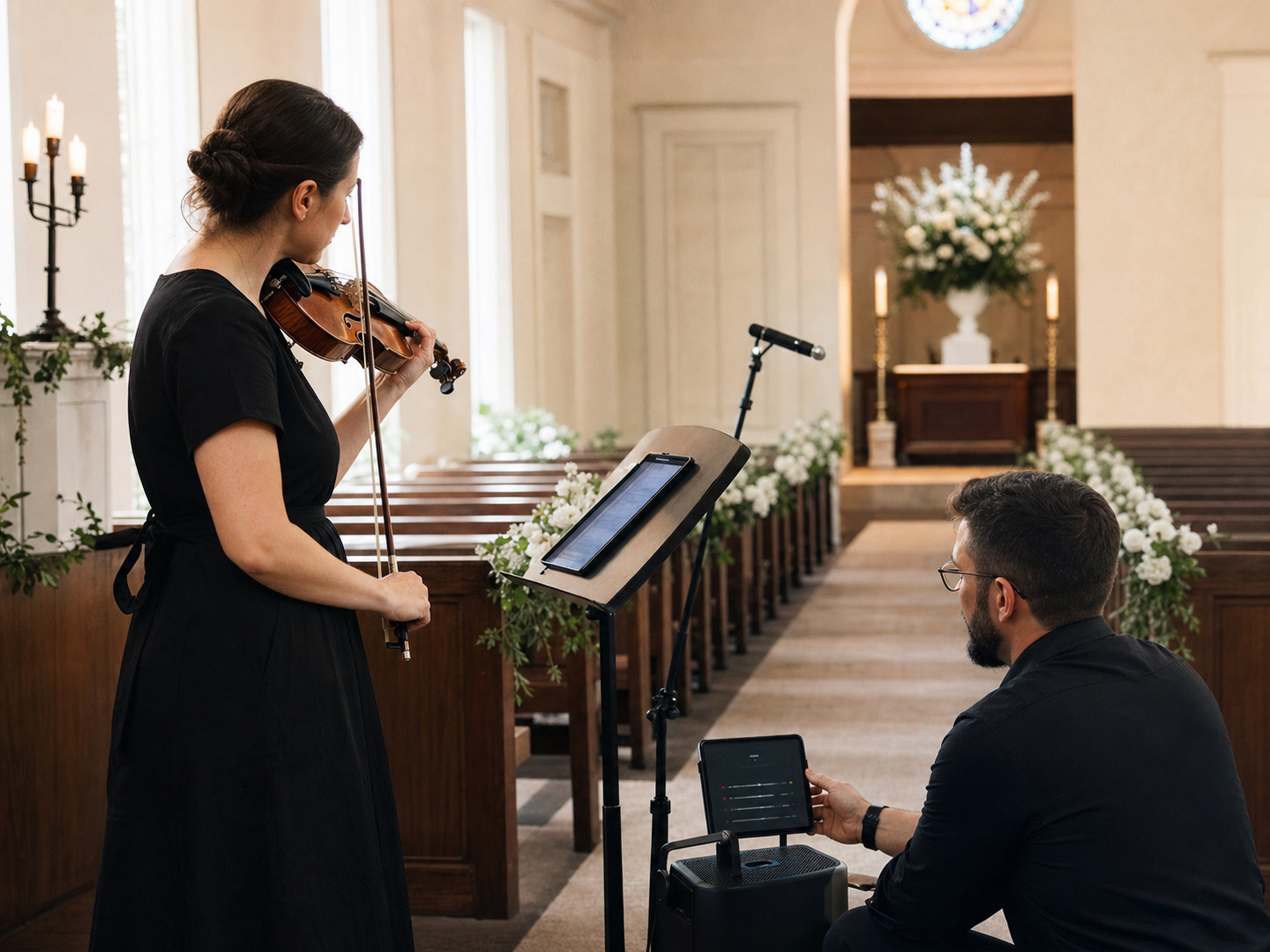
Pachelbel's Canon is familiar, steady, and easy to underestimate. In a wedding ceremony, the piece has one job: help the room settle into the processional without making the musician, soloist, or sound volunteer guess where the cue begins.
A backing track can work beautifully when there is no pianist or string ensemble available, but it needs a calm plan before guests arrive. Spiritrax offers Pachelbel's Canon as a ceremony-ready backing track that can support processionals, chapel services, and wedding music rehearsals.
Decide where the track begins
The first question is practical: does the track start before the doors open, as the first person walks, or after a spoken cue from the officiant?
Write that answer down. Wedding music often involves several people who are not standing together: the coordinator, officiant, sound operator, musician, and wedding party. A simple written cue prevents a beautiful piece from starting three seconds too early or too late.
Match the length to the procession
Pachelbel's Canon can support a short aisle, a long chapel aisle, or a larger wedding party. The track plan should match the actual movement in the room.
During rehearsal, time:
- the entrance of parents or honored guests;
- the wedding party processional;
- the final entrance;
- the moment when the music should fade, stop, or continue softly.
If the movement takes longer than expected, decide whether the track should loop, fade, or continue into the next moment. Do not leave that decision to the person pressing play during the ceremony.
Sound-check the real playback setup
A track that sounds fine on a laptop may feel different through chapel speakers. Test the exact file, device, cable, volume level, and speaker placement before the room fills.
Listen for three things: whether the first notes are clear, whether the volume supports the procession without covering spoken directions, and whether the ending can be handled gracefully.
Keep the ceremony mood simple
Wedding music should support the moment. Avoid a complicated playback plan unless the service truly needs it. One clear track, one clear cue, and one backup device are usually better than several versions with similar file names.
Name the file plainly, keep it in a ceremony folder, and make sure the person running sound knows which version is final.
When a backing track is the right choice
A backing track can help when:
- the venue does not have an available pianist;
- the couple wants a consistent arrangement;
- the ceremony is in a chapel, garden, or small venue;
- a solo instrumentalist needs accompaniment support;
- the sound team wants one dependable MP3 file for rehearsal and ceremony use.
The important part is preparation. A backing track is not a shortcut around rehearsal. It is the rehearsal reference and ceremony cue.
FAQ: Pachelbel's Canon backing tracks
Can Pachelbel's Canon be used for a wedding processional?
Yes. It is commonly used for processionals, especially when the ceremony needs a steady, recognizable piece with enough time for entrances.
Should the track start before the wedding party walks?
That depends on the ceremony plan. Decide whether the track begins before the doors open, on the first step, or after an officiant or coordinator cue.
What should the sound operator test?
Test the exact MP3 file, playback device, speaker connection, volume, first note, ending, and backup plan.
Is a backing track appropriate in a church or chapel?
It can be, when used respectfully and prepared well. Confirm any venue or worship-service music requirements before the ceremony.
The takeaway
Pachelbel's Canon works best when the cue feels calm. Choose the Spiritrax backing track, rehearse the entrance, test the real sound system, and give the sound operator one clear final file before the wedding day.
Prepare the processional with Spiritrax Pachelbel's Canon, including instant MP3 download support for weddings, chapel services, and ceremony sound checks.
View Pachelbel's Canon