
A Three-Song Patriotic Set Can Keep the Program Moving
Holiday & Special Occasion Music
By Spiritrax Content Studio · June 10, 2026
Updated June 10, 2026
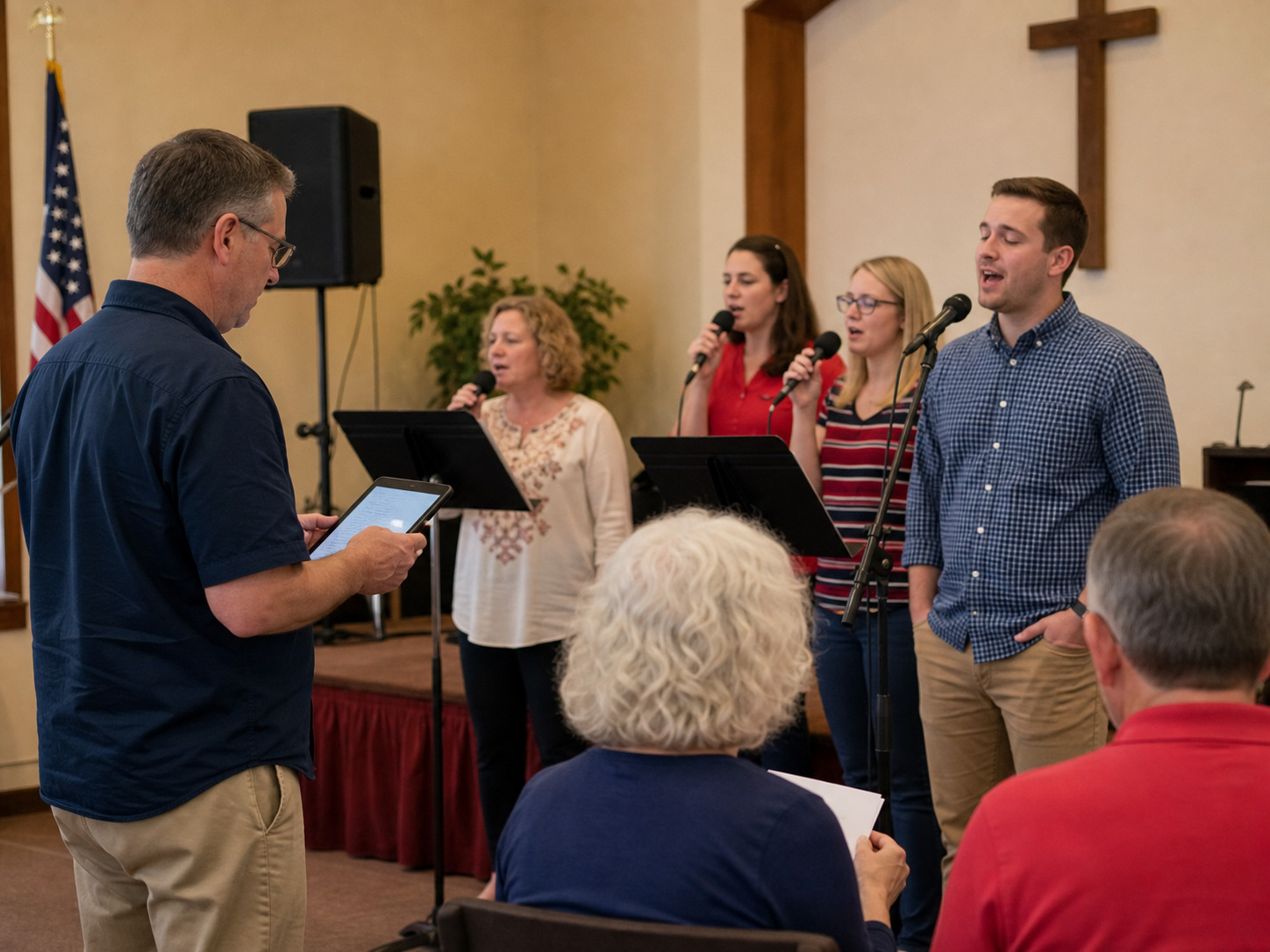
Patriotic music can become heavy if the program tries to do too much.
A church service, school assembly, senior living event, civic gathering, or community program may only need a few strong moments: a recognizable opener, a familiar song everyone can settle into, and a respectful closer. When those choices are clear, the event feels prepared without becoming overbuilt.
That is why a three-song set often works better than a long list of patriotic titles. It gives the room shape.
Start with the purpose of the gathering
Before choosing songs, decide what the music needs to support.
Is the gathering a worship service with a remembrance moment? Is it a school program where children need clear entrances? Is it a senior living singalong where familiar melodies matter most? Is it a civic event where the national anthem has to be ready, polished, and easy for the soloist to follow?
The answer changes the order.
For a worship setting, keep the tone reverent and avoid making the music feel like a rally. For a school program, choose keys and tempos that support young singers. For a community event, keep the transitions simple so the audience always knows what is happening next.
Use the first song to gather attention
The opening song should tell the room that the program has begun.
For many events, The Star-Spangled Banner is the natural choice. It is familiar, formal, and expected in many civic settings. It also needs more preparation than people sometimes assume.
Before rehearsal, confirm:
- the key,
- whether the song is solo or group-led,
- where the singer will stand,
- whether the audience is expected to join,
- and how the sound team will start the track.
National anthem performances feel most confident when the singer and playback team agree on the first cue before anyone enters the room.
Use the second song to invite participation
The middle song can bring the room in.
God Bless America works well when the program needs something familiar, warm, and singable. It can sit between a formal opener and a more reflective closing moment, especially when the event includes families, older adults, school groups, or a mixed congregation.
If the group will sing along, check the range before the event. A song that feels easy to one soloist may sit too high or too low for a room full of casual singers.
Use the third song to close the arc
The final song should leave the room with a clear ending.
That might mean a reflective hymn, a familiar civic song, or another selection from the Patriotic Collection. The collection approach is useful when you want options without rebuilding the plan from scratch.
For example:
- use the national anthem as the formal opener,
- place God Bless America where the room can participate,
- then choose a closing title that matches the event tone.
This keeps the program focused while still giving the leader flexibility.
Build the set around real transitions
A good set is not just three songs. It is the space between them.
Write down:
- who introduces each song,
- whether people stand or sit,
- whether the singer needs a breath before the track starts,
- how the sound team will know the cue,
- and whether there is a spoken remembrance, prayer, pledge, reading, or announcement between selections.
Backing tracks work best when the service leader, singer, and sound operator all know the transition plan.
Rehearse the first ten seconds
Many problems happen before the melody begins.
The singer may not be ready. The microphone may be low. The tablet may be on the wrong track. The audience may still be moving. The person introducing the song may not know when to step away.
Rehearse the first ten seconds of each track:
- spoken introduction,
- singer position,
- track start,
- first breath,
- first phrase,
- and the plan if something starts wrong.
That small check can make the entire program feel calmer.
Choose keys for the people in the room
Patriotic music is often written as if everyone sings the same way. Real rooms do not work like that.
A soloist may need a different key than a congregation. Children may need a simpler range than adults. A senior living singalong may need a comfortable middle register. A worship service may need the leader to sound steady rather than showy.
If several keys are available, test the actual singers before printing programs or sending the final track list.
Keep the sound setup portable
Many patriotic events happen outside the normal worship or performance setup. A fellowship hall, gym, courtyard, retirement community lounge, or civic room may not have the same sound support as a sanctuary or stage.
Before the event, confirm:
- speaker placement,
- microphone access,
- playback device,
- internet independence,
- volume level,
- backup file access,
- and who can restart a track.
Downloaded accompaniment tracks are especially helpful when the event space has unreliable internet or limited technical support.
FAQ: patriotic backing tracks
What is a simple three-song patriotic set?
A practical set can use The Star-Spangled Banner as the opener, God Bless America as a familiar participation song, and one flexible closing selection from a patriotic collection.
Should a patriotic set be different for church?
Usually, yes. In worship settings, choose music that supports prayer, gratitude, remembrance, and community rather than turning the service into a performance showcase.
Can backing tracks work for school programs?
Yes. Backing tracks can give students a clear tempo, consistent entrances, and a dependable arrangement, especially when a live accompanist is not available.
How many songs are enough for a short event?
Often, three well-chosen songs are enough. A clear opener, participatory middle song, and respectful closer can feel more organized than a longer program with weak transitions.
The takeaway
A patriotic program does not need to be crowded to feel complete. Choose the song order by purpose, test the keys with real singers, rehearse the first cue, and keep the playback plan simple enough that the room can focus on the moment.
Start with flexible patriotic accompaniment tracks for services, school programs, senior living events, and civic gatherings, then choose the keys and arrangements that fit your singers.
Browse Patriotic Tracks