
A Patriotic Service Works Better as a Set
Holiday & Special Occasion Music
By Spiritrax Content Studio · June 22, 2026
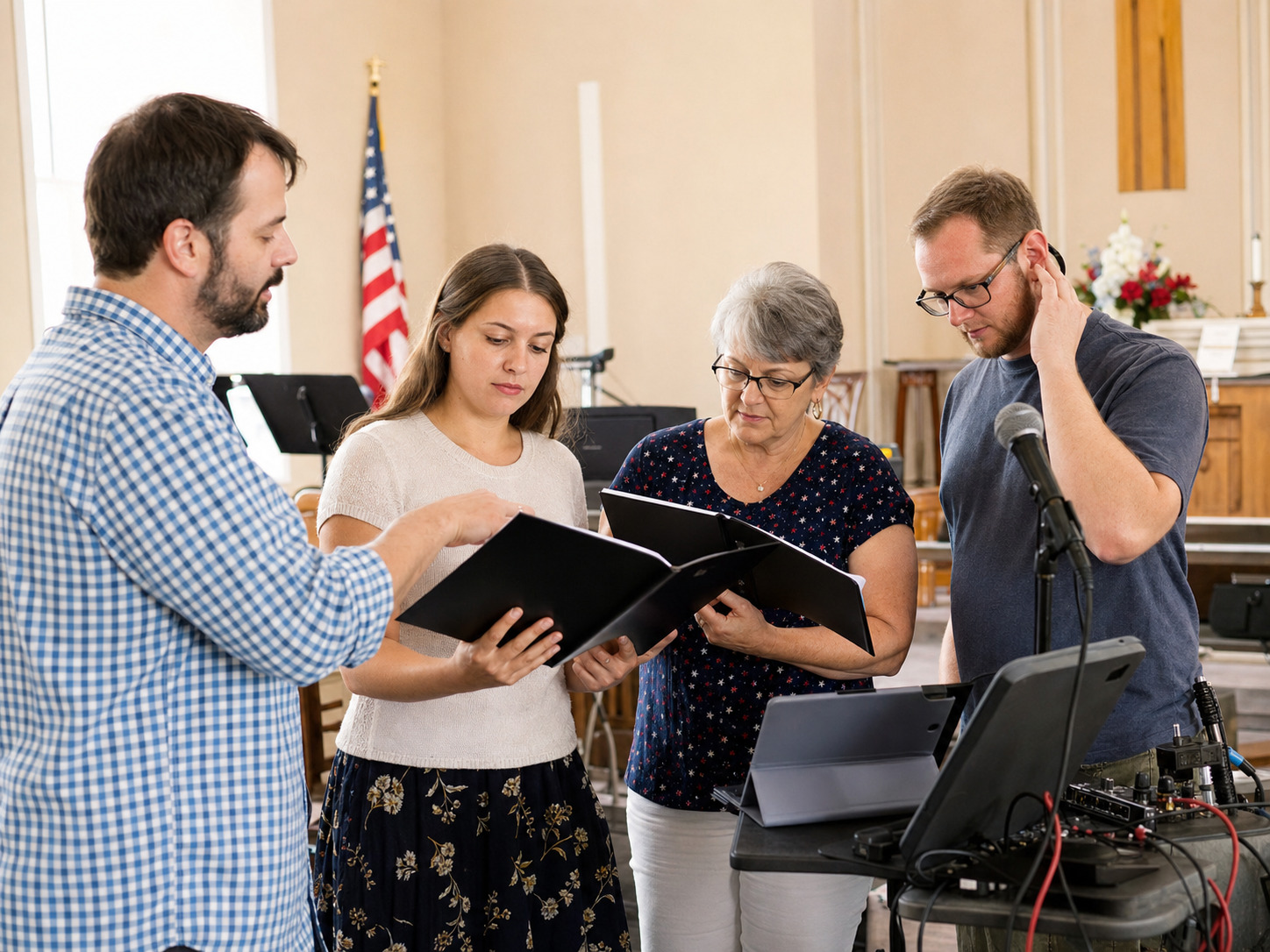
A patriotic service can become heavy when one song is asked to carry the whole occasion.
The room may include veterans, families, children, civic guests, choir members, worship leaders, and people who came for a regular Sunday service. Some moments should invite the congregation to sing. Others should give the room space to listen. Some songs feel bright and familiar. Others need a calmer tone.
That is why patriotic music usually works better as a set than as a single isolated track.
For worship services, Memorial Day, July 4, Veterans Day, school programs, civic gatherings, and community events, a simple set plan can make the music easier to follow and more respectful to the occasion.
Give each song one job
Start by deciding what each song is supposed to do.
A patriotic set might need:
- an opening song that gathers attention,
- a congregational or audience singalong,
- a reflective moment,
- a choir or solo feature,
- a closing song that gives the program a clear finish.
When every song has a job, the service does not have to force one familiar title to do everything.
For example, a bright opener can welcome the room. A familiar singalong can bring people together. A quieter selection can honor service or remembrance. A strong closer can send the room out with confidence.
Match the track to the room, not just the holiday
The same song can feel different in a sanctuary, senior living room, school auditorium, outdoor civic program, or small chapel.
Before choosing tracks, ask:
- Will the room sing or listen?
- Is there a soloist, choir, or worship leader?
- Does the audience know the melody?
- Is the moment celebratory, reflective, or ceremonial?
- Does the sound volunteer have time for transitions?
- Will the music be used before, during, or after a spoken tribute?
Those answers affect key, tempo, volume, intro length, and whether guide vocals or sheet music are helpful.
Use guide vocals as a learning step
Guide vocals can help when the melody is familiar but not secure.
They are especially useful for children, casual singers, senior groups, volunteer choirs, and soloists who need to hear entrances before rehearsing with accompaniment alone. Once the melody is comfortable, move toward the accompaniment track so the final service feels natural.
The goal is not to make the guide vocal part of the public moment unless that is the intended use. The goal is to help the singers arrive prepared.
Keep keys singable
Patriotic melodies are familiar, but that does not mean every key works for every room.
A soloist may need a different key from a congregation. A choir may handle a higher climax than a casual audience. A school group may need a steadier tempo and a more comfortable range.
If the room is expected to sing, avoid choosing a key only because it sounds dramatic in a recording. Choose the key that lets ordinary voices participate without strain.
Plan transitions before the service starts
Patriotic programs often include spoken introductions, prayers, recognitions, readings, flag moments, or memorial names. The track plan should make space for those moments.
Write simple cue notes:
- track starts after welcome,
- fade before spoken tribute,
- hold applause before next selection,
- soloist enters after the four-bar intro,
- audience stands before final song,
- sound volunteer keeps backup file ready.
That kind of cue sheet protects the mood of the room. It also keeps the person running sound from guessing under pressure.
When a collection is more useful than one download
If the program needs more than one patriotic song, a collection can be easier than building the set one track at a time.
A collection gives the planner several familiar options in one place. That helps when the service needs an opener, a reflective selection, and a closer, or when the final order changes after rehearsal.
The Spiritrax Patriotic Collection includes familiar songs such as America the Beautiful, Battle Hymn of the Republic, God Bless America, My Country 'Tis of Thee, Simple Gifts, Taps, The Star-Spangled Banner, Yankee Doodle, and You're a Grand Old Flag, with sheet music included and guide-vocal support for several songs.
Use the full collection when flexibility matters. Use a single track when one specific moment is all the program needs.
A practical patriotic set map
Here is a simple planning structure:
- Opening: a confident familiar song that gathers the room.
- Reflection: a quieter or more reverent selection after a reading, prayer, or tribute.
- Participation: a singable title with a clear invitation for the congregation or audience.
- Closing: a strong final song with a clean ending and enough time for the next program action.
The set does not need to be long. It needs to feel intentional.
FAQ: patriotic backing tracks for services and programs
What patriotic song should open a service?
Choose a song that matches the room's tone and participation plan. A bright familiar opener can work well, but a memorial or Veterans Day setting may need a calmer beginning.
Should the congregation sing patriotic music?
Only when the service leader clearly invites them and the key, tempo, and lyrics support ordinary singers. If the song is intended as a solo or choir feature, make that clear.
Are guide vocals useful for patriotic songs?
Yes. Guide vocals can help singers learn entrances and melody shape, especially when the group is casual, intergenerational, or rehearsing quickly.
Is a collection better than buying one track?
Use one track when the program needs one specific song. Use a collection when the service needs several options, a complete set, or flexibility for last-minute changes.
Build the set from one collection
If your service or program needs more than one familiar patriotic option, explore the Spiritrax Patriotic Collection for accompaniment tracks, sheet music, and guide-vocal support in one download.
The takeaway
A patriotic service works best when the music has a plan.
Choose one job for each song, keep the keys singable, use guide vocals as rehearsal support, write the transitions down, and use a collection when the program needs more than one familiar option. The result is easier for volunteers, clearer for singers, and more respectful for the room.