
Let Simchat Torah Music Carry the Circle, Not Crowd It
Holiday & Special Occasion Music
By Spiritrax Content Studio · September 9, 2026
Updated September 9, 2026
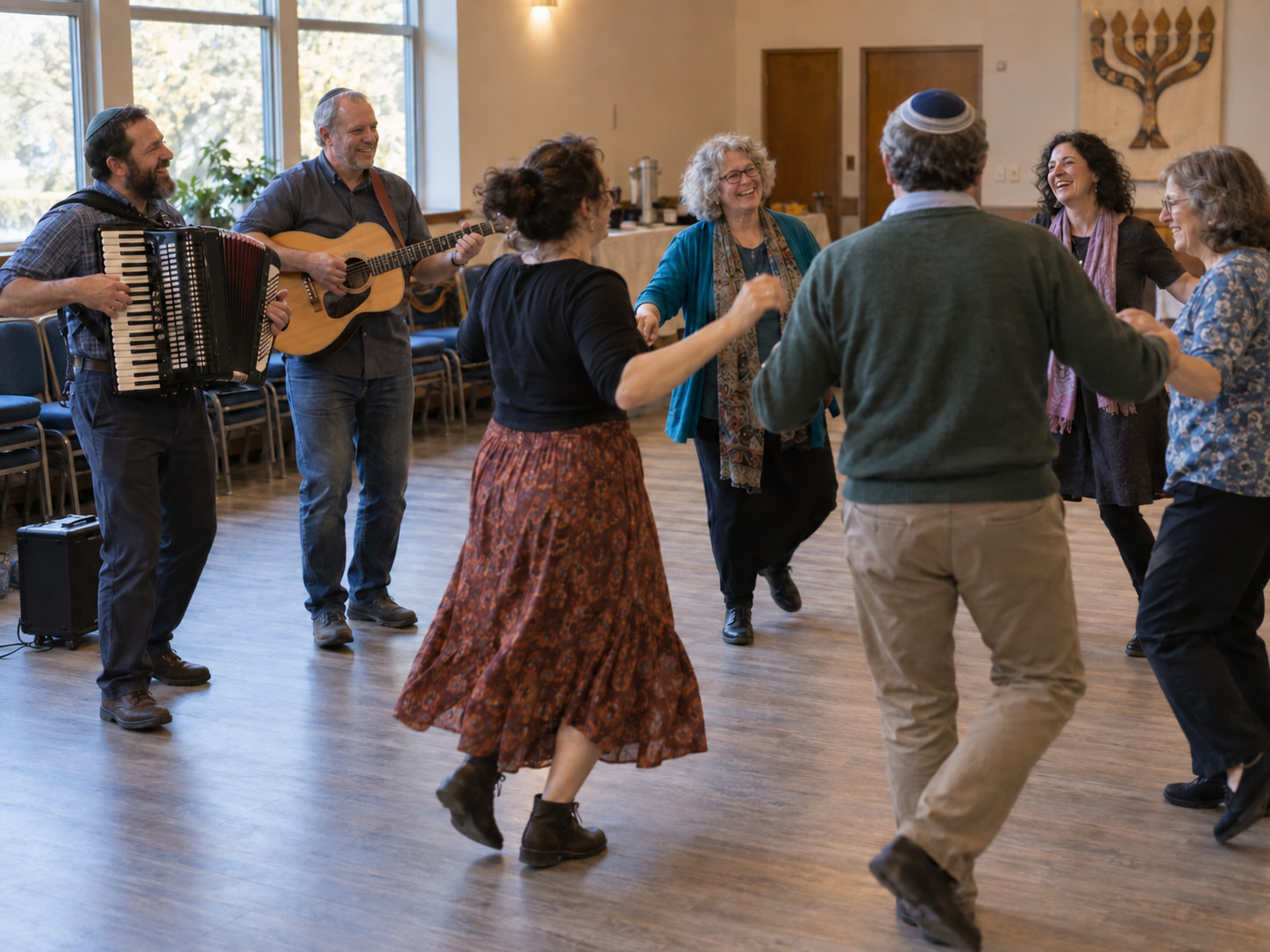
The short answer: a Simchat Torah music plan should help the community move, sing, and celebrate together while leaving the Torah procession, local practice, and people in the room at the center.
Simchat Torah marks the completion of the annual Torah-reading cycle and the immediate return to the beginning. In many Diaspora communities in 2026, it is celebrated from the evening of October 3 through nightfall on October 4, following Shemini Atzeret. Calendars and practices differ, so confirm the exact schedule and service plan with the rabbi, cantor, educator, or community leader responsible for the gathering.
The musical question is practical: where will accompaniment give people a shared pulse, and where should the room lead without it?
Start with the community’s actual plan
Simchat Torah can look different across synagogues, schools, congregations, and family programs. One community may build the evening around hakafot and dancing. Another may emphasize Torah readings, children’s participation, study, prayer, or a smaller gathering shaped by local needs.
Before choosing music, answer:
- Which parts of the service or event include movement?
- Who is expected to lead: cantor, musicians, choir, teacher, families, or the whole room?
- Which selections are established by the community’s practice?
- Will accompaniment support a full sanctuary, social hall, classroom, or outdoor area?
- Who can stop, restart, or change the plan if movement or attendance differs from rehearsal?
Do not let a general celebration playlist define the observance. The community’s approved service and educational plan comes first. The track supports that plan.
Give each musical section one job
Joy does not require continuous sound. A clear structure helps music strengthen participation instead of competing with it.
| Moment | Useful musical job | What the leader should decide |
|---|---|---|
| Arrival | Welcome people and establish warmth | Whether conversation or music should lead |
| Opening | Give the room one recognizable beginning | Who cues the first entrance |
| Hakafot or procession | Support shared movement and repeated participation | Tempo, route, duration, and exit cue |
| Children’s or family section | Make joining simple and safe | Key, repetition, teaching cue, and adult support |
| Reading transition | Mark a change without crowding the text | Whether instrumental music is appropriate at all |
| Closing | Gather the room into one final action | Button, full ending, or clear fade |
This keeps the program from becoming one long block of high energy. It also gives volunteers and participants a shared understanding of why each track is present.
Build the processional plan before the playlist
If people will move with Torah scrolls or gather into circles, the physical plan is part of the music plan.
Confirm the route, entrances, exits, floor conditions, spacing, visibility, and the people responsible for ritual and physical safety. Keep speakers, stands, power cables, instruments, and playback devices outside movement paths. Test whether the person controlling playback can see the person who owns the processional cue.
Then choose how the music behaves:
- A complete song with a fixed ending.
- A repeated section with a named exit cue.
- Several short selections separated by spoken or ritual moments.
- Live-led singing with a track used only for selected sections.
- Instrumental support that can end cleanly before the next reading or instruction.
Do not rely on an operator fading whenever the room appears ready. Name the cue: a leader’s hand signal, a completed circuit, a spoken line, or another approved visual event.
Choose tempo for the circle, not the recording
A joyful arrangement can accelerate faster than a mixed-age gathering can move safely or sing clearly.
Test the intended track with a small group walking or dancing the real route. Listen for:
- whether the beat remains clear without becoming frantic;
- whether people can sing complete phrases while moving;
- whether children, older adults, and first-time participants can join without being pushed to the edge;
- whether the leader can communicate over the accompaniment;
- and whether the ending allows the group to stop together.
Some repertoire naturally grows in speed or intensity. Decide in advance whether that shape fits the program. A musically exciting acceleration is not automatically the right accompaniment for every room.
Put communal singing in a communal key
A key that works for a solo cantor may sit too high or low for the wider gathering. Preview the full arrangement, including repeated sections that rise in energy, then test the highest and lowest phrases with the intended leader and a few representative singers.
Watch for the moment when participation drops. If people stop singing in order to listen, decide whether that is the intended role of the selection. If the goal is communal singing, choose a key and level that let the room carry the melody.
Spiritrax offers Jewish accompaniment tracks in multiple available keys. If it fits the community’s approved program, the Hava Nagila backing track provides a celebratory arrangement that increases in tempo across its verses. Preview the complete track and choose it only when that musical shape, key, and repertoire are appropriate for the specific gathering.
Teach the musical map before adding movement
People participate more confidently when they know what will repeat and how the ending arrives.
For a family, school, or intergenerational program, teach in layers:
- Speak or sing the first entrance without the track.
- Let one leader or small group demonstrate the melody.
- Add the accompaniment at a comfortable level.
- Practice the repeated section while standing in place.
- Add the real movement pattern.
- Rehearse the cue that ends the section.
If a guide vocal or demonstration version is available, use it as a learning aid before the event, then move toward the accompaniment-only version the leader intends to use. Keep teaching files out of the final playback folder unless the service plan explicitly calls for them.
Plan for a full and unpredictable room
Attendance, age mix, movement speed, and room noise may differ from rehearsal. Build a plan that can absorb those changes without asking the operator to improvise musically.
Use checkpoints:
- The leader confirms that the route is clear before playback starts.
- The operator begins only on the named cue.
- A designated person watches the movement path rather than the screen.
- The leader can signal the approved ending or next section.
- If the room becomes crowded, the movement plan changes before the volume rises.
Music should never be used to push people through a space faster than the gathering can safely move. If conditions change, simplify the movement or shorten the musical section through a rehearsed boundary.
Keep the sound supportive
Celebratory music still needs intelligible leadership.
Place the speaker where the pulse reaches the room without creating one painfully loud area. Listen from the front, center, sides, and movement path. If a leader gives spoken instructions, test whether those words remain clear while the track plays.
Avoid solving every coverage problem with volume. Speaker position, accompaniment density, room surfaces, participant noise, and the direction people face all affect what they hear.
For portable playback:
- download the final files before the event;
- disable notifications and automatic audio interruptions;
- charge the main and backup devices;
- secure cables and stands away from movement;
- keep a tested local backup;
- and assign one operator who knows the order and cues.
Separate celebration files from every other holiday folder
Simchat Torah follows closely after Sukkot and Shemini Atzeret. Similar dates and reused devices make version mistakes easy.
Create one final event folder containing only the approved files. A useful name can include:
- order number;
- song or musical moment;
- key;
- event or service;
- and approved version date.
For example, 04_CircleSong_GMinor_SimchatTorah_Approved.mp3 is easier for a volunteer to identify than holiday-song-final.mp3.
Give the operator a short cue sheet with the starting signal, expected musical shape, ending cue, and next action. If a track increases in tempo, note that explicitly so the leader can plan participation around it.
Protect the reading and the return to the beginning
The holiday’s meaning is not created by the playlist. Music can carry joy, but it should not cover the Torah reading, teaching, prayer, or the community’s chosen way of marking completion and renewal.
Walk through every handoff:
- music into spoken instruction;
- procession into reading;
- reading into communal response;
- high-energy participation into a quieter moment;
- and the final selection into dismissal, gathering, or continued celebration.
Leave real silence where the words need it. A clean stop is often more useful than filling every transition.
Simchat Torah music rehearsal checklist
Before the event, confirm:
- The date, service structure, repertoire, and community practice are approved.
- Every musical selection has one clear job.
- Processional routes and equipment positions have been checked.
- The key and tempo fit the people expected to participate.
- The leader and operator share exact start, repeat, exit, and ending cues.
- The complete track has been previewed, including any acceleration.
- Teaching files and accompaniment-only files are labeled separately.
- The final folder is stored on primary and backup devices.
- Spoken instructions remain understandable over the accompaniment.
- Old or unrelated holiday files are removed from the active playlist.
FAQ: Simchat Torah music and backing tracks
When is Simchat Torah in 2026?
In many Diaspora calendars, Simchat Torah is observed from the evening of Saturday, October 3, through nightfall on Sunday, October 4, 2026. Practice and timing vary by location and community, so confirm the schedule with the organization hosting the observance.
Can a backing track support hakafot or a procession?
Yes, when the route, tempo, repetition, exit cue, speaker placement, operator, and physical safety plan have been rehearsed. The community’s ritual leadership should determine whether and how a track is used.
Should the music keep speeding up?
Only if the full arrangement and acceleration fit the approved program and the people participating. Preview the complete track; test it with movement; and choose a safe, singable tempo for the room.
Is Hava Nagila specifically a Simchat Torah song?
It is a broadly recognized Jewish celebration song, not a universal requirement for Simchat Torah. Use it only when it fits the community’s repertoire and approved plan.
What should a volunteer operator receive?
Give the operator one approved folder, a short ordered cue sheet, the visible or spoken start signal, any repeat or tempo-growth note, the ending cue, and a tested backup device.
The takeaway
Simchat Torah music works when it helps joy move through the room without asking the room to follow an inflexible recording.
Begin with the community’s practice. Design the route and cues. Choose a singable key and workable tempo. Teach the musical map before movement. Keep the playback system simple and safe. Then let accompaniment support the circle while the people, Torah, and shared return to the beginning remain at the center.
Preview Spiritrax’s Hava Nagila backing track in the available keys and hear its full tempo shape. Use it only when the celebratory arrangement fits your community’s approved Simchat Torah program.
Preview Hava Nagila