
Simple Gifts Works Best When the Room Has Space to Sing
Worship Music & Hymn Resources
By Spiritrax Content Studio · June 8, 2026
Updated June 8, 2026
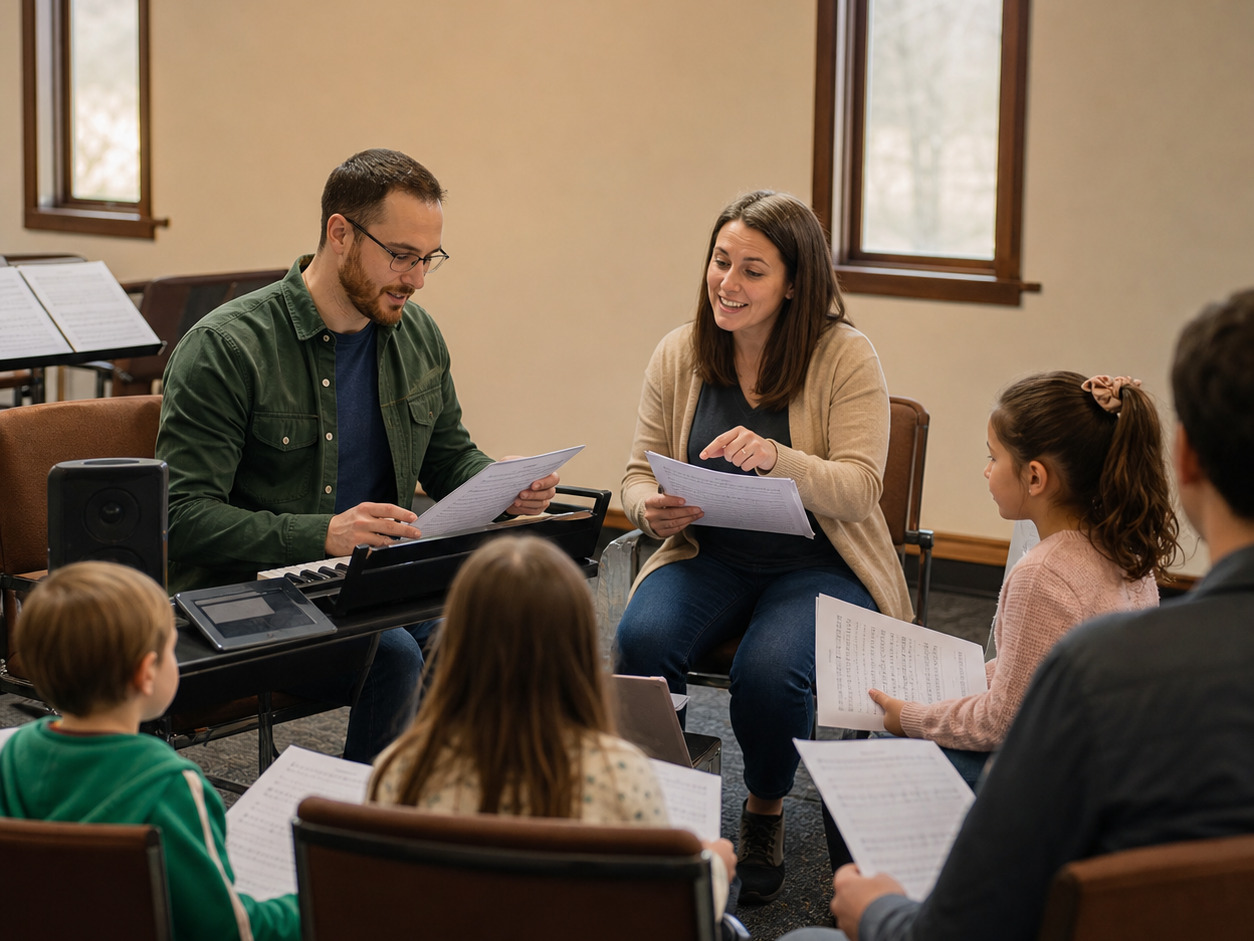
Some songs become harder when people try to make them too impressive.
"Simple Gifts" is the opposite kind of piece. It works best when the room can hear the shape, enter without fear, and let the text feel plain in a good way. That makes it useful for worship services, children's choirs, school programs, community gatherings, Thanksgiving services, and quiet moments where the music needs to feel honest rather than oversized.
A backing track can help when there is no pianist available, when a children's group needs a steady frame, or when a leader wants one dependable version for rehearsal and the service itself.
Decide what role the song has
Before choosing the track placement, decide what the song is supposed to do.
It can work as:
- a children's choir feature,
- a congregation-friendly folk hymn,
- a solo or small-group reflection,
- a school or community program piece,
- a Thanksgiving or gratitude-themed service song,
- or a quiet transition between readings, prayers, or spoken reflections.
The same arrangement can feel different depending on where it sits. A children's choir may need a clear start and enough confidence in the melody. A worship service may need a quieter frame. A community program may need the room to feel invited rather than performed at.
Keep the first entrance easy
Simple songs still need a cue. If the first entrance feels uncertain, the whole room gets cautious.
Before rehearsal, confirm:
- who starts the track,
- whether anyone speaks before the song,
- how many measures of introduction the singers hear,
- where the leader will stand,
- and whether the room is expected to join.
For children, practice the first entrance more than once without stopping the whole song. For adults, make sure the leader can hear the introduction clearly enough to breathe before the first line.
Choose a key around the people singing
The best key is the one the actual singers can use comfortably. A children's choir, soloist, congregation, and mixed-age community group may all need different support.
Test the song in three places:
- the first phrase,
- the middle phrase where the melody turns,
- and the final slower ending.
If the low notes disappear, the key may sit too low. If the final phrase feels strained, it may sit too high. A steady backing track makes this easier to judge because the singers are not guessing around a changing accompaniment.
Let children learn the shape first
"Simple Gifts" is often approachable for young singers because the text and melody feel direct. That does not mean children automatically know where to breathe, how to wait through the introduction, or how to finish together.
For a children's choir or school program, rehearse in this order:
- Speak the words in rhythm.
- Sing the melody without movement.
- Add the track at a comfortable volume.
- Practice the ending twice.
- Add any procession, gestures, or staging last.
Movement can be beautiful with this song, but it should not arrive before the music is secure.
Use the track to support worship, not overpower it
In a worship setting, "Simple Gifts" can carry themes of gratitude, humility, stewardship, community, and faithful simplicity. Keep the introduction short and plain. Let the leader explain the placement in one sentence if needed, then let the music speak.
The track should sit under the singers, not compete with them. During sound check, listen for:
- accompaniment volume,
- microphone level,
- whether the leader can hear the introduction,
- whether the room can hear the melody,
- and whether the ending leaves enough space before the next spoken moment.
If the song leads into prayer or a reading, avoid rushing the next cue. A small pause can protect the meaning.
Plan the ending before rehearsal is over
The final half verse or slower ending is often where a simple song becomes either graceful or messy. Singers may relax too soon, the room may not know when to stop, or the leader may talk over the last chord.
Write down the ending plan:
- who gives the cutoff,
- whether the room stays standing or sits,
- whether the track should play to the final chord,
- and what happens immediately afterward.
This is especially important for school programs and intergenerational services, where the group may be watching several leaders at once.
Quick planning checklist
Before the service or program, confirm:
- the final key has been chosen,
- the MP3 is downloaded locally,
- a backup copy is available,
- the playback device is tested,
- the leader knows the introduction,
- the singers have rehearsed with the exact track,
- the sound team knows the start and ending cue,
- and any public performance, streaming, or recording questions have been reviewed for the specific event.
The goal is not to make the setup complicated. The goal is to remove the distractions that keep a simple song from feeling settled.
FAQ: Simple Gifts backing tracks
Is Simple Gifts a good song for children's choirs?
Yes. The melody and text can be approachable for children, especially when the key is comfortable and the first entrance is rehearsed clearly.
Can Simple Gifts work in a worship service?
Yes. It can fit services focused on gratitude, humility, stewardship, Thanksgiving, community, or reflective prayer. Keep the placement simple and respectful.
Should the congregation sing along?
That depends on the setting. If the room knows the song and the key is comfortable, congregational singing can work well. If the piece is a children's feature or solo reflection, let the room listen.
What should the sound team know?
Give the sound team the final track file, playback device, starting cue, microphone plan, volume notes, ending cue, and a backup copy.
Can the track be customized?
If the singer or group needs a different key, tempo, cut, or arrangement adjustment, request that before rehearsal habits settle around the wrong version.
The takeaway
"Simple Gifts" does not need a complicated plan. It needs a clear one.
Choose the key around the singers, rehearse the first entrance, keep the track at a supportive volume, and give the ending enough room to land. When the preparation is steady, the song can feel simple in the way people remember.
Use the Spiritrax Simple Gifts backing track for a clear, singable arrangement that works for worship services, children's choirs, school programs, and community gatherings.
Listen to Simple Gifts