
Let “Sing to the Lord of Harvest” Breathe Without Losing the Pulse
Worship Music & Hymn Resources
By Spiritrax Content Studio · October 19, 2026
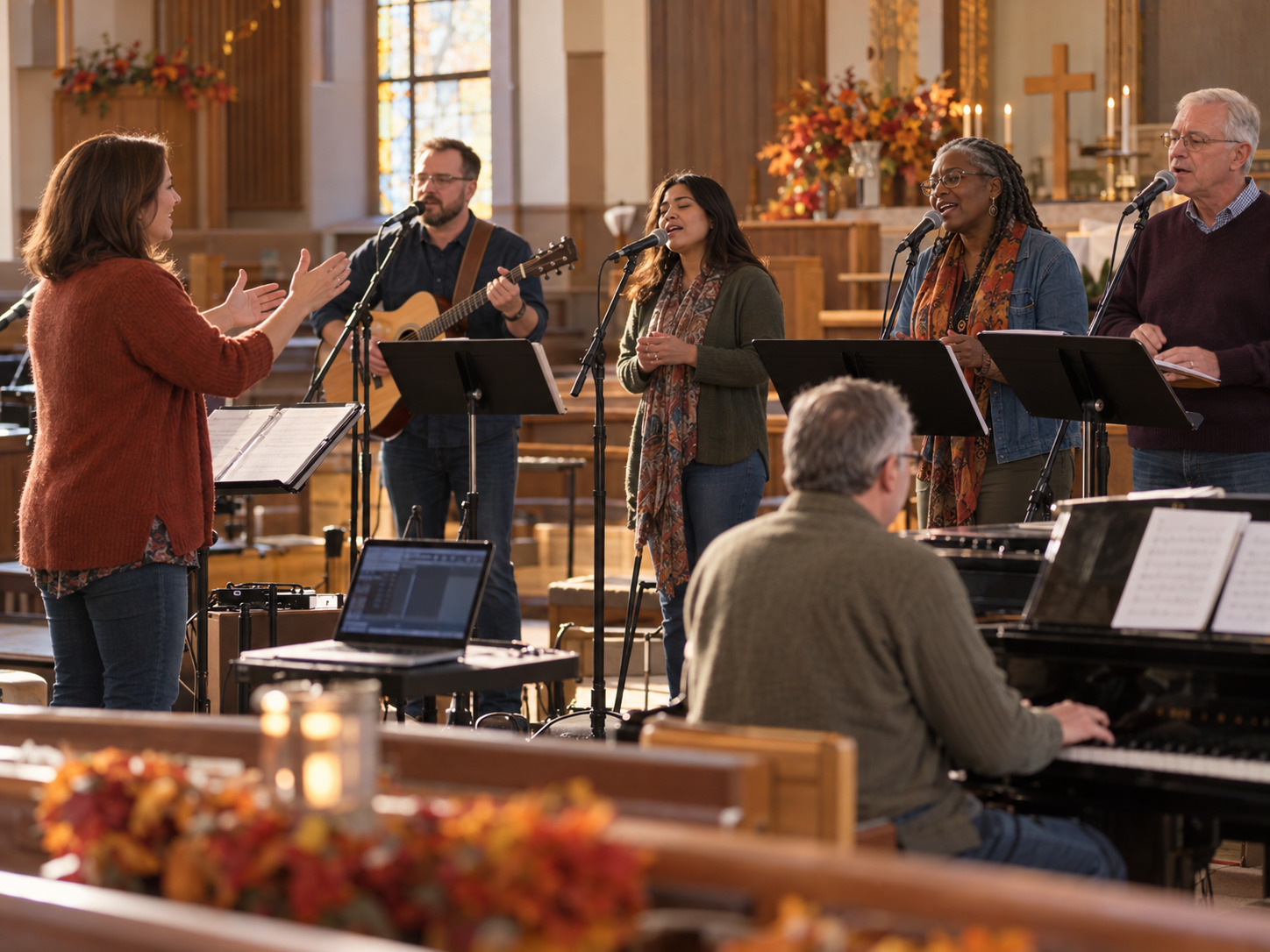
The short answer: keep the pulse clear enough for people to join, then leave enough space for the words to breathe. “Sing to the Lord of Harvest” can feel warm and contemporary without rushing the congregation or turning every verse into the same musical shape.
Spiritrax’s “Sing to the Lord of Harvest” backing track uses piano, bass, drums, and acoustic guitar and is available in B-flat, C, D, and F major. Those four keys give a worship leader practical options for a soloist, choir, small group, or congregation at a Thanksgiving or harvest service.
The useful rehearsal question is not “Which key sounds biggest?” It is “Which key lets this room sing the whole hymn with clear words, steady breath, and a confident final verse?”
Choose the key with the people who will carry the melody
Preview all four available keys with the actual leaders. Do not decide from the opening phrase alone.
Use a simple comparison:
- Sing the first phrase in each realistic key.
- Test the lowest text-heavy phrase.
- Sing the final verse after the group has already been working.
- Listen for clear consonants, unforced sustained notes, and comfortable breath.
- Choose the version ordinary voices can carry without pressing or disappearing.
| Primary singers | What to listen for |
|---|---|
| Congregation | A middle range that invites participation across several voice types |
| Choir | Balanced sections, clean words, and enough energy for the final verse |
| Soloist or cantor | A key that supports expression without forcing the top or losing the lower text |
| Small worship group | A range the lead voice can carry while others join naturally |
The lowest key is not automatically the easiest. If the melody sits too low, the room may stop projecting. The highest key is not automatically more joyful. The best key keeps the text and breath comfortable from beginning to end.
Hear the contemporary pulse in two layers
The arrangement’s piano, bass, drums, and acoustic guitar create motion without requiring the singers to sound like a full band. Rehearse the pulse in two layers:
- Foundation: the steady beat the congregation can feel.
- Phrase: the longer line shaped by the words.
First, clap or tap the underlying pulse while listening to the introduction and one verse. Then speak the text in complete phrases over that pulse. Finally, sing without adding extra holds the track cannot follow.
This keeps the hymn from becoming either heavy or hurried. The band texture provides movement; the leader provides breath, words, and an invitation to sing.
Make the first entrance hospitable
A familiar hymn can still begin uncertainly when the spoken introduction runs over the track or several leaders give different cues.
Rehearse the opening from silence:
- Who introduces the hymn?
- Who starts playback?
- When does the speaking stop?
- Who gives the visible breath?
- Can the congregation see the words before the first sung note?
- Is the accompaniment loud enough to establish the key without startling the room?
Choose one visible leader for the first breath. The choir, soloist, and operator should all follow the same cue plan.
If the congregation needs help, let the choir or worship team establish the first phrase clearly. Participation feels easier when people can hear both the melody and the beginning of the next line.
Give each verse a reason to be there
Do not make “add volume every verse” the whole arrangement plan. Decide how leadership, texture, and participation develop.
One workable outline is:
| Verse role | Leadership choice | Rehearsal focus |
|---|---|---|
| Welcome | Choir or worship leader establishes the key and pulse | Clear first word and unified breath |
| Participation | Congregation joins the established pattern | Comfortable volume and readable text |
| Reflection | Slightly smaller live texture | Phrase shape and meaning stay present |
| Sending | Full group returns with confidence | Final cadence and next service cue |
This is a planning example, not a required sequence. The number of verses and the service role may differ. The principle is to decide when the room joins, who leads each change, and what happens after the final sound.
Balance the band texture around live voices
A backing track can feel polished at a level that is too large for the singers. Set microphones and live voices first. Add enough playback for people to hear the pulse, harmony, transitions, and ending.
Listen from the seating area and ask:
- Can people hear the first consonant of each phrase?
- Does the bass become heavy in the room?
- Do drums help participation or make people rush?
- Can lower voices stay present?
- Does the acoustic-guitar rhythm remain supportive rather than brittle?
- Is the piano still audible as a harmonic guide?
- Does the final build cover the text?
If singers start forcing, reduce or reposition playback before asking them for more volume. A contemporary arrangement can feel energetic at a moderate level when the room’s voices remain the center.
Plan the service placement before rehearsal ends
The hymn can serve several practical roles. Its placement changes how the track should begin and finish.
Gathering
Keep the spoken setup brief, establish the first entrance clearly, and invite the room to participate early.
Offering or thanksgiving response
Let the words lead. Use a restrained starting level and decide whether a choir, soloist, or congregation carries the opening.
Choir feature
Rehearse section entrances and diction, but keep the groove natural. Decide whether and when the congregation is invited to join.
Sending
Build toward a confident last verse, then rehearse the handoff to the dismissal, prayer, or next spoken cue.
For a wider plan, Spiritrax’s Thanksgiving worship-music guide can help shape the full service arc. Use this song-specific rehearsal to settle the key, pulse, participation, balance, and ending.
Rehearse the ending as part of the service
The hymn is not finished merely because the track ends.
Decide:
- who gives the final release;
- whether the congregation remains standing;
- whether silence follows;
- who speaks or moves next;
- and when that next action begins.
Run the last verse into the real transition. The operator should know the final musical event and the next service cue. The speaker should know whether to enter immediately or leave a moment of space.
Avoid an unplanned fade or a rushed spoken pickup. A clear ending protects both the music and the service flow.
Give the operator one approved plan
Provide a short playback note with:
- exact filename and selected key;
- who gives the start cue;
- where the first breath happens;
- who leads each verse;
- the intended starting volume;
- any instrumental or transition landmark;
- the final cadence;
- and what follows.
Keep the approved file on the primary playback device and a separate backup. If the available version does not fit a confirmed singer or service need, describe the exact key, tempo, structure, or ending issue before requesting a customization.
A focused 20-minute rehearsal
Minutes 1–4: compare keys
Test B-flat, C, D, and F with the intended leaders, including a later phrase and the ending.
Minutes 5–8: establish the pulse
Clap the foundation, speak one verse in phrases, and then sing without adding unplanned holds.
Minutes 9–12: assign participation
Decide who begins, when the congregation joins, and how the live texture changes.
Minutes 13–16: balance the room
Sing through the actual microphones and speakers while someone listens from the seating area.
Minutes 17–20: connect the final handoff
Run the last verse, release, silence if any, and the next spoken or musical service action.
Final checklist
- All realistic keys were tested with the actual leaders.
- The selected key works after the singers are warmed up and slightly tired.
- One person owns the visible first breath.
- The spoken introduction ends before the musical cue needs attention.
- The group can feel the pulse without clipping the phrases.
- Every participation change is named in advance.
- Piano, bass, drums, and guitar support rather than cover the words.
- The playback level was checked from the seating area.
- The final cadence and next service action were rehearsed together.
- The approved file and backup are clearly labeled.
FAQ: “Sing to the Lord of Harvest” backing tracks
Which keys does Spiritrax offer?
The current product page lists B-flat, C, D, and F major.
What instruments are in the arrangement?
Spiritrax describes a gentle contemporary arrangement featuring piano, bass, drums, and acoustic guitar.
Is the track suitable for congregational singing?
It can be, when the chosen key fits the room, the first entrance is clear, and playback supports rather than covers live voices. Test the full verse with ordinary singers before the service.
Should the choir or congregation start?
Either can work. If the room needs help hearing the key and pulse, let the choir or worship leader establish the opening before inviting broader participation.
How loud should the track be?
Loud enough for singers to hear the pulse, harmony, transitions, and ending, but not so loud that the words disappear or people begin to force. Set live voices first and listen from the seating area.
What should the playback volunteer know?
Provide the exact file and key, start cue, first breath, verse-leadership plan, volume starting point, ending, and the action that follows.
The strongest final test is simple: can a person in the room hear the introduction, take one confident breath, and stay connected through the last verse? When the key, pulse, and handoffs are settled, the track can carry warmth without taking the hymn away from the people singing it.
Preview Sing to the Lord of Harvest in B-flat, C, D, and F major, then choose the version that lets your soloist, choir, small group, or congregation carry the whole hymn comfortably.
Preview the Four Keys