
“Still, Still, Still” Should Feel Unhurried, Not Unsteady
Holiday & Special Occasion Music
By Spiritrax Content Studio · September 23, 2026
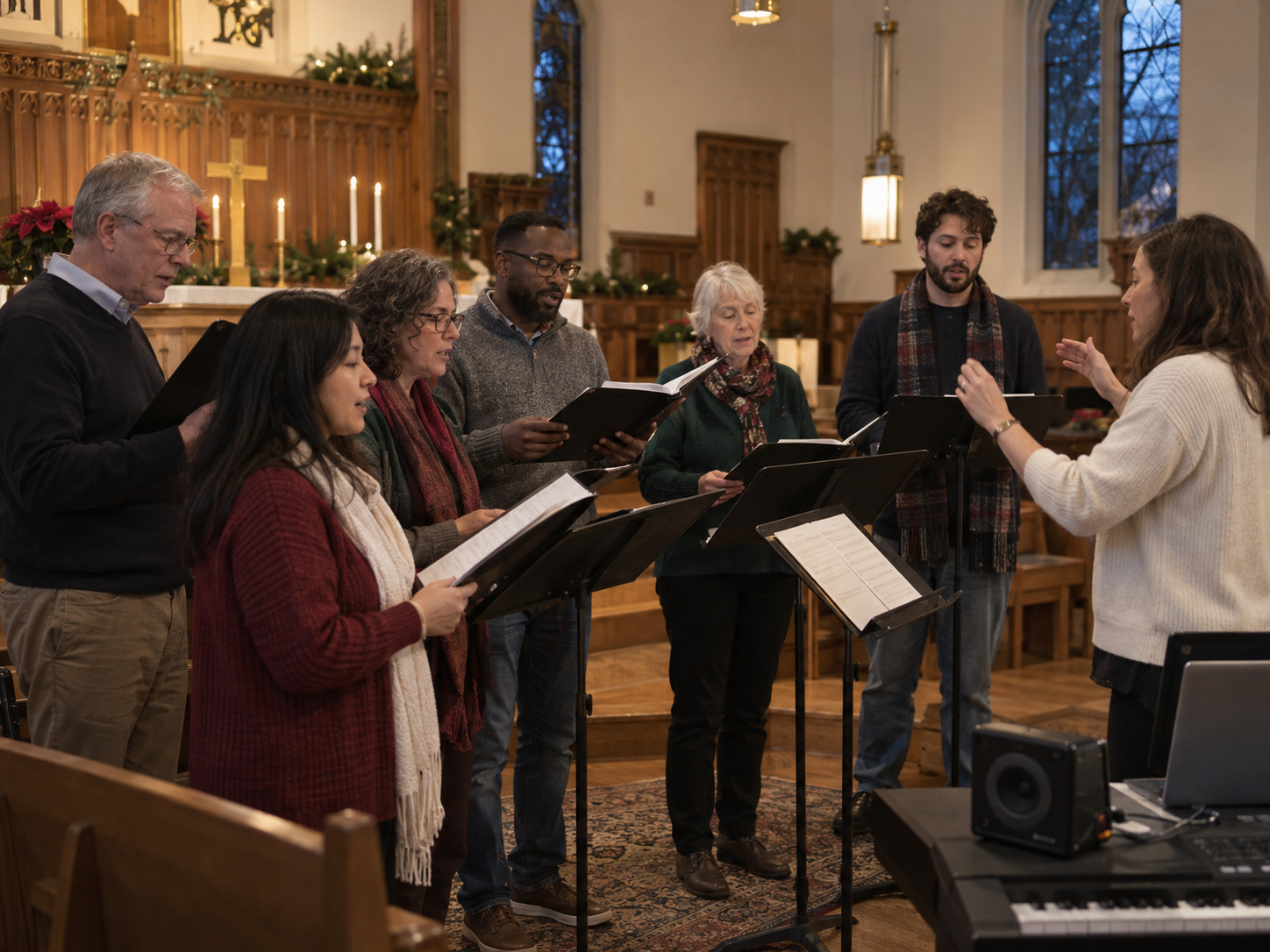
“Still, Still, Still” should feel calm because the singers know exactly where the music is going—not because the choir is waiting cautiously for the track.
The carol's lullaby character asks for quiet breath, unified vowels, patient entrances, and an ending that settles rather than collapses. A backing track can support that shape, especially for a small choir, soloist, youth group, or volunteer-led Christmas service. But the gentler the arrangement sounds, the more clearly the group needs to rehearse its timing.
The practical plan is simple: choose the key with the complete melody, learn the accompaniment's phrase shape, mark every entrance and release, then practice the entire song softly enough that the words remain present.
What makes “Still, Still, Still” difficult to rehearse?
The melody is not technically showy, but soft music exposes uncertainty.
Common problems include:
- the first entrance arriving before the choir has a shared breath;
- long phrases losing support at low volume;
- consonants landing at different times;
- singers stretching the text beyond the accompaniment;
- verse changes feeling less secure than the first verse;
- and the final note ending without a unified release.
The Spiritrax “Still, Still, Still” backing track is available in C, A, and E major. Its gentle orchestral, acoustic, and music-box colors make it suitable for children or youth choirs, adult choirs, soloists, and congregational listening. Choose the version that fits the voices in the room rather than assuming the first listed key is right for everyone.
Choose the key with the whole song
Do not test only the opening phrase.
Sing through:
- the lowest sustained notes;
- the highest repeated phrase;
- the longest line on one breath;
- the quietest planned dynamic;
- and the final verse after the voice has been working.
For a soloist, choose the key that keeps the text warm and centered without making the upper phrase sound pressed. For a choir, listen for balance across sections. A key that is comfortable for sopranos may leave lower voices without enough tone; a lower key may make the melody disappear for a small group.
If the congregation will join, test the melody with ordinary voices in the room. The best choral key is not always the most comfortable congregational key.
Write the selected key on the service plan, rehearsal packet, and operator cue sheet. Do not rely on the filename alone when several versions have been downloaded.
Hear the introduction before singing
Play the introduction once without voices.
Ask the singers to notice:
- the pulse beneath the gentle surface;
- which instrument carries the clearest entrance cue;
- how many measures prepare the first phrase;
- where the harmony feels settled;
- and what the accompaniment suggests about the first breath.
Then speak the cue aloud: “Hear this figure, breathe together here, sing on the next downbeat.” The exact language can differ, but the group should share one musical landmark.
A soft introduction is not an invitation to guess. If the choir cannot describe the entrance, repeat the listening step before adding text.
Build one silent breath into the first cue
The worship leader, director, or soloist should prepare the room before playback begins.
A reliable sequence is:
- Choir is physically ready and looking up.
- Director confirms the operator is on the correct file and key.
- Operator starts on the agreed cue.
- Director listens through the introduction with the singers.
- Everyone takes one visible, silent breath together.
- The first consonant begins from that shared preparation.
Avoid counting over the track unless the ensemble genuinely needs it and the count will not become a performance habit. Teach singers to hear the accompaniment cue, then use the director's breath and gesture to unify the entrance.
Practice quiet singing with supported breath
“Soft” does not mean airy, unsupported, or difficult to understand.
Rehearse one phrase at a comfortable medium-soft dynamic. Ask for:
- a released jaw and quiet inhale;
- connected vowels;
- consonants placed together without being overemphasized;
- steady airflow through the longest note;
- and a diminuendo that keeps pitch and breath alive.
Then repeat the phrase at the intended service dynamic. If the tone collapses, return to the supported version instead of telling the choir only to sing more quietly.
For a small adult choir, place singers close enough to hear each other without depending on the speakers. For a soloist, check that the microphone does not encourage breathy singing or force the track louder than the room needs.
Mark phrase endings before shaping them
A lullaby can feel free while still sharing precise releases.
For every phrase, decide:
- the final consonant;
- whether the note releases on the beat or after it;
- whether the accompaniment continues immediately;
- where the next breath belongs;
- and whether the next phrase begins from the same musical gesture.
Speak the last word in rhythm. Sing the final two measures. Then run the complete phrase.
This is especially helpful when repeated words invite singers to lengthen a vowel differently each time. The track will continue on schedule. A shared release lets the choir sound peaceful instead of late.
Rehearse each verse as a new entrance
The first verse often receives most of the attention because it includes the opening. Later verses can feel less secure when singers turn a page, shift attention, or relax after a familiar refrain.
Before running the complete carol, practice:
- the transition into each new verse;
- the first word after every interlude;
- any text that changes the natural stress of the phrase;
- and the breath before the final verse.
If printed music or lyrics are used, make page turns before the entrance window. If words are projected, confirm the slide changes soon enough that the choir or congregation is not reading while the introduction passes.
Do not assume that a repeated melody requires no new cue. Give each verse the same preparation and attention as the first.
Decide the song's job in the service
“Still, Still, Still” can serve several different moments:
- a quiet choir anthem;
- a solo during prayer or offering;
- a children's or youth presentation;
- a reflective transition after a reading;
- a Christmas Eve meditation;
- or a gentle congregational listening moment.
The placement changes the performance plan.
After a reading, leave enough silence for the text to settle before starting the track. During an offering, decide whether the music must cover a flexible amount of movement. For a children's presentation, keep the entrance, standing positions, and adult cue support simple. On Christmas Eve, test how candles, low light, and movement affect what singers can see and hear.
Name the song's job before deciding volume, microphones, spoken introduction, and what follows the ending.
Balance the track below the words
The accompaniment should carry warmth and pulse without covering the text.
Test from the center and rear of the room, not only beside the speakers. Listen for:
- whether low instruments make the mix feel heavier than intended;
- whether the music-box color remains supportive rather than prominent;
- whether the first consonants stay understandable;
- whether the choir can hear enough pulse to remain together;
- and whether the final phrase can become quieter without disappearing.
Use the actual microphones and singer positions planned for the service. A small choir may need less accompaniment level than expected. A soloist may need more vocal gain rather than more track volume.
Write the starting level and any planned change on the cue sheet. “Keep it soft” is not a complete operator instruction.
Protect the ending
The ending needs three agreements:
- Where is the final breath?
- Who controls the release?
- What happens after the track finishes?
Rehearse the last phrase separately. Keep the final vowel alive, place the ending consonant together, and let the director release the voices with the accompaniment.
Then practice the silence after it.
If the next action is prayer, a reading, a lighting cue, or a procession, name who moves first and after how much silence. Do not let applause, an operator reaching for another file, or a hurried announcement erase the stillness the music created.
Keep the playback plan simple
Prepare one approved file in the selected key and one tested backup on a second device.
The operator should know:
- exact filename and key;
- service position;
- start cue;
- first vocal entrance;
- verse count;
- expected ending;
- starting level;
- and the next event.
Download the file before the service. Test it through the same cable, device, mixer input, and speakers that will be used publicly. Keep the guide or demonstration version clearly separated from the accompaniment-only performance file.
If the available track is musically close but the service needs a different key, timing, cut, or ending, Spiritrax custom tracks can support a clearly planned adjustment.
“Still, Still, Still” rehearsal checklist
- Test the complete melody in C, A, or E before choosing a key.
- Listen to the introduction without singing.
- Name the musical landmark for the first entrance.
- Build one shared silent breath into the cue.
- Practice soft singing with supported airflow.
- Mark final consonants and releases for every phrase.
- Rehearse the transition into each verse.
- Match volume and microphone choices to the actual room.
- Decide what the carol does in the service.
- Rehearse the final phrase and the silence after it.
- Separate guide and accompaniment files clearly.
- Keep one downloaded backup on a second tested device.
FAQ: rehearsing “Still, Still, Still” with a backing track
What key is “Still, Still, Still” available in?
The Spiritrax arrangement is available in C, A, and E major. Test the full song with the actual soloist, choir, or congregation before selecting the service key.
Is the backing track suitable for a choir?
Yes. The gentle arrangement can support adult, youth, or children's choirs as well as soloists. Rehearse entrances, phrases, verse transitions, balance, and the final release with the exact selected track.
How can a choir sing softly without losing pitch?
Begin at a supported medium-soft dynamic, align vowels and breath, then reduce volume while keeping steady airflow. Make sure singers can hear enough accompaniment and each other to maintain pitch.
Should the congregation sing along?
Only when the key, lyrics, verse plan, and service role make participation clear. If the piece is offered as a choir anthem or meditation, let the congregation listen without an uncertain invitation.
What should happen after the last note?
Plan the silence and the next cue. The director releases the ensemble, the operator lets the track finish, and the next speaker or action begins after the agreed pause.
The takeaway
“Still, Still, Still” feels restful when the preparation underneath it is dependable.
Choose the key with the whole song, listen before singing, breathe and release together, rehearse every verse entrance, balance the words above the accompaniment, and protect the final silence. The track can then do its best work: holding the musical shape while the singers carry the carol's quiet center.
Preview “Still, Still, Still” in C, A, and E major, choose the key with the complete song, and rehearse every entrance, phrase ending, verse change, and final release with the exact accompaniment.
Preview Still, Still, Still