
Let “The First Noel” Grow Without Rushing the Story
Holiday & Special Occasion Music
By Spiritrax Content Studio · October 27, 2026
Updated October 28, 2026
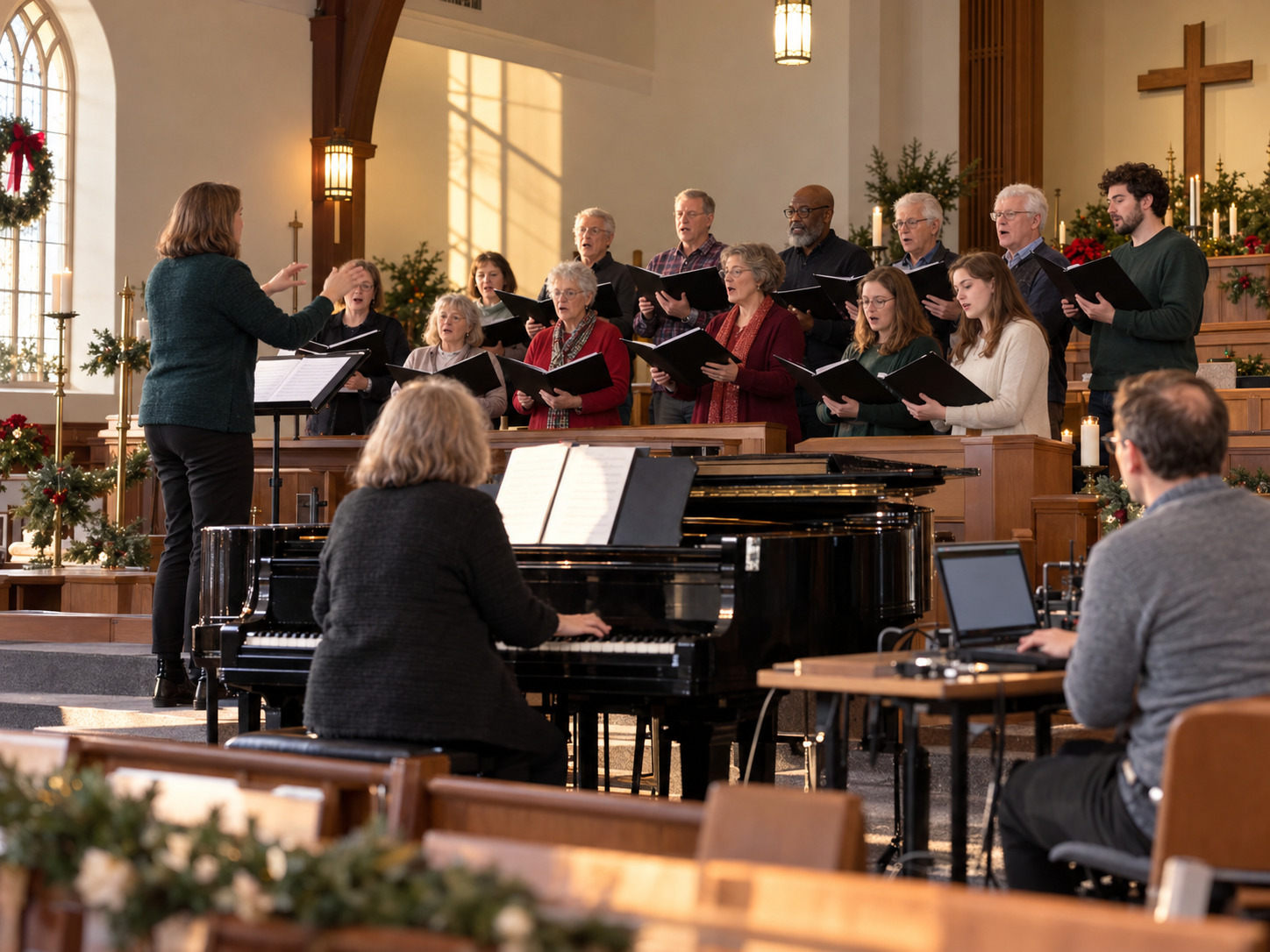
The short answer: choose the key for the people who will sing all three verses, then rehearse “The First Noel” as a story that grows through repetition. Keep the 3/4 pulse steady, make the first entrance unmistakable, and plan the final verse before the choir or soloist is tempted to manufacture a bigger ending by rushing.
Spiritrax’s contemporary orchestral arrangement combines piano, bass, drums, orchestra, and guitar. It can support a soloist, choir anthem, or caroling setting, but each use needs a slightly different balance and leadership plan.
Choose the key from the complete melody
The Spiritrax backing track for “The First Noel” is currently available in A, D, F, and C major. Do not choose among them from the opening phrase alone.
Ask the actual singer or group to test:
- the lowest comfortable notes near the beginning;
- the highest sustained part of the full melody;
- the refrain after two complete verses;
- and the final verse at realistic service or performance energy.
A key that feels bright for one verse can become tiring by the third. A key that feels easy in a quiet room can lose presence once the accompaniment, microphones, and sanctuary acoustics are involved.
For congregational participation, favor the key ordinary voices can repeat without strain. For a solo feature, choose the key that lets the singer communicate the text across the whole range. For choir, test the melody and any planned harmony or descant together rather than assuming the soloist’s key will fit everyone.
Feel three beats without making every bar sway
The arrangement is in 3/4. The safest rehearsal pulse is one clear beat per measure with three smaller subdivisions inside it.
Conducting every small beat too heavily can make the carol feel careful and square. Ignoring the smaller beats can make entrances and word endings imprecise. Rehearse both layers:
- Speak the text while tapping one large pulse per measure.
- Sing the opening while the director shows all three beats lightly.
- Return to one larger gesture once the choir shares the internal subdivision.
The goal is movement without hurry. Let the accompaniment carry the meter while singers shape complete phrases over it.
Give each verse a distinct role
Three verses do not need three unrelated performances. They need one story with a developing point of view.
Before singing, assign a simple role to each verse:
- Verse one: tell the scene clearly. Prioritize shared vowels, clean consonants, and a confident first entrance.
- Verse two: bring the story closer. Warm the sound and let the text feel more personal without losing pulse.
- Verse three: invite the room into the conclusion. Build through supported breath, fuller harmony, or a broader dynamic—not extra speed.
The precise interpretation belongs to the worship leader, conductor, or soloist. The useful principle is contrast with continuity. The arrangement remains the same map; the people singing it reveal more with each return.
Rehearse the refrain as a handoff
The repeated refrain can feel automatic because everyone knows it. That is exactly why entrances, releases, and balance can become casual.
Decide who leads the first syllable, where the choir or congregation joins, and how the final consonant releases into the next instrumental moment. If a soloist leads the verse and the choir joins the refrain, rehearse the handoff without singing the whole song first.
Use a simple loop:
- Start four measures before the refrain.
- Have the soloist keep the final verse phrase at normal volume.
- Bring the choir in on the planned breath and visual cue.
- Release together without clipping the accompaniment.
- Repeat once from the same playback point.
One agreed cue is better than several people trying to help at once.
Match the arrangement to the service moment
The same track can serve different musical roles, but the room needs to know which role it is hearing.
| Setting | Leadership plan | Rehearsal focus |
|---|---|---|
| Solo during worship | Soloist carries all verses; operator follows one written start cue | Key, breath, instrumental turns, ending |
| Choir anthem | Director owns entrances and dynamic shape | Shared 3/4 pulse, diction, refrain balance |
| Caroling or community program | One visible leader gives each entrance | Comfortable key, strong first pitch, portable playback |
| Congregational song | Worship leader or choir establishes the melody | Singable key, clear intro, words and entrance visible to the room |
Do not assume a familiar carol leads itself. A recorded accompaniment cannot watch the congregation, extend a breath, or wait for a late page turn. Human leadership still makes the room feel welcome.
Keep the orchestra behind the words
The contemporary orchestral texture gives the carol breadth, but the singer’s text should remain easy to understand.
During sound check, stand in several parts of the room and listen for:
- whether piano and percussion define the pulse without covering consonants;
- whether fuller orchestral moments mask a soft soloist;
- whether choir microphones make the refrain suddenly much louder than the verses;
- whether the track remains audible when the congregation joins;
- and whether the final chord has enough space to finish before speech or applause begins.
Set the playback level before the service. The sound volunteer should not have to search for a balance during the first verse.
Build one dependable playback cue
Write the file name, selected key, service placement, and start cue in the order of worship. If the track begins after a reading or spoken introduction, decide who gives the operator the visible cue.
Keep a local backup copy on a second device, turn off notifications and autoplay, and test the exact file through the actual sound system. If the service also streams or records, confirm the relevant music, lyric, streaming, and recording permissions separately.
For a choir, give the director and operator the same note about the ending. For caroling, confirm power, speaker placement, and how the group will hear the introduction outdoors or in a noisy gathering space.
A focused rehearsal checklist
- The selected key works for the complete three-verse range.
- Everyone can feel one large pulse and three smaller beats.
- The first entrance is clear without verbal counting over the track.
- Each verse has a distinct role in the story.
- The soloist-to-choir or leader-to-room handoff is rehearsed.
- The refrain begins and releases together.
- The fuller arrangement does not cover the text.
- The final verse grows without rushing.
- The operator has the exact file, cue, and backup.
FAQ: using a backing track for “The First Noel”
Which keys are available?
The Spiritrax product page currently offers accompaniment previews and downloads in A, D, F, and C major. Test the complete melody with the actual singer, choir, or congregation before choosing.
Is the track only for choir?
No. Spiritrax describes the three-verse arrangement as suitable for caroling, choir anthem, or solo performance. The leadership and balance plan should change for the setting.
How should a choir keep 3/4 from dragging?
Feel one larger pulse per measure while maintaining the three internal beats. Keep consonants moving through the phrase and avoid leaning equally on every beat.
The takeaway
The carol does not need a rushed final verse to feel complete. Choose the key from the whole melody, agree on the 3/4 pulse, shape the three verses as one growing story, and give the operator a cue the room can trust.
With those decisions settled, the accompaniment can provide breadth while the singers keep the words, worship, and shared story at the center.
Compare the four available keys, preview the three-verse contemporary orchestral arrangement, and choose the version that fits your soloist, choir, or caroling group.
Preview The First Noel