
Rehearse the Key Change Before “This Is My Father’s World”
Worship Music & Hymn Resources
By Spiritrax Content Studio · September 30, 2026
Updated September 30, 2026
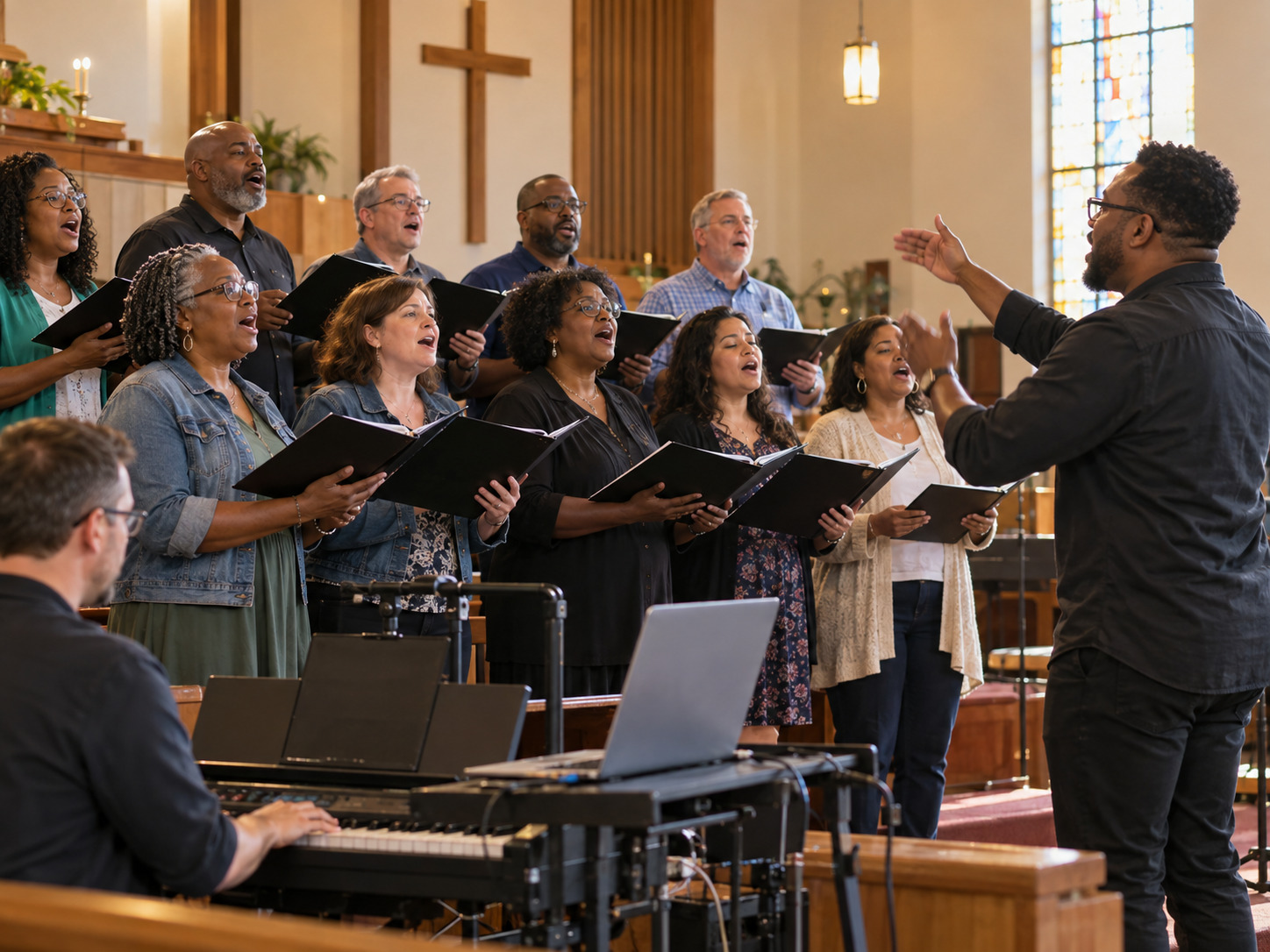
The short answer: rehearse the final-verse key change before you rehearse the complete hymn. If the choir, soloist, or congregation does not know how the lift arrives, a beautiful arrangement can feel like a surprise instead of a natural widening of the song.
Spiritrax offers “This Is My Father’s World” in C, D, and F major. The product page describes a three-verse arrangement that moves up one whole step for the third verse. Choose the starting key with that final destination in mind.
Choose the key for the entire arrangement
Do not choose a starting key after singing only the first verse. The group has to remain comfortable after the whole-step lift.
Use this key test:
- Preview C, D, and F major.
- Sing the opening in each realistic option.
- Jump to the transition into verse three.
- Continue through the complete final verse.
- Listen for free tone, clear words, and sustainable breath.
- Choose the version that works at the end, not merely the one that feels easy at the beginning.
A soloist may enjoy a warm lower opening but feel pressed after the modulation. A congregation may sing the first two verses comfortably and lose confidence when the melody rises. A choir may need to balance its sections differently in the final key.
Test the people who will actually carry the strongest part of the song. If none of the offered versions fits the group, the product page provides a customization route. Identify the precise range or pacing problem before requesting a change.
Teach the key change as its own musical event
The final lift deserves more than a warning that the song “goes up.” Give singers a practical route into it.
First, listen to the transition without singing. Identify:
- the final sound of verse two;
- the accompaniment cue that signals the new key;
- the breath available before verse three;
- the first pitch or phrase in the higher key;
- and the point where the group can settle rather than keep reaching.
Then rehearse only the last phrase before the modulation and the first complete phrase after it. Repeat until the singers can enter the new key without a leader singing over them.
Finally, begin earlier and continue farther. A transition that works in isolation still has to feel natural after two full verses.
Let the text earn the lift
A key change should not feel like a demand to become suddenly louder. The final verse can grow through clarity, participation, and conviction before volume increases.
Ask three questions:
- What has the congregation or choir heard by the end of verse two?
- What new assurance or response does verse three carry?
- How should the room change when the music rises?
Choose one musical action for the lift: broaden the vowel, bring in the full choir, invite the congregation, strengthen the accompaniment level slightly, or let the director’s gesture expand. Do not add every possible change at once.
The arrangement will already create energy by moving upward. Give the singers enough space to carry that energy with a free sound.
Decide who leads each verse
The hymn can work for a soloist, choir, congregation, or a combination. The key change becomes clearer when each group knows its job.
One practical plan is:
- verse one: soloist or small group introduces the arrangement;
- verse two: choir or congregation joins in the established key;
- transition: director and accompaniment make the modulation unmistakable;
- verse three: the full group carries the higher key together.
That is only one option. A soloist may sing all three verses, or a choir may lead throughout. The important choice is not the exact distribution. It is whether everyone knows who carries the first phrase after the modulation.
Write the plan into the service order. “Choir joins later” is too vague. Name the verse, the cue, and the leader.
Rehearse breath before intensity
A one-step rise can make singers feel as if they must push upward. Prepare the breath and vowel before asking for more sound.
Try this sequence:
- Speak the first phrase of verse three together.
- Sing it lightly in the final key without the track.
- Add the accompaniment transition.
- Sing through the first complete phrase at a moderate dynamic.
- Continue through the final verse without increasing volume automatically.
- Repeat with the intended service or performance dynamic.
Listen for lifted shoulders, shortened vowels, disappearing final consonants, or a section that arrives late because singers are searching for pitch. Solve those details before adding microphones or playback volume.
For a congregation, the choir or worship leader should model the higher entrance clearly without turning it into a solo. For a choir, make sure every section can hear the harmonic support under the modulation.
Set playback so the new key remains audible
The singers need to hear the accompaniment’s modulation cue, but the track should not cover their words.
At sound check:
- use the actual device and speakers;
- begin before the end of verse two;
- listen from the congregation or audience area;
- verify that the transition is audible across the room;
- check the first phrase in the new key;
- continue to the strongest final passage;
- and keep the vocal sound in front of the accompaniment.
An empty sanctuary can sound very different from a full one. Recheck the balance when the choir, people, music stands, and seasonal decorations are in place.
If a soloist uses a microphone, set the vocal first. Bring the track underneath it. A singer should not have to force the higher verse because playback was set alone in an empty room.
Connect the hymn to the service
Plan what happens before the track starts and after it ends.
Confirm:
- who introduces the hymn, if anyone;
- who starts playback;
- what the visible leader does during the introduction;
- whether a soloist, choir, or congregation begins;
- how the modulation will be cued;
- who releases the ending;
- and whether prayer, reading, silence, or another musical event follows.
Run the opening from the actual preceding service moment. Then run the final verse and ending into what comes next. A prepared key change should live inside a prepared service flow.
A 20-minute rehearsal plan
Minutes 1–4: compare keys
Test the opening and the complete final verse in the realistic starting keys. Select one version.
Minutes 5–9: isolate the modulation
Listen to the transition, then sing from the last phrase of verse two through the first phrase of verse three.
Minutes 10–13: assign leadership
Confirm who leads each verse, who cues the transition, and who carries the first phrase in the new key.
Minutes 14–17: balance the final verse
Run the modulation through the ending. Check breath, words, section balance, and playback from the room.
Minutes 18–20: prove the service handoff
Run the opening from the previous event and the ending into the next prayer, reading, silence, or cue.
Key-change rehearsal checklist
- C, D, and F-major previews were compared with the actual singers.
- The selected starting key remains comfortable after the whole-step lift.
- Singers know the accompaniment cue into verse three.
- The first phrase in the new key has been rehearsed without a guide voice.
- Every soloist, section, or congregational leader knows its verse.
- The modulation grows through meaning and participation, not only volume.
- Words and breath remain clear in the higher key.
- Playback was checked from the room.
- The opening and ending connect to the surrounding service.
FAQ: “This Is My Father’s World” backing tracks
Which keys are available?
The product page lists C, D, and F major. Each version uses a three-verse arrangement with a whole-step key change for the third verse.
Should we choose the lowest starting key?
Not automatically. Sing through the final verse after the modulation. Choose the version that supports the complete group and complete arrangement.
Can a congregation follow the key change?
Yes, when the accompaniment cue is audible and the choir or leader gives a confident first phrase in the new key. Rehearse the transition with the people who will lead it.
What if the modulation is too high?
Compare all listed versions with the full final verse. If none fits, identify the exact range issue and use the customization option rather than asking generally for an easier track.
Should the final verse be much louder?
Not necessarily. Let the higher key create lift, then add only the participation, color, and dynamic the room can carry clearly.
The useful final test is simple: can the group move into verse three without searching, pushing, or losing the words? When the key is chosen for the whole arrangement and the transition is rehearsed as a real service cue, the lift feels purposeful instead of surprising.
Preview the C, D, and F-major versions, then choose the starting key that keeps the complete third verse clear after the whole-step lift.
Preview the Available Keys