
Rehearse the Extra Refrain Before “’Twas in the Moon of Wintertime” Reaches Christmas Eve
Holiday & Special Occasion Music
By Spiritrax Content Studio · November 16, 2026
Updated November 24, 2026
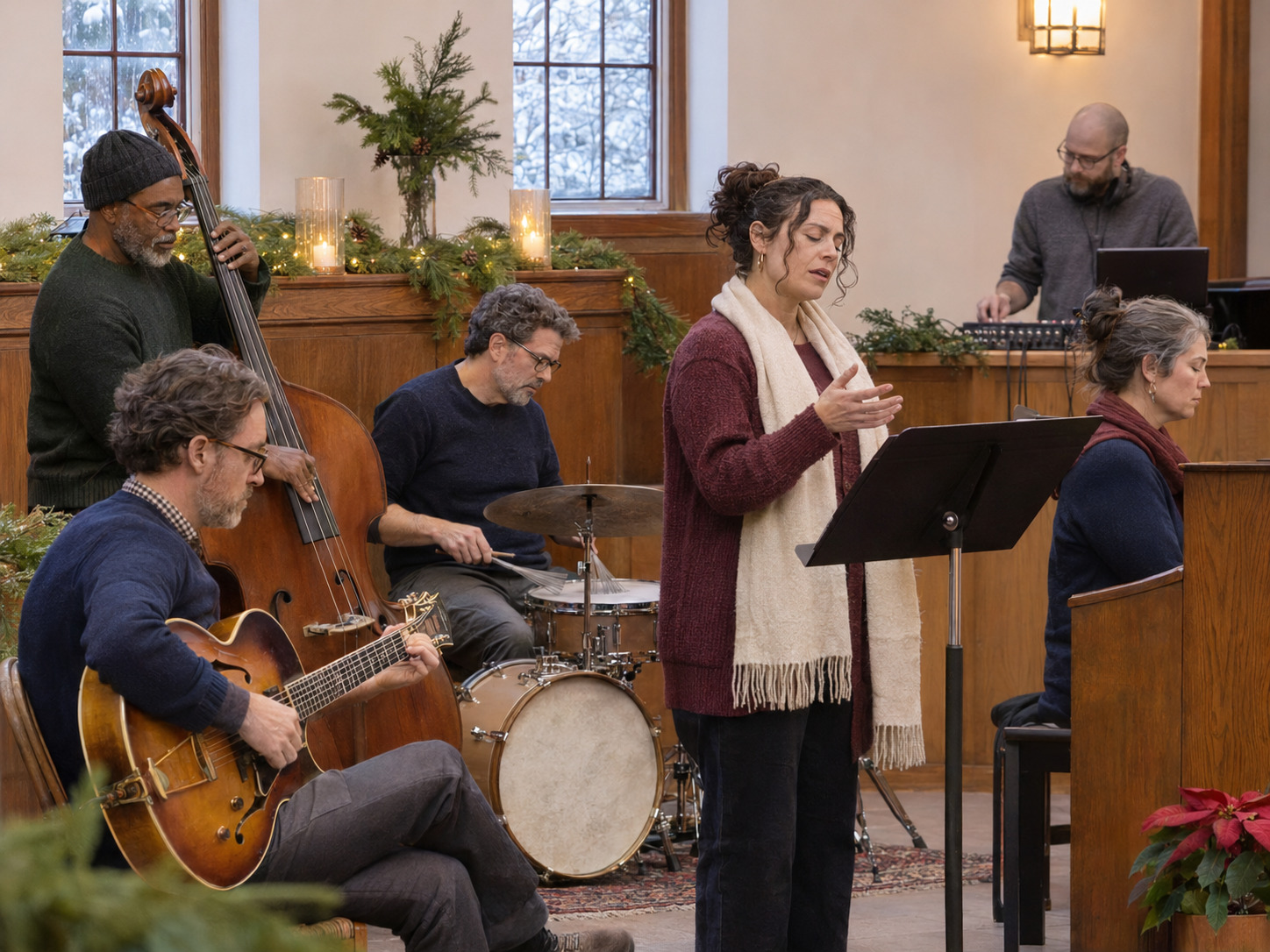
“’Twas in the Moon of Wintertime” can feel spacious and unhurried, but that calm only works when everyone knows exactly where the form is going. The Spiritrax accompaniment is a quiet, contemplative jazz-quartet setting for piano, bass, brushes, and mellow jazz guitar. It covers three verses, gives each verse its refrain, and adds one more refrain at the end.
That last detail is the reason to rehearse the arrangement as a complete journey—not simply as a familiar tune. Use the plan below to settle the key, internalize the pulse, cue every handoff, and make the final refrain sound intentional on Christmas Eve.
1. Choose the key with the whole form in mind
The Spiritrax track is available in G minor, C minor, D minor, and E minor; G minor is the original key. Begin by testing more than the opening phrase. Sing a full verse and refrain in each likely key, then check the later part of the range while your voice is warm but not tired.
A useful key should support all of these things:
- Clear diction in the low register
- Comfortable sustained notes
- Enough room for the final refrain to grow without strain
- A tone color that suits a quiet jazz setting
Make the decision before the full rehearsal. Changing keys late forces the soloist, sound volunteer, and other musicians to relearn cues that should already be automatic.
2. Map the complete arrangement on one page
Write a simple roadmap that everyone can see:
- Verse 1
- Refrain
- Verse 2
- Refrain
- Verse 3
- Refrain
- Extra final refrain
- Ending
The repeated sections may look obvious on paper, yet the extra refrain changes the emotional and practical shape of the ending. Mark it boldly. If a music stand is used, keep the roadmap visible beside the lyric or score. The sound volunteer should have the same map, including the approximate point at which the final refrain begins.
During rehearsal, speak the transition names aloud before running the track: “third verse, refrain, extra refrain, ending.” That thirty-second check prevents the most common form mistake—relaxing too early after the third refrain.
3. Find the pulse inside the quiet texture
A brushed drum part can feel softer than a conventional backbeat, but it still defines time. Listen first for the continuous motion of the brushes and the placement of the bass. Those two parts provide the floor beneath the vocal line.
Run the opening once without singing. The soloist can lightly tap the main pulse while listening for where the piano and guitar phrases sit around it. Then sing one verse while keeping that same internal pulse. The goal is not to become rigid; it is to keep expressive phrasing connected to the accompaniment.
If a phrase starts to drag, return to the bass and brushes rather than chasing every piano detail. In a contemplative arrangement, steadiness creates space. Uncertain time makes the same tempo feel longer.
4. Let the piano and guitar color the phrase
The piano and mellow jazz guitar add warmth and harmonic shape. Treat them as conversation partners, not as signals to imitate every inflection. The vocalist can listen for the accompaniment’s releases and arrivals, then place consonants clearly enough that the text remains understandable over the softer instrumental colors.
Rehearse one verse at normal volume and another at a slightly lower dynamic. Keep the breath support and diction consistent in both. This reveals whether “quiet” has turned into unsupported singing or whether the line can remain focused without pushing.
Avoid adding rubato in every phrase. Choose one or two places where a small amount of flexibility serves the text, and verify that the track still supports the choice. The recorded accompaniment will not wait for an improvised delay.
5. Rehearse every verse-to-refrain handoff
Do not spend the whole sound check running from the beginning. Loop the final line of a verse into the opening of its refrain. Practice that handoff three times, then repeat the process from the third refrain into the extra final refrain.
Each run should answer four questions:
- Where does the soloist breathe?
- What instrumental sound confirms the transition?
- Does the vocalist enter ahead of, on, or after the perceived beat?
- What visual cue tells the sound volunteer that the roadmap is still on course?
If the vocalist is joined by a small ensemble on the refrain, decide whether the additional voices enter on every refrain or only near the end. Write the choice into the roadmap. Consistency will sound more confident than an unplanned crescendo of people.
6. Give the extra refrain its own purpose
The final refrain should not feel like an accidental repeat. Decide what changes—if anything—when it arrives. The vocalist might sing with a slightly fuller tone, the ensemble might join, or everyone might remain restrained and let the repetition provide the meaning.
Whatever the choice, practice the final refrain and ending as a separate unit. Start a few seconds before the transition, sing through the finish, then remain still until the track has completely ended. This prevents movement, page turns, or microphone handling from interrupting the final decay.
A good test is simple: a listener who does not know the track should sense that the extra refrain belongs there.
7. Balance the accompaniment beneath the voice
Set playback volume with the soloist standing in the actual singing position. Begin with the track lower than expected and raise it until the bass, brushes, piano, and guitar are present without masking consonants.
Check the balance from three places:
- At the microphone
- In the middle of the room
- Near the rear seating area
If possible, have one person listen while the soloist sings the quietest verse and the fullest final refrain. Adjust the system for intelligibility across both, not just for the loudest moment. Keep a note of the final playback and microphone settings so they can be restored quickly before the service.
8. Run a short Christmas Eve readiness check
Before doors open, confirm the selected key and exact audio file, disable device notifications, and make sure the playback device is connected to power. Verify the start level, the opening cue, the extra refrain, and the full ending. Then stop rehearsing.
The purpose of the final check is confidence, not another performance. A clear roadmap and a settled mix give the soloist room to communicate with calm attention.
Frequently asked questions
What keys are available?
The Spiritrax accompaniment is available in G minor, C minor, D minor, and E minor. G minor is the original key.
What instruments are in the arrangement?
The track uses piano, bass, brushes, and mellow jazz guitar for a quiet jazz-quartet sound.
How many refrains are in the track?
Each of the three verses is followed by a refrain, and there is an additional refrain at the end.
What should we rehearse if time is short?
Prioritize the selected key, the verse-to-refrain handoffs, the transition into the extra final refrain, and the complete ending. Then confirm playback balance with the live voice.
A calm performance starts with a clear map
The reflective character of “’Twas in the Moon of Wintertime” does not require a complicated rehearsal. It requires agreement: the right key, a shared form, a dependable pulse, clear transitions, and a final refrain that everyone expects. Prepare those details ahead of time, and the quartet texture can remain gentle while the vocal line stays assured.
Choose the key and rehearse all three verses, recurring refrains, and the extra final refrain with the Spiritrax accompaniment track.
Hear the accompaniment