
Wedding Ceremony Backing Tracks for Church and Chapel Services
Holiday & Special Occasion Music
By Spiritrax Content Studio · May 15, 2026
Updated May 15, 2026
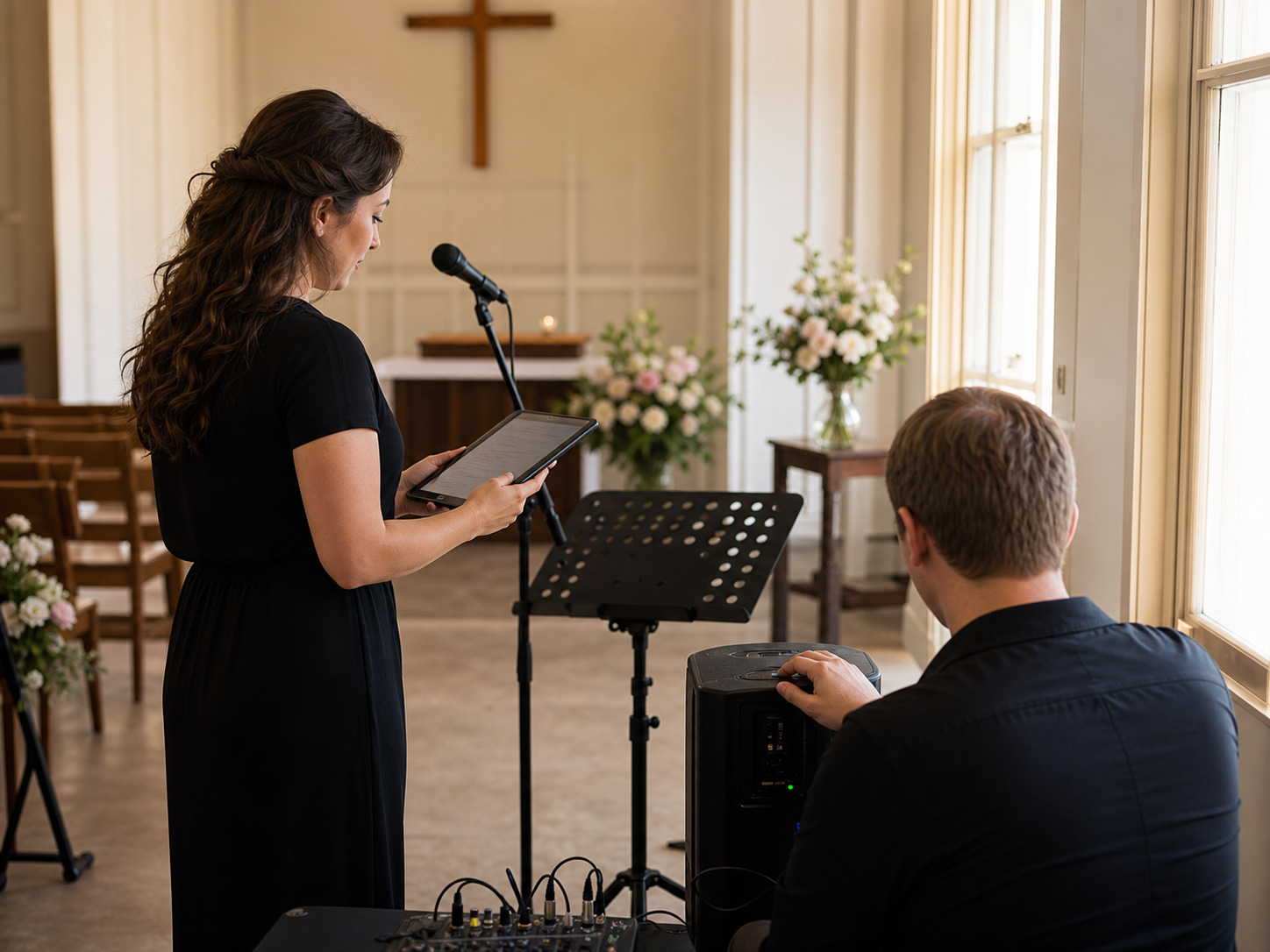
Wedding music has to feel calm before it sounds beautiful. A soloist may know the melody, the officiant may know the order of service, and the couple may have chosen the songs months ago, but the moment still depends on practical preparation: keys, cues, entrances, volume, and a playback setup that works in the room.
For churches, chapels, small sanctuaries, and intimate ceremony spaces, backing tracks can make the music plan more reliable when a full ensemble or organist is not available. The goal is not to make the service feel mechanical. The goal is to give singers, musicians, and coordinators a steady accompaniment source they can trust.
Spiritrax offers a wedding backing tracks collection with ceremony-friendly options for processionals, recessionals, preludes, and classical moments. Use the collection as a starting point, then build a clear plan around the actual service order.
Start with the ceremony flow
Before choosing individual tracks, write down where music will happen. A simple ceremony map keeps everyone aligned and prevents last-minute guessing.
Common music moments include:
- prelude music while guests arrive;
- seating of family members;
- wedding party processional;
- bride or couple entrance;
- unity candle, communion, prayer, or reflection;
- solo or special music;
- recessional;
- postlude or exit music.
Not every ceremony needs every moment. In a small chapel, one strong processional and one confident recessional may be enough. In a larger church service, the music may need more transitions and longer lead time.
Match the track to the room
A backing track that works well in headphones can feel different in a sanctuary. Reverberation, ceiling height, speaker placement, and the distance between the soloist and sound operator all affect the experience.
For a church or chapel wedding, listen for:
- a clear introduction that gives the singer or wedding party time to enter;
- a tempo that supports walking, not rushing;
- an ending that can land cleanly before the next spoken moment;
- a key that lets the soloist sing comfortably under pressure;
- an arrangement that fits the tone of the ceremony.
The best ceremony track is not always the biggest arrangement. Often, the right choice is the one that gives the room space.
Choose processionals and recessionals differently
A processional and recessional have different jobs. The processional needs poise, timing, and enough musical space for movement. The recessional can usually carry more energy because the formal vows have already happened and the room is ready to celebrate.
For processionals, choose a track that gives the coordinator time to manage entrances. If there are several pairs walking, confirm whether the track is long enough or whether it can loop, restart, or fade naturally.
For recessionals, choose something confident and easy to start. The first seconds matter because applause, movement, and emotion can make a soft entrance hard to hear.
Prepare the singer separately from the ceremony cue
If a soloist is singing during the service, rehearse the song as music first and as a ceremony cue second. Those are related, but they are not the same task.
The singer should confirm:
- the key is comfortable from first phrase to final note;
- the intro gives enough time to breathe and enter;
- the track volume leaves room for the voice;
- the ending is clear to the sound operator;
- the file being rehearsed is the exact file used on the wedding day.
A soloist should not discover a difficult key or unclear entrance during the sound check. Use the backing track early enough that the singer can practice with the real arrangement.
Build a simple sound-check checklist
A wedding sound check does not need to be long, but it does need to be specific. Bring the exact playback device, cable, adapter, or wireless connection that will be used during the ceremony.
Before guests arrive, confirm:
- the track starts from the beginning, not from a paused rehearsal point;
- the volume is balanced for the room;
- the solo microphone and track are both audible;
- the sound operator knows the cue word or visual cue;
- the device will not sleep, lock, ring, or show notifications;
- every track is named clearly and arranged in ceremony order.
If the ceremony uses more than one track, put the files in a dedicated playlist or folder. Do not rely on search during the service.
Keep sacred and family moments uncluttered
Wedding ceremonies often include prayer, scripture, blessings, memorial acknowledgments, or family traditions. Music should support those moments without drawing attention away from them.
If a song carries strong emotional or religious meaning, avoid crowding it with too much spoken direction, abrupt fades, or uncertain cues. Let the track serve the text, the couple, and the room.
That is also why this topic is not a good fit for an in-article ad block. A wedding ceremony music guide should keep the reader focused on preparation, trust, and the direct music path.
Practical planning questions
Ask these before finalizing the music plan:
How many entrances need music?
Count people, not just songs. A wedding party of two needs different timing than a wedding party of twelve.
Is the ceremony in a church, chapel, hall, or outdoor space?
The space affects volume, tempo feel, equipment, and whether a softer arrangement will carry.
Who controls playback?
Choose one person. The sound operator, coordinator, or musician should know exactly when each track begins and ends.
Does the singer need a different key?
Test the song early. Ceremony nerves can make a barely comfortable key feel harder.
What happens if the track ends before the entrance is complete?
Plan for a fade, restart, loop, or alternate cue before the service begins.
The takeaway
Wedding backing tracks work best when they are chosen for the ceremony, not just for the song title. Start with the Spiritrax wedding collection, choose music that fits the room and service flow, rehearse the exact files, and give the sound operator a clear cue plan before guests arrive.
Plan ceremony music with Spiritrax wedding backing tracks for processionals, recessionals, preludes, and calm sound-check preparation.
Browse Wedding Tracks