
A Worship Track Works Best When It Has One Job
Worship Music & Hymn Resources
By Spiritrax Content Studio · June 17, 2026
Updated June 17, 2026
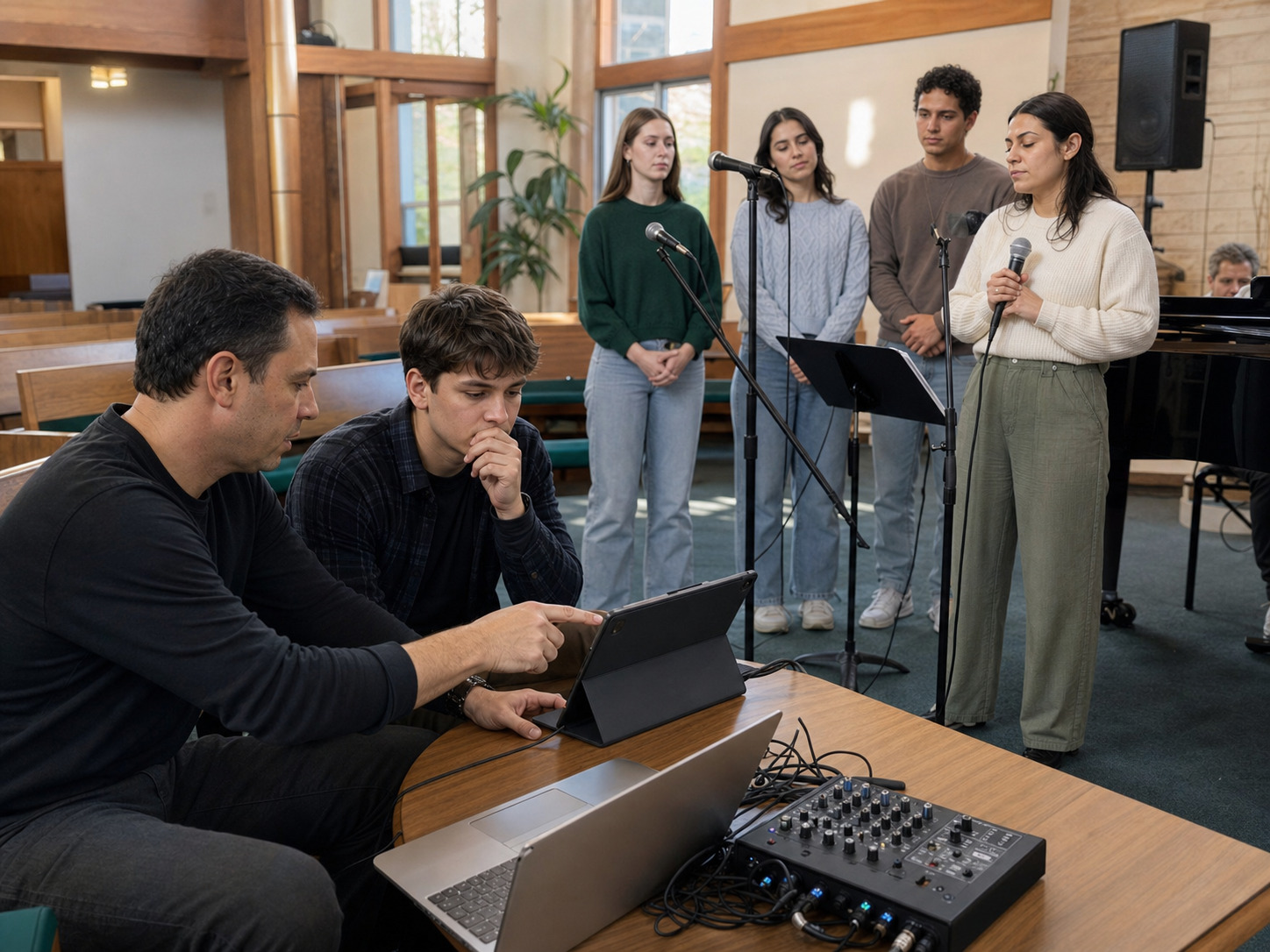
A worship backing track is easier to use when everyone knows why it is there.
The same song can serve as a solo, a choir feature, a congregational hymn, a reflective prayer moment, or soft music under a service transition. Each use asks something different from the track. When the track has one clear job, the worship leader, singer, choir, sound volunteer, and congregation can follow it more naturally.
Start with the service moment before choosing the file.
Name the job before choosing the song
It is tempting to begin with a familiar title. That can work, but the better first question is practical: what does this moment need?
A worship track may need to:
- support a soloist,
- steady a small choir,
- help a congregation sing a hymn,
- create a reflective prayer or meditation moment,
- cover a transition without distracting the room,
- give a youth group or small ensemble a dependable accompaniment,
- provide music when no pianist or band is available.
Those are not identical jobs. A track that works beautifully for a solo may be too detailed for congregational singing. A track that helps a choir stay together may feel too full under a spoken prayer.
Choose the track by role, not title alone.
Solo tracks can carry more musical detail
When one singer carries the melody, the accompaniment can offer more shape. A soloist may benefit from a fuller arrangement, a clear introduction, and a steady musical bed that leaves space for phrasing.
Still, the track should not compete with the singer. Test the highest phrase, the opening entrance, and the ending. Make sure the singer can hear the accompaniment without pushing.
For a solo, check:
- whether the key fits the actual voice,
- whether the intro is easy to count,
- whether the arrangement supports the text,
- whether the ending feels natural for the service moment,
- whether the track volume lets the words remain clear.
The goal is confidence, not volume.
Congregational songs need a room-friendly plan
Congregational singing asks more from the track because ordinary voices have to enter together.
The key should feel singable, the tempo should not rush the text, and the introduction should make the first entrance obvious. If the track is too ornate, people may listen instead of joining.
For congregational hymns or worship songs, favor clarity:
- a comfortable key,
- a steady tempo,
- a recognizable intro,
- enough space between phrases,
- a clear final ending.
If the room is small, the track should feel like support under the congregation, not a recording the congregation has to chase.
Choir and ensemble tracks need rehearsal consistency
A choir or small ensemble often needs the same track to behave the same way every time.
That means the file name, start cue, intro length, tempo, repeats, and ending should be settled before rehearsal becomes habit. If the group rehearses with one version and sings with another, entrances and cutoffs can become uncertain.
For choir use, confirm:
- the group knows the intro count,
- the conductor or leader knows who gives the first cue,
- the track version matches the printed or learned arrangement,
- any repeat or cut is marked,
- the sound volunteer has the final file.
Consistency is part of the accompaniment.
Reflective moments should leave space
Not every track needs to fill the room.
For prayer, meditation, communion, candle lighting, remembrance, or quiet transitions, a simpler arrangement may work better than a dramatic one. The music should support attention, not pull it away.
In those moments, listen for texture. Does the track give enough movement to keep the moment from feeling empty? Does it stay gentle enough for speech, prayer, or silence? Does it end cleanly if the service moves faster than expected?
A reflective track should be easy to fade, pause, or let finish without making the moment feel abrupt.
Give the sound volunteer a simple cue sheet
Even a strong track plan can fall apart if the person pressing play does not know what is supposed to happen.
Write down:
- the exact file name,
- the service moment,
- who gives the start cue,
- whether the song is solo, choir, congregation, or background,
- the volume starting point,
- whether the track should fade or play to the end,
- any spoken cue before or after the song.
This does not have to be elaborate. It just has to prevent guessing.
Decide whether the track should lead or support
Some moments need the track to lead. A soloist may need a firm intro. A youth group may need a clear beat. A choir may need the arrangement to hold the tempo steady.
Other moments need the track to support. A congregation should not feel pulled by the recording. A prayer moment should not feel crowded. A quiet hymn should not become a performance just because the arrangement is full.
Ask this before rehearsal: is the track leading this moment, or supporting it?
That answer affects volume, arrangement choice, tempo, and how much attention the track should draw.
FAQ: choosing worship backing tracks
What makes a worship backing track easy to follow?
A singable key, clear introduction, steady tempo, natural ending, and simple cue plan make a track easier for singers, choirs, congregations, and volunteers to use.
Should a congregation sing with a backing track?
It can work well when the key and tempo fit the room and the arrangement leaves space for ordinary voices. The track should support congregational singing rather than overpower it.
Can one track work for a solo and a choir?
Sometimes, but only if the key, arrangement, repeats, and ending fit both uses. If the choir needs a different structure or the soloist needs a different key, separate versions may be clearer.
Should reflective service music use a full arrangement?
Not always. Prayer, meditation, remembrance, and transition moments often work better with arrangements that leave space and do not draw too much attention.
The takeaway
The right worship track works best when its role is clear.
Decide whether the moment is for a soloist, choir, congregation, reflection, or transition. Then choose the key, arrangement, cue, and volume around that purpose. The track will feel less like technology in the room and more like dependable support for the service.
Find worship and hymn backing tracks for solos, choir features, congregational moments, prayerful reflection, and small-group services.
Browse Worship Tracks