
Handel's Messiah for Easter Worship and Choirs
Backing Track Guides
By Spiritrax Content Studio · March 1, 2026
Updated May 23, 2026
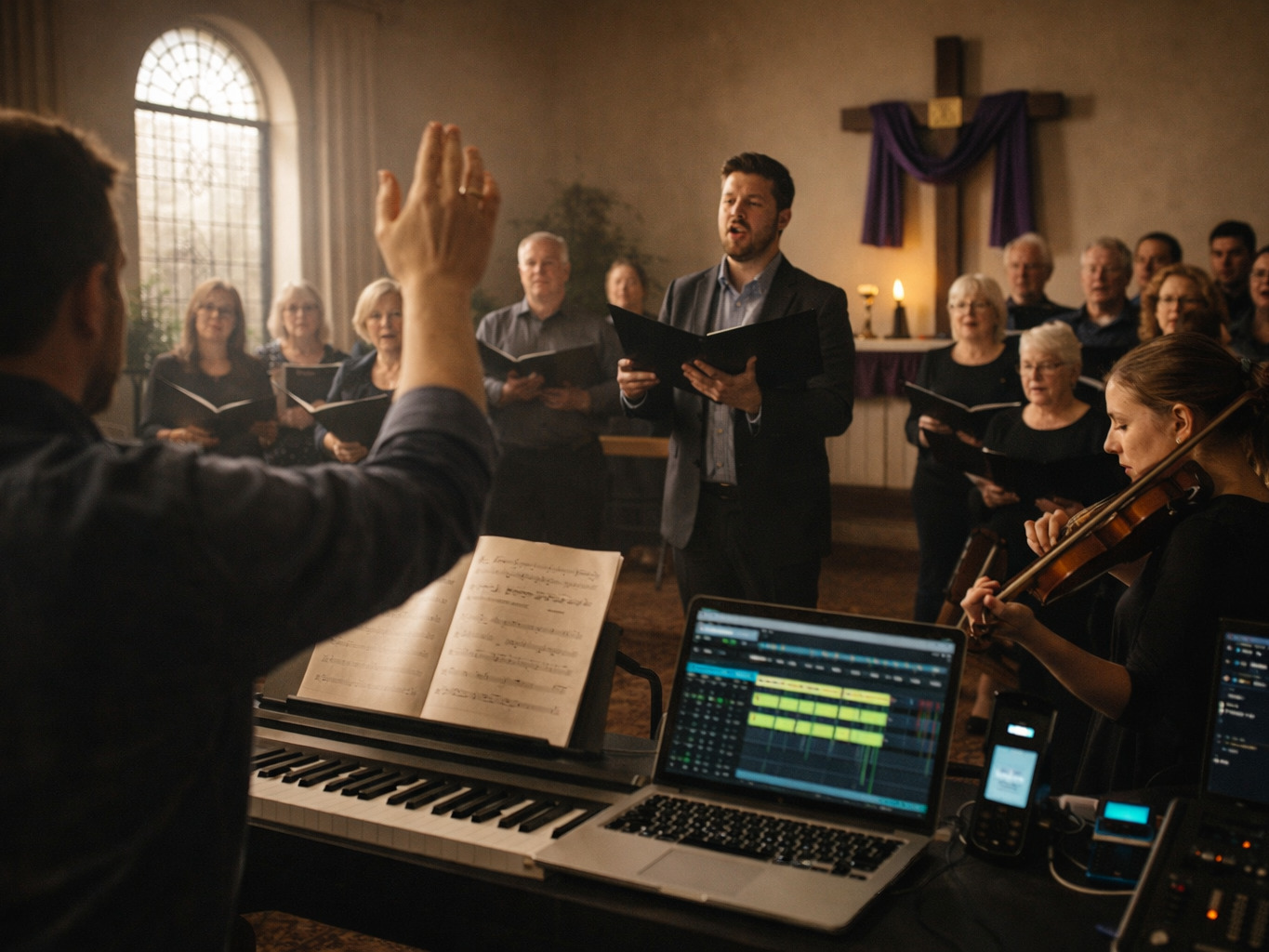
The room is quiet as your music director lifts a hand. A soft two-bar count-in plays in the in-ears, and the strings come to life. The tenor sings the first line, and the choir responds confidently. This is Handel's Messiah, prepared for Easter 2026. With a small team and steady backing tracks, everything sounds clear and full.
In this guide, we’ll dive deeper into practical steps to help soloists, small choirs, and leaders prepare effectively for performing Messiah. We’ll build a cut list, set keys and tempos, rehearse challenging spots, and set up technology for solid cues.
Why Messiah Works for Easter
Handel wrote Messiah in three parts. Part II focuses on the Passion and ends with the Hallelujah chorus. Part III begins with the hopeful "I know that my Redeemer liveth" and closes with "Worthy is the Lamb" and "Amen." This story fits well into Easter worship, moving from the cross to the joy of resurrection. Backing tracks help solve common problems small teams face—they provide consistent tempo and orchestral color that enhance the performance without requiring a full orchestra (Encyclopaedia Britannica).
Creating Your Cut List (25–45 minutes)
Start your Easter flow with "Behold the Lamb of God." Move through key pieces like "Surely He hath borne our griefs," "And with His stripes," and "All we like sheep." Lift spirits with "Lift up your heads." If the choir reads well, include "The Lord gave the word," and for a reflective moment, consider "How beautiful are the feet." To contrast, use "Why do the nations."
Turn the last third into a strong anchor with "Since by man came death," ensuring clarity for the chorus. Feature a bass solo on "The trumpet shall sound," and finish with either "Worthy is the Lamb" and "Amen" or the beloved Hallelujah. Keep one big chorus near the end and include a solo earlier for a balanced flow.
Choosing Keys, Tempos, and Editions
Select keys that are comfortable for your soloists. A soprano singing "I know that my Redeemer liveth" will perform better if you place a chorus before it. For bass parts, find a key that supports both high and low notes. Fast choruses like "All we like sheep" require clarity more than speed. Record a quick memo of your intended tempo. If consonants blur on playback, reduce the tempo by 2-4 bpm before finalizing your track choices.
Make sure your score matches the recording. Most modern editions have the same movement order, but check for any repeats or da capo sections that may differ. If your track includes repeats, plan ornaments that fit within the music's fixed harmony. Notate these in advance, ensuring everyone stays aligned.
Rehearsing Arias and Recitatives with Tracks
"Comfort ye" needs breaths aligned with string gestures. Practice speaking the text in rhythm with the track before singing it. Follow with "Ev’ry valley," making sure the tempo feels natural before adding any turns on repeats. For dry recitatives, use a metronome to establish the rhythm first. After that, incorporate the track to ensure clean cadences.
Small Choir, Big Sound: Effective Tactics
For 8-16 voice groups, assign the best readers to the prominent parts in fugal sections, like in "And the glory." If necessary, simplify inner parts to two lines on fast runs, ensuring clarity of lyrics. Mark staggered breath points so fixed tempos don’t create gaps. Early planning for dynamics is key. Since the orchestra is pre-mixed, singers should create contrast—save true forte for climaxes and ensure subito piano moments feel genuine, not timid.
Practical Tech for a Smooth Service
Use two-bar count-ins for each piece. Keep any clicks or spoken cues in the in-ears, but not in the house mix. When using talkback mics, limit their use to rehearsals for setting cutoffs and fermatas. For stereo setups, position choir mics to minimize text masking by the track. For livestream setups, remember that while Handel's music is in the public domain, the recordings are not. Ensure your church is legally covered for any streaming of recorded tracks (CCLI).
“Consistency is the payoff of backing tracks. Use it.”
A 7-Day or Two-Weekend Prep Plan
Begin by confirming cuts, keys, and tempos. Share track timings and cue notes with your team. On Day 2, meet with soloists to rehearse recitatives and arias. Focus first on the text, then cadences, and finally phrasing. Practice difficult cadences until they are smooth. On Day 3, split the choir into sections to practice entries at the final tempo and refine articulation. On Day 4, rehearse with in-ears, muting the house for most of the run to hear the balance clearly.
Over the first weekend, hold a sitzprobe with all tracks. Stay still, listen, and make necessary adjustments. During the following week, target any flagged pickups and check livestream levels. On the second weekend, finalize transitions, timings for walk-ons, Scripture, and prayers. Record a safety take if possible.
Troubleshooting Tips
If "Hallelujah" feels hurried, slow down by 2-3 bpm and clean up sibilants. If the trumpet is overpowering the bass, adjust the track's presence in the 2-4 kHz range and carefully spot-mic the bass. For late recitative cadences, provide a clear cue during stressed syllables, or use subtle clicks only for the music director.
Where to Find Movement-Specific Support
For programming Part II this Easter, movement-ready tracks can help with consistent entrances and cadences. Explore options at Spiritrax - Part II Complete Package and pair this with tracks from Part III. For broader options, check out the Complete Messiah for more selections. For tips on shaping the Easter service, see Augment Your Easter Choir with Backing Tracks.
Handel’s score will shine brightly. With the right choices and steady backing tracks, it will fit your available time, singers, and the message your group needs to share this Easter.
Create a focused Easter set with movement-by-movement accompaniment from Messiah Part II. Prepare a 25–45 minute arc from "Behold the Lamb of God" through "Hallelujah" to ensure every cue is consistent.
Build a focused Easter set for Spring 2026 with movement-by-movement accompaniment from Handel's Messiah.
Download the Album